Why Is Your Hair Thinning? 5 Common Causes of Hair Loss
Discovering a sudden increase in the amount of hair accumulating in the plug hole is a universal source of anxiety. Yet, while losing hair can feel deeply distressing, the factors behind it are usually straightforward once you understand what to look for. Below is a restructured breakdown of the five primary drivers responsible for most hair loss in both men and women, alongside guidance on how to tackle them.
1. Stress-Triggered Shedding (Telogen Effluvium)
If your hair appears to be coming out rapidly rather than thinning over years, a physical or emotional shock is often the primary reason.
Telogen effluvium occurs when a major disturbance forces hair follicles prematurely into a resting phase. Roughly two to three months after the initial event, these hairs fall out simultaneously. Because of this delayed reaction, people frequently struggle to connect the sudden loss with the original trigger.
Common causes include:
-
Severe illness, high fever, or major surgery
-
Significant emotional stress
-
Rapid weight loss or sudden restrictive dieting
-
Childbirth
-
Certain prescribed medications
-
Thyroid dysfunction
While alarming, stress-related shedding is typically temporary, and hair usually regrows within six to twelve months once the underlying cause is resolved. However, an episode can sometimes unmask or accelerate underlying genetic thinning.
2. Genetic Thinning (Androgenetic Alopecia)
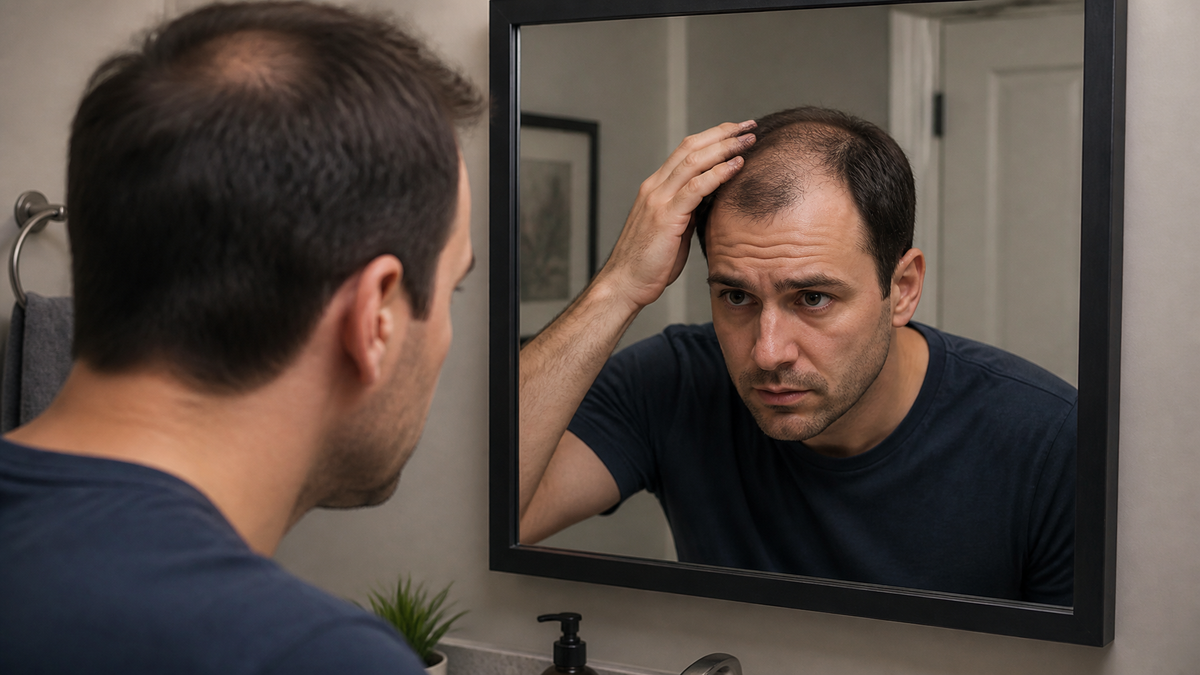
Commonly referred to as male pattern baldness or female pattern hair loss, this is the single most frequent cause of long-term hair reduction.
Driven by a combination of genetics and hormones—specifically the sensitivity of hair follicles to dihydrotestosterone (DHT)—affected follicles shrink gradually over time. They produce increasingly finer and shorter strands until hair growth stops altogether.
-
In Men: Thinning typically begins with a receding hairline and a thinning crown, eventually meeting across the top of the scalp.
-
In Women: Loss usually presents as a widening central parting and general thinning across the top, while the front hairline remains intact. This subtle onset means female pattern loss is often missed in its early stages.
This type of loss can start any time after puberty and naturally progresses over time unless actively targeted.
3. Tension and Styling Damage (Traction Alopecia & Chemical Damage)
Unlike genetic or systemic causes, hair loss caused by physical stress or chemical treatment is entirely preventable.
-
Traction Alopecia: Caused by persistent tension on the root from tight hairstyles such as ponytails, braids, cornrows, weaves, or extensions. Occasional tightness causes temporary stress, but repeated strain over years scars the follicle, leading to permanent loss along the hairline and temples.
-
Chemical and Heat Stress: Regular bleaching, perming, chemical relaxing, and high-heat styling weaken the structural integrity of the hair shaft. This leads to breakage that mimics true hair loss.
Distinguishing features: Breakage occurs when strands snap along the shaft, whereas true loss happens at the follicle level. Physical damage is concentrated specifically where tension or heat was applied, often accompanied by a tender scalp, brittle strands, or small bumps.
4. Key Nutritional Shortfalls
Hair production requires substantial metabolic energy. When key nutrients are scarce, the body prioritises vital organs and redirects resources away from hair growth, leading to diffuse thinning across the entire scalp.
Frequent deficiencies include:
-
Iron: Low ferritin levels (stored iron) are strongly linked to shedding, particularly in women with heavy periods. Ferritin can fall within the "normal" range on a basic blood test while still remaining below the optimal threshold for healthy hair growth.
-
Vitamin D: Widespread deficiency in the UK is frequently linked to increased shedding and accelerated pattern loss.
-
Zinc: Crucial for tissue repair and growth; insufficient levels lead to generalized thinning.
-
Protein: Hair is composed primarily of protein. Inadequate dietary intake—often seen in unmanaged restrictive diets—typically manifests as hair shedding within a few months.
-
Vitamin B12 and Folate: Commonly affects vegetarians, vegans, adults over 50, or those on long-term acid-suppressing medication.
Obtaining a comprehensive blood panel is essential before starting supplements, as unguided supplementation is rarely effective.
5. Hormonal Changes and Endocrine Shifts
Because hormones regulate the growth cycle, shifting hormone levels directly affect hair density.
-
For Women: Polycystic ovary syndrome (PCOS) is a frequent driver, causing crown thinning alongside symptoms like acne, irregular periods, and excess facial hair. Decreasing oestrogen levels during menopause allow circulating androgens to exert greater influence, triggering thinning. Changing or stopping hormonal contraceptives can also prompt temporary shedding.
-
For Men: Beyond DHT sensitivity, factors like low testosterone or elevated prolactin levels can occasionally play a role.
-
In Both Sexes: Thyroid conditions (both underactive and overactive) frequently mimic other forms of hair loss. If shedding is accompanied by unexplained fatigue, weight changes, sensitivity to cold, or mood swings, a thyroid check is warranted.
Key Steps for Addressing Hair Loss
Hair loss is often multifaceted—for instance, a nutritional deficit can easily coincide with genetic pattern loss, or an acute episode of stress can bring underlying thinning to light.

-
Seek a Medical Evaluation: Consult a GP or a specialist dermatologist to examine your scalp, evaluate the pattern of loss, and perform blood tests.
-
Intervene Early: Shrunken hair follicles can often be revitalised with treatment, but scarred, inactive follicles cannot recover. Early action yields significantly better long-term results.
-
Rely on Proven Treatments: Approach miracle shampoos or unverified remedies with caution. Interventions backed by clinical evidence—such as topical minoxidil, oral finasteride for men, targeted medical therapies, or addressing diagnosed iron deficits—remain the most reliable options.
-
Target the Underlying Cause: Topical treatments cannot overcome unmanaged thyroid disorders, severe nutritional gaps, or styles that constantly pull hair from the root. Identifying and treating the root issue is essential.
Hair thinning is common, but it is also far more manageable than most people assume once the correct underlying cause is identified and addressed.