Clearing Up Common Misconceptions on Mole Removal
Few topics in everyday skin care attract as much folklore as moles. Virtually everyone has at least one, most people have pondered a specific spot at some point, and many have received confident advice from a friend, a beautician, or the internet. The difficulty is that a great deal of that guidance is incorrect — and some of it is outright dangerous.
Moles, or naevi, are clusters of pigment-producing cells called melanocytes. They are overwhelmingly benign, requiring no intervention beyond regular monitoring. When removal is appropriate, it stems from medical, cosmetic, or practical reasons — and the method chosen is of paramount importance. Below is a realistic look at what mole removal actually entails, rearranged by core themes.
1. What Mole Removal Is Not: A Quick Aesthetic Fix
It is not a beauty treatment to be taken lightly
Perhaps the most persistent misconception is that removing a mole is akin to having your eyebrows threaded, a minor cosmetic fix booked on a whim with the cheapest provider. Skin is living tissue equipped with nerves, blood vessels, and an active healing process. Any intervention that cuts, freezes, or burns it is a surgical procedure, not a spa treatment. While many removals are simple and swift, proper framing is crucial: walk away from any practitioner offering treatment without a thorough prior assessment, a discussion regarding scarring, or an inquiry into your motives.
It is not painless, scarless, or guaranteed permanent
Marketing promises often overreach in three areas:
-
Pain: While local anaesthetics make the procedure itself comfortable after an initial sharp pinch, subsequent tenderness during healing is normal.
-
Scarring: Any procedure breaking the skin leaves a trace. Expert techniques minimise this and scars fade over time, but no honest clinician promises zero scarring.
-
Permanence: If pigment cells remain, particularly following shave or destructive techniques, moles can recur. Recurrence requires clinical reassessment rather than assumption.
2. What Mole Removal Is Not: A Safe DIY Task or One-Size-Fits-All Approach
It is not something you can safely do at home
Internet searches reveal numerous hazardous DIY methods: tying thread around moles, filing them down, or applying garlic, apple cider vinegar, and caustic pastes. Their occasional apparent success — where the mole shrivels and falls off — makes them exceptionally dangerous. Home attempts risk severe infection, permanent scarring, and delayed healing. Crucially, they destroy tissue vital for diagnostic testing. Burning or dissolving a potential skin cancer removes the evidence needed for early, straightforward diagnosis, swapping a clear answer for a complex medical issue.
It is not a one-size-fits-all procedure
Mole removal encompasses several distinct clinical techniques:
-
Surgical excision: The mole and a small margin of surrounding skin are cut away, then stitched. This provides tissue for laboratory analysis and carries the lowest recurrence risk, though it leaves a linear scar.
-
Shave excision: The raised portion is sliced level with the skin. It heals quickly with minimal marking but may not reach sufficient depth to prevent recurrence, sometimes complicating future site evaluations.
-
Destructive methods (Laser, Cautery, Cryotherapy): These remove the mole without leaving a specimen. This approach is suitable solely for moles already confirmed as benign.
3. What Mole Removal Is Not: Purely Cosmetic or an Automatic Diagnosis
It is not always about appearance
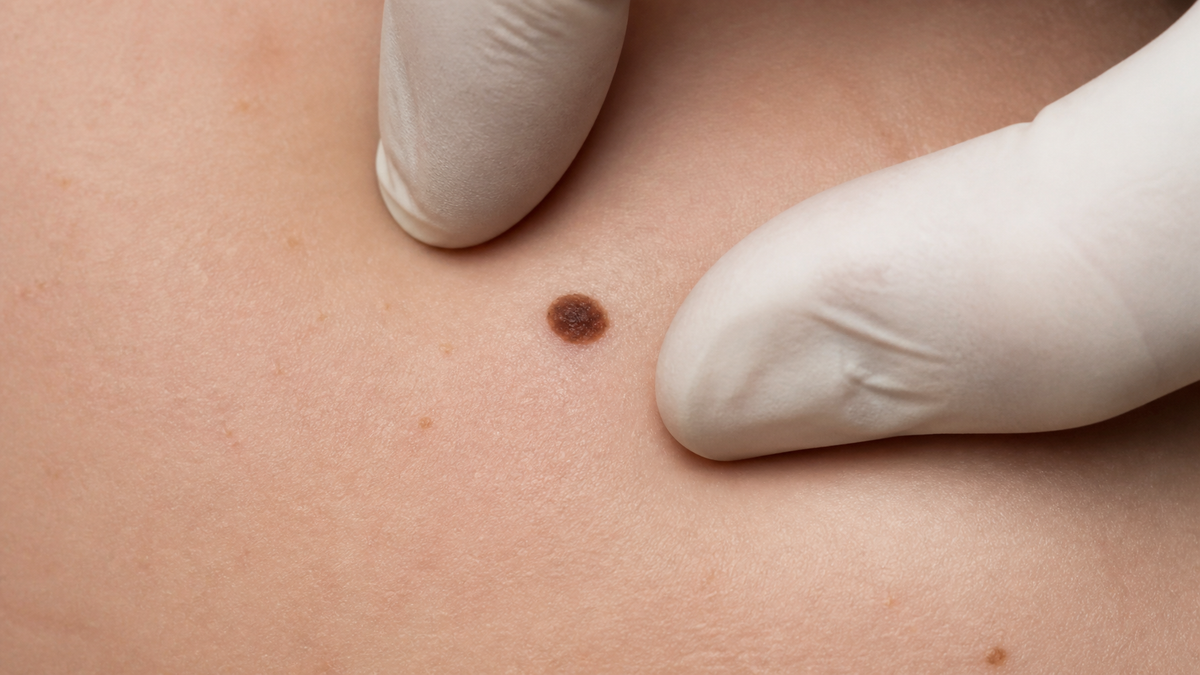
Removals are frequently driven by practical or medical necessities rather than vanity. A GP or dermatologist may advise removal if a mole changes, appears atypical, or sits where clothing, bra straps, seatbelts, or razors constantly irritate it. Furthermore, specific types — such as large congenital moles — carry a higher lifetime risk of developing melanoma, making removal or close monitoring a carefully considered clinical decision.
It is not a diagnosis in itself

Removing a mole and determining its nature are two separate steps. When a mole is removed for medical reasons, the tissue should undergo laboratory histopathology under a microscope. This analysis confirms whether the spot was benign, atypical, or required further treatment. A cosmetic clinic that discards tissue without analysis offers an incomplete service, regardless of how neat the final result appears.
4. What Mole Removal Is Not: A Reason to Delay or Stop Monitoring
It is not a substitute for ongoing monitoring
Removing a single mole does not alter your underlying skin type, sun exposure history, or overall risk profile. Regular vigilance remains essential using the ABCDE self-check guide:
-
Asymmetry
-
Border irregularity
-
Colour variations within the mole
-
Diameter larger than 6 mm
-
Evolution (changes in size, shape, colour, or symptoms like bleeding and itching)
It is not something to put off if a mole worries you
Delaying an evaluation out of apprehension is understandable, but skin cancers caught early are among the most treatable. Time is the one non-renewable resource in early intervention. If you are uncertain about a mole, that uncertainty itself warrants a professional evaluation. An expert assessment culminating in reassurance is an ideal outcome; if removal is required, ensuring it is performed correctly by a qualified clinician is what matters most.