The One Thing I Wish My Patients Understood About Ageing
If I could get one message through to every patient who sits in front of me, it wouldn't be about a miracle cream, a laser, or an injectable. It would be this: prevention is better than cure. By the time most people come to see us about lines, pigmentation, sagging, or broken veins, we're already playing catch-up. The patients who age the best aren't the ones who found the perfect rescue treatment at 50 — they're the ones who started protecting their skin properly at 20.
Sunscreen Should Be Like Brushing Your Teeth
Sunscreen is the single most powerful anti-ageing tool that exists, and it isn't close. Not a serum, not a device, not an injectable — sunscreen. Yet it's the thing most people apply inconsistently, or only when they remember, or only on holiday.
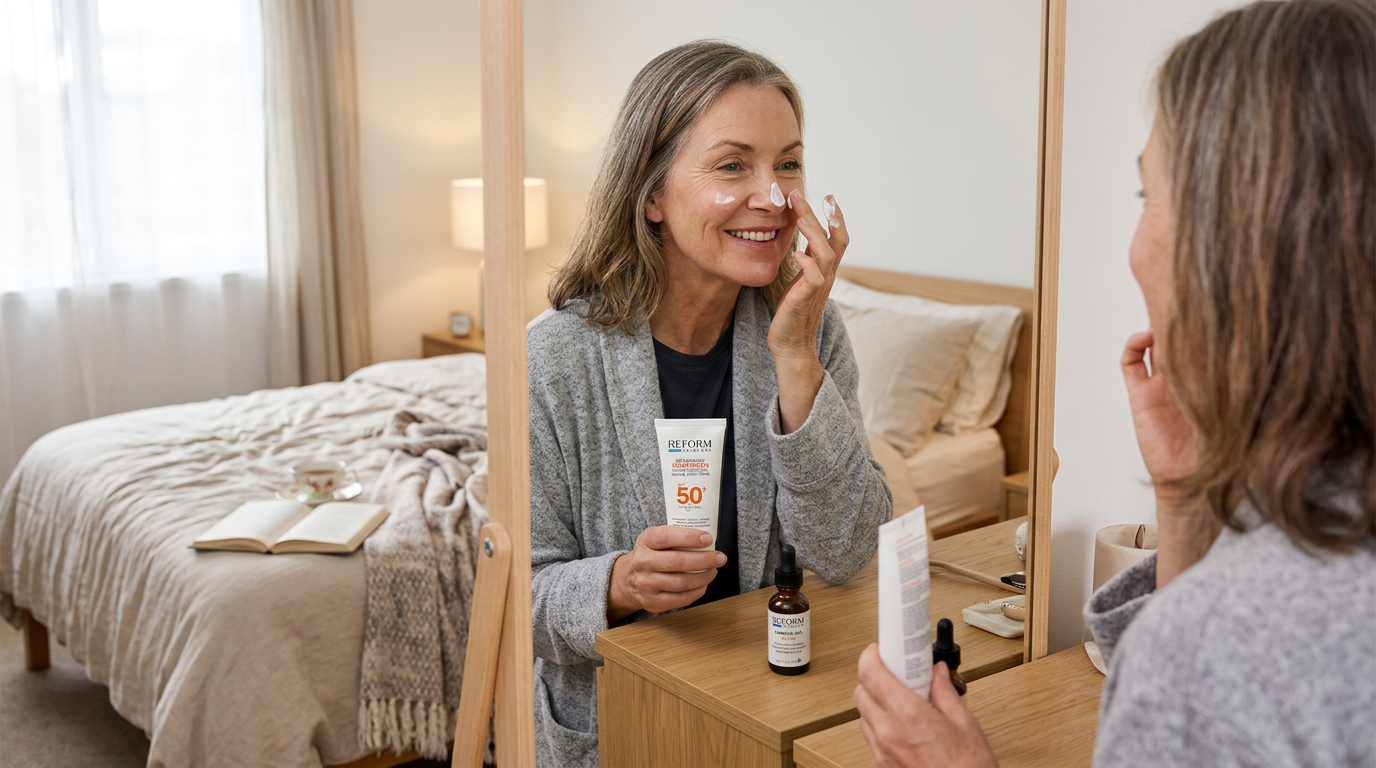
I tell patients: sunscreen on exposed skin should be as automatic as brushing your teeth. You don't decide each morning whether today is a “teeth-brushing day.” It should be the same with SPF — every day, on every exposed area, without exception. And critically, that means more than just the face. The neck and the backs of the hands are two of the most commonly neglected areas, and two of the areas that show the earliest, most visible signs of cumulative sun damage — pigmentation, crepiness, broken veins. If you protect your face beautifully for twenty years and ignore your neck and hands, you'll eventually have a face that doesn't match the rest of you.
Skin of Colour Needs Sunscreen Too — For a Different Reason
There's a persistent myth that sunscreen is only necessary for fair skin, or only necessary to prevent skin cancer. Both are wrong. Patients with skin of colour absolutely need daily sunscreen, particularly here in Ireland and the UK between March and September, whenever the UV index rises above 3.

The reason isn't primarily skin cancer risk, though that still exists. It's pigmentation. Skin of colour is far more prone to melasma and to hyperpigmentation left behind after acne or inflammation, and UV exposure is one of the biggest triggers and aggravators of both. Daily sunscreen won't just protect against cancer risk — it's one of the most effective tools we have to prevent and manage stubborn pigmentation problems that can take months of treatment to fade once they've set in.
Building the Right Routine, at the Right Age
Skincare should evolve with you, not stay static from your twenties into your fifties.
Very young skin can still be quite reactive and sensitive, so I'd urge caution before piling on active ingredients too early — sunscreen is the priority here, not a shelf full of actives.
By your twenties and thirties, it's worth starting to build in genuine antioxidant protection — ingredients like niacinamide and vitamin C (around 20%) — alongside your sunscreen. As you move further into your thirties and beyond, adding a retinol at night becomes worthwhile too, provided you are not pregnant or breastfeeding. These aren't luxuries — they're the ingredients with genuine, evidence-backed anti-ageing effects.
Stop Trying to Navigate This Alone
The internet is full of skincare advice, and very little of it is tailored to you. Instead of trying to piece together a routine from conflicting recommendations, forums, and influencer videos, a bespoke consultation with a dermatology specialist or qualified skincare professional will save you time, money, and frustration. Just because a product transformed someone else's skin doesn't mean it's right for yours — skin type, concerns, and sensitivities vary enormously from person to person.
Brands like Obagi, SkinCeuticals, REFORM Skincare, and iS Clinical are all excellent cosmeceutical ranges — but they are exactly that: brand names. What actually matters is understanding the active ingredients inside the product and whether they're appropriate for the specific concern you're trying to treat. Without some grounding in skincare science or dermatology, it's genuinely difficult to make that call reliably from a shelf of similar-looking bottles.
It's also worth knowing that the most expensive product on the shelf isn't automatically the most effective one for you. Good skincare doesn't have to be the priciest option — but a single “hero” product is rarely enough on its own. What matters is building an affordable, coherent package of products that work together and that you'll actually use consistently.
Skincare Alone Isn't Always Enough
Here's the part patients are often surprised by: once you're past your early thirties, your skin's natural collagen production begins to decline, and topical skincare alone can only do so much to compensate. This is where in-clinic treatments become part of a genuinely preventive strategy, not just a corrective one — medical-grade microneedling, Secret RF, and chemical peels are things we recommend to help maintain what you already have, rather than waiting until significant volume or texture loss has already occurred.
The Forties, Perimenopause, and a Changing Skin Picture
Your forties often bring a new layer of complexity. Perimenopause can trigger a combination skin pattern many patients haven't seen before — perimenopausal acne alongside other ageing changes, sometimes on the same face at the same time. This is a stage where your skincare and in-clinic treatment plan genuinely needs to adapt, rather than simply continuing whatever worked in your thirties.
Menopause: A Turning Point for the Skin
Menopause deserves particular attention. In the first five years after menopause, women can lose as much as 60% of their type I and III collagen — a dramatic and rapid shift. Falling oestradiol weakens the skin barrier considerably, and skin that previously tolerated a certain routine may suddenly need far more support. This is often the point where patients need to increase the frequency of professional treatments and pay much closer attention to areas — particularly the neck and hands — that may not have needed extra attention before.
Ageing Gracefully Is the Goal — Not Fighting Time
There is nothing wrong with ageing. Everyone ages — the goal is to age gracefully. Nobody wants to look in the mirror and see large broken veins, unwanted age spots, or crepey skin looking back at them; that's simply an unpleasant experience, regardless of how “natural” it is to age. We can't turn back the clock, but we can be strategic, consistent, and always a couple of steps ahead of the damage rather than reacting to it after the fact.

Look at the men and women who still look genuinely well in their fifties and sixties. Almost without exception, they've paid attention to diet and exercise — but they've also practised real photoprotection, used vitamin C and retinol consistently, chosen good moisturisers, and attended for regular medical-grade treatments like microneedling, Secret RF, and chemical peels along the way.
Think of it this way: nobody would let their hair go grey and unruly and simply never cut it, or let their nails grow uncut for years, without ever attending to them. So why would anyone let their skin age prematurely, when so much of that process is genuinely preventable?
The Takeaway
If there's one thing I want every patient to walk away understanding, it's this: the work of ageing well happens years before you'd think you need to start, not after the damage is visible. Daily sunscreen on your face, neck and hands, sensible antioxidants and actives introduced at the right age, professional guidance rather than guesswork, and preventive in-clinic treatments as your skin's natural collagen production declines — that's the real formula.
At Adare Dermatology Clinics in Dublin, Limerick, or London, our specialist team can help you build a skincare and treatment plan that's genuinely tailored to your skin, your concerns, and your stage of life — so you're always working with your skin's biology, not catching up to it.