Skincare Reset: Why Your Routine Isn't Complete Without a Barrier Repair Cream
Walk into most skincare conversations and the spotlight lands on actives: retinoids, acids, brightening serums, the ingredients that promise visible change. What rarely comes up, and what we at The Adare Dermatology Clinic, Chelsea, consider genuinely non-negotiable, is the product responsible for whether all those actives actually work in the first place: a proper barrier repair cream.
Your Skin Barrier, Explained
The outer layer of the skin, the stratum corneum, functions like a wall: skin cells act as the bricks, and a carefully balanced mix of ceramides, cholesterol, and fatty acids acts as the mortar holding everything together. This structure has one job above all others: keeping water in and everything else, irritants, allergens, pollutants, out.
When that structure breaks down, through harsh products, over-exfoliation, environmental exposure, or an underlying skin condition, the consequences show up fast. Water escapes more easily (a process called transepidermal water loss), irritants penetrate more readily, and the skin turns reactive, dry, and inflamed. This isn't a minor cosmetic detail. It directly determines whether treatment for almost any skin condition actually succeeds, which is why barrier support is built into nearly every plan we write for patients.
Acne Treatment Works Better With Barrier Support, Not Without It
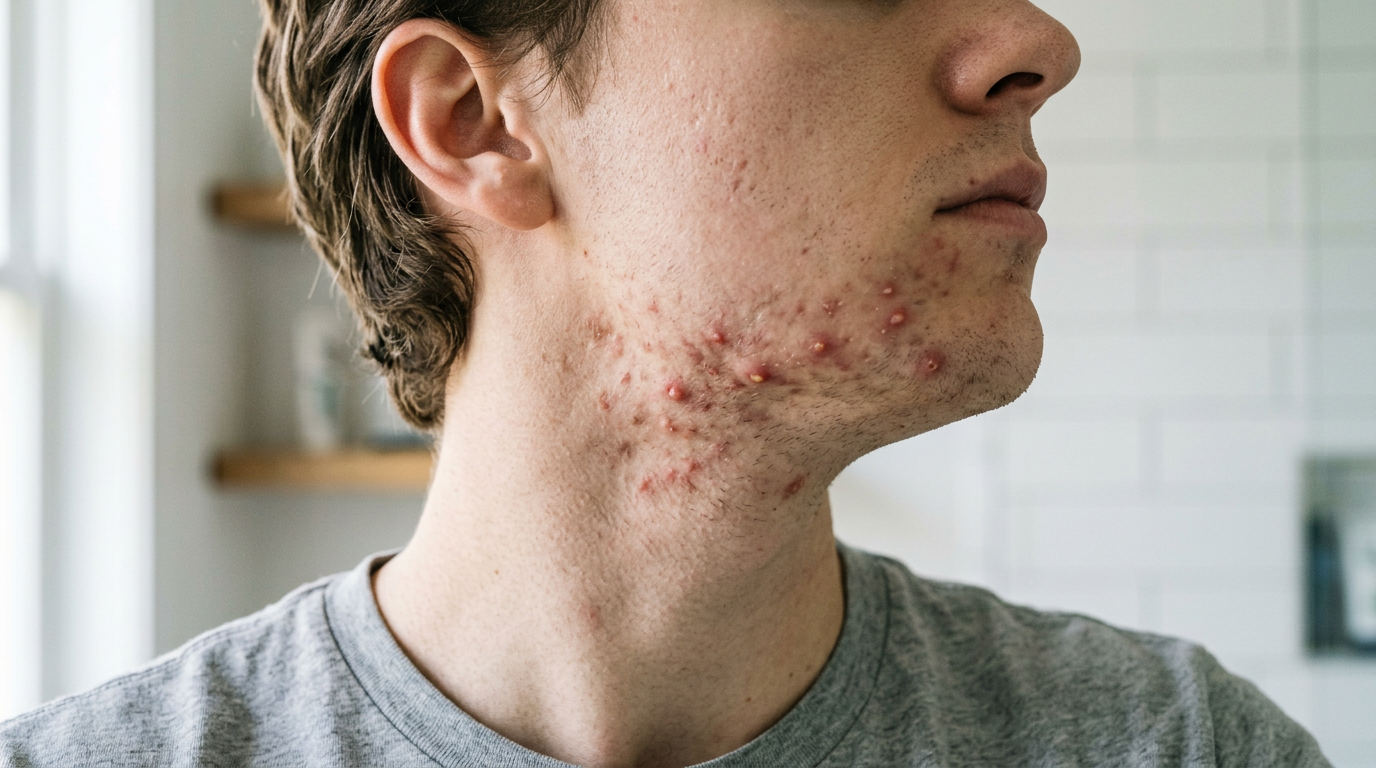
Take acne vulgaris. When we prescribe the Reform Skincare anti- Blemish Kit to treat active breakouts, we're using genuinely effective ingredients aimed at excess oil, blocked pores, and acne-causing bacteria. But those same ingredients, used without support, can leave the skin barrier compromised, dry, tight, and prone to irritation.

That's precisely why a daily vitamin B5 gel and an everyday moisturiser sit alongside the anti-Blemish Kit as standard, not as optional add-ons. Vitamin B5 (panthenol) has a well-documented role in supporting skin hydration and barrier recovery, and combined with proper moisturisation, it means patients can actually stay on their acne treatment long enough for it to work. In practice, we see this play out constantly: patients who give up on an effective acne treatment after a couple of weeks usually aren't experiencing treatment failure, they're experiencing a barrier that broke down faster than it could recover. Pair the actives with barrier support, and both tolerance and results improve substantially.
Eczema and Psoriasis: Treating Inflammation Alone Isn't Enough
The same logic applies, if anything more urgently, to inflammatory skin conditions like eczema and psoriasis. Our prescribing toolkit here includes topical steroids to bring down inflammation, tacrolimus (Protopic) as a non-steroid alternative, and calcipotriol, a vitamin D analogue frequently used in psoriasis, sometimes in combination with a topical steroid.
These are effective, well-evidenced treatments. But used on their own, without a dedicated barrier repair product, achieving durable control of either condition is genuinely difficult. That's because both eczema and psoriasis involve a disrupted skin barrier as part of the condition itself, not merely as a downstream symptom. Treating inflammation while leaving the barrier unaddressed is solving only half the equation. Patients who consistently pair their prescribed treatment with a proper barrier repair cream tend to experience fewer flares, longer stretches of clear skin, and less reliance on escalating medication.
Irritated Skin Needs Less, Not More
A pattern we see constantly, and completely understandably, is patients responding to irritated skin by reaching for more products: another cleanser, another treatment, something to "fix" it. The better instinct, almost without exception, is the reverse. When skin is genuinely irritated, the priority should be stripping the routine back and restoring the barrier before introducing anything active again.
Adding harsher products onto already-compromised skin only compounds the damage and extends the flare. Often, a barrier repair cream used alone for a period is exactly what allows the skin to rebuild its defences before any active treatment resumes.
What We're Seeing in Perioral Dermatitis Patients
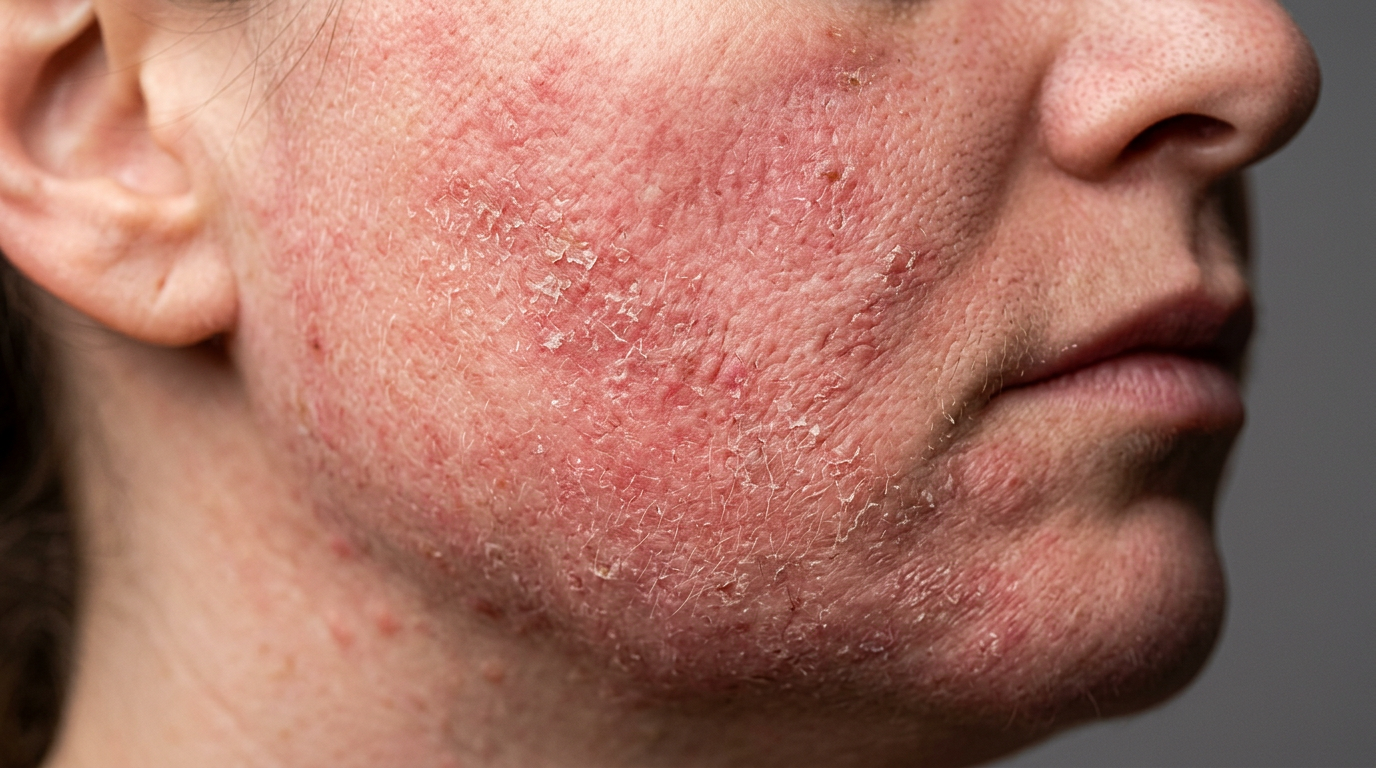
This pattern shows up especially clearly in our late-teen and adult patients presenting with recurrent perioral, or more broadly periorificial, dermatitis around the mouth, nose, or eyes. In case after case, the trigger isn't a new allergen or product sensitivity, it's cumulative, low-grade barrier damage from a routine that's simply too aggressive for the skin to keep up with.
Overusing topical tretinoin, applying it more often or at a higher strength than the skin can tolerate, is one frequent cause, alongside daily use of harsh, foaming, or overly stripping cleansers. Each contributes to a barrier that's slowly eroding, and the skin eventually responds with the small, red, often scaly bumps characteristic of perioral dermatitis. The frustrating part for patients is the cycle: the flare is treated, it clears, and then returns weeks later, because the actual cause, ongoing barrier damage, was never resolved. Breaking that cycle means simplifying the routine, cutting the offending products, and actively rebuilding the barrier rather than just managing each flare in isolation.
What to Look for in a Barrier Repair Cream
An effective barrier repair cream should mirror the skin's own lipid composition, ceramides, cholesterol, and fatty acids in balanced ratios, alongside humectants like glycerin and barrier-supportive ingredients such as panthenol and niacinamide. It should feel calming on compromised skin rather than causing any sting or tingle, and it works best used consistently, not just pulled out during a flare-up.

We encourage patients to treat barrier repair as a permanent part of their routine rather than an emergency measure. Whatever you're managing, acne, eczema, psoriasis, or recurring perioral dermatitis, or you simply want skin that tolerates actives and everyday stressors better, a barrier repair cream deserves a permanent place in your routine, as the foundation everything else depends on.
Ready for a Routine That Actually Works With Your Skin?
Every condition we treat at The Adare Dermatology Clinic, Chelsea, from acne to eczema to recurring perioral dermatitis, responds better once the skin barrier is properly supported alongside active treatment. If your current routine isn't delivering what you'd expect, or you feel stuck in a repeating cycle of flares and irritation, it's worth examining whether your barrier is being supported or quietly worn down.
Book a consultation with our dermatology team in Chelsea either virtual or in-person, and we'll build a plan around what your skin actually needs, targeted treatment where it matters, and the barrier support to make sure it holds.