Mastering Skin Hydration: The Power of Vitamin B5 Gels
Dehydration is a remarkably widespread skin concern, yet it remains widely misunderstood. Most people recognise the signs: a uncomfortably tight feel following cleansing, mid-afternoon flakiness, and a lackluster, dull appearance. The instinctive reaction is to reach for a heavy, rich cream, slather it on, and hope for the best. Whilst this occasionally helps,it frequently fails—simply because the underlying issue has been misdiagnosed.
Dryness and dehydration are distinct issues. Treating one as if it were the other explains why so many individuals spend years battling parched skin despite investing in costly skincare routines. Grasping this distinction is the essential first step towards achieving healthy skin.
1. Dry vs Dehydrated: Understanding the Difference
Confusion persists because dryness and dehydration frequently overlap, yet they stem from fundamentally different causes and require distinct solutions:
-
Dry Skin (A Skin Type): Characterised by a natural lack of oils (lipids) in the upper layers. It feels rough, looks flaky, and remains constant regardless of the environment or season.
-
Dehydrated Skin (A Temporary Condition): Caused by a lack of water, affecting any skin type—including oily or combination complexions.
An individual can have a shiny, oil-prone T-zone while simultaneously suffering from dehydrated skin. Conversely,someone with a dry skin type can maintain excellent hydration levels.
Because oil and water escape through different pathways, they must be restored using different ingredients. A thick,occlusive cream will do little for a barrier that cannot hold onto water. Instead, the skin requires humectants—ingredients that draw water into the upper layers—paired with structural components that fortify the skin barrier.
       DRY SKIN                  DEHYDRATED SKIN
   (Lacks Natural Lipids)       (Lacks Water Content)
           │                             │
           ▼                             ▼
   Requires Oils &          Requires Humectants &
   Occlusive Creams          Barrier Support
2. What "Deep Hydration" Truly Entails
"Deep hydration" is a term frequently used in skincare marketing, but topically applied water cannot travel deep into the dermis. In reality, true hydration centers on the stratum corneum (the outermost layer of skin).
This outer layer functions like a brick wall:
-
The Bricks: Individual skin cells.
-
The Mortar: A mixture of lipids, including ceramides, cholesterol, and fatty acids.
When this lipid mortar is compromised, moisture escapes rapidly through a process called transepidermal water loss (TEWL).
Effective hydration requires a dual-action approach:
-
Replenishment: Delivering water-binding molecules into the upper skin layers to attract moisture.
-
Retention: Strengthening the skin barrier so that attracted moisture cannot evaporate.
A product that only attracts water without supporting retention offers temporary relief, leaving the skin feeling dry again by evening.
3. Why Vitamin B5 Leads the Way
Vitamin B5 (pantothenic acid)—utilised in skincare as its stable alcohol form, panthenol—is an exceptionally effective yet subtle ingredient. Due to its small molecular size, it penetrates the upper skin layers easily rather than sitting on the surface.
| Characteristic | Skincare Benefit |
| Humectant Action | Draws and binds water within the stratum corneum, offering a lighter, non-sticky finish compared to glycerin or hyaluronic acid. |
| Pro-Vitamin Action | Converts to pantothenic acid in the skin (a precursor to coenzyme A), supporting normal cellular repair and renewal. |
| Soothing Properties | Widely used in post-procedure and wound-care formulations to calm irritation; highly tolerated across all skin types. |
4. The Advantages of a Water-Based Gel Format
The delivery system of an active ingredient is crucial. Lightweight, water-based gels rich in humectants offer clear advantages over heavy creams:
-
Fast Absorption: Sits weightlessly without causing congestion or pilling under other products.
-
Versatility: Ideal for oily or combination skin, warm humid climates, makeup wearers, or anyone who dislikes heavy textures.
-
Layering Efficiency: When applied to slightly damp skin after cleansing, a gel primes the surface, enabling subsequent moisturisers to seal in significantly more moisture (the "hydrate then seal" method).
5. Integrating Vitamin B5 Gel into Your Routine
A structured skincare regime follows a logical order: Cleanse > Treat > Hydrate > Protect.

Vitamin B5 gel fulfills the hydrate step and can be incorporated morning and night:
-
Morning: Apply after antioxidant serums and prior to broad-spectrum sunscreen.
-
Night: Apply after exfoliating acids or retinoid treatments, followed by a night moisturiser.
Because of its calming qualities, panthenol acts as an excellent buffer when introducing potent actives that might otherwise cause irritation. Applied after active treatments, it soothes; applied before a moisturiser, it locks in water.
Flexible Application: If your skin is severely dry, use the gel in the morning and a heavier cream at night. If your skin is oily yet dehydrated, the gel may serve as your primary moisturiser for most of the year. Adjust placement based on your skin's immediate needs.
6. How to Select the Right Product
Not all hydrating gels deliver equal results. High-performing options balance humectants with structural support ingredients rather than relying on water and synthetic fragrances.
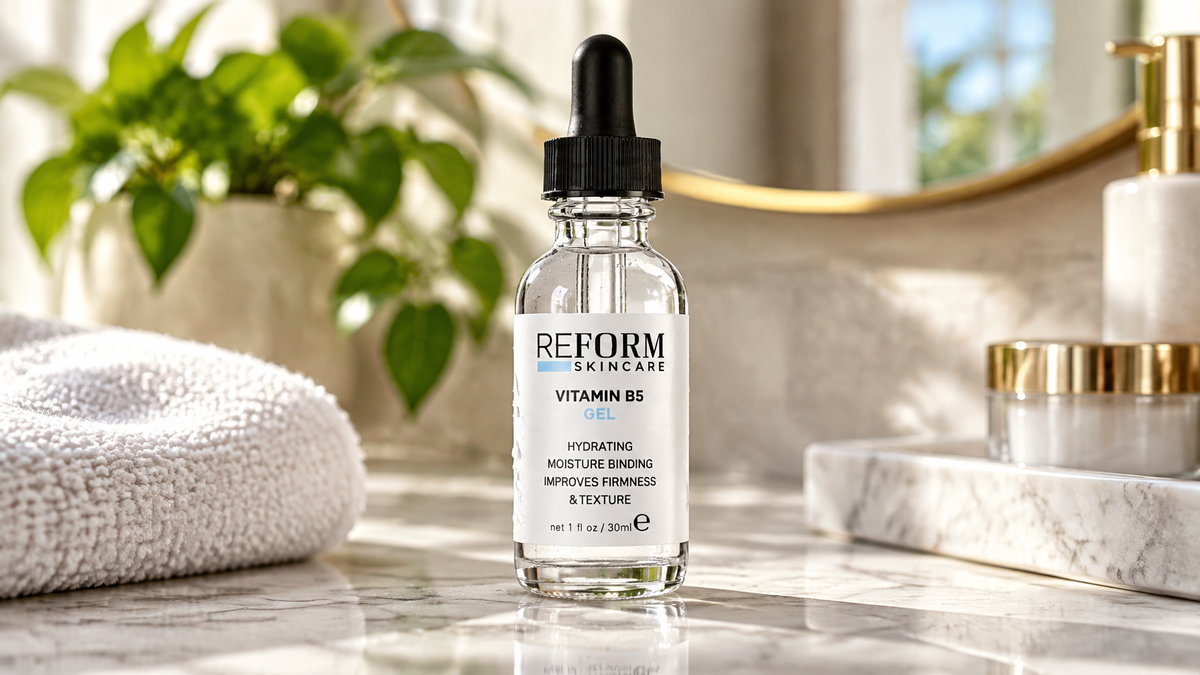
For example, formulations like Reform Skincare's Vitamin B5 Gel focus on rapid absorption, barrier support, and long-term balance without leaving a greasy residue. When evaluating any hydrating gel, check for three criteria:
-
Humectant Focus: Does it lead with proven moisture-binders like panthenol, glycerin, hyaluronic acid, or betaine?
-
Barrier Support: Does it include supportive ingredients like niacinamide or ceramides?
-
Usability: Is the texture comfortable enough for consistent, twice-daily application?
7. The Long-Term Outlook
Achieving well-hydrated skin is a continuous daily practice rather than an instantaneous fix. With consistent care:
-
Water-filled cells reflect light evenly, giving the complexion a plumper, more radiant appearance.
-
Fine lines caused by dehydration appear softened.
-
Makeup applies more smoothly, and active treatments cause less surface irritation.
Focusing on overall balance—attracting moisture, preventing loss, and maintaining a healthy skin barrier—yields lasting results. A well-formulated Vitamin B5 gel provides a reliable, highly tolerable foundation for lasting skin health.