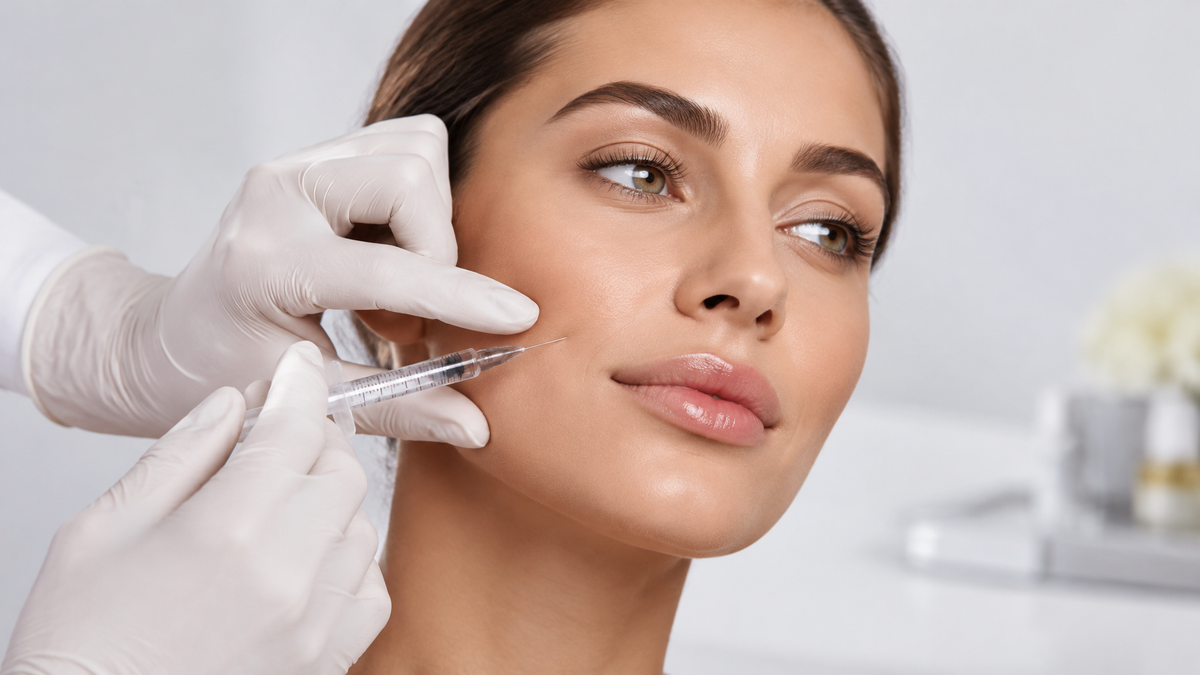
Understanding Dermal Fillers: Restoring Facial Structure
Ageing alters the face in ways that go far beyond surface fine lines. Beneath the skin, deep structural fat pads shrink, bone gradually resorbs, and tissue drifts downwards. Cheeks lose their projection, hollows develop beneath the eyes and across the temples, and the jawline loses its crisp definition.
Dermal fillers were designed to counter this structural deflation rather than simply smooth out creases. By re-establishing underlying scaffolding, skilful treatment does not alter your natural appearance; it simply restores a rested, healthy balance to the face you already recognise.
How Fillers Function: Materials and Mechanism
Dermal fillers are injectable medical gels placed into specific anatomical layers to reinstate lost volume, soften deep folds, and rebalance facial contours.
-
Hyaluronic Acid (HA) Fillers: The standard across UK aesthetic medicine. Hyaluronic acid is a naturally occurring complex sugar found in human skin, eyes, and connective tissues that binds large amounts of moisture. Alongside high biocompatibility and a negligible allergy profile, HA carries a crucial safety benefit: it can be completely dissolved using an injectable enzyme called hyaluronidase.
-
Biostimulatory Fillers: Formulations based on calcium hydroxylapatite or poly-L-lactic acid act differently, prompting the body’s own fibroblasts to produce collagen over several months rather than offering immediate mechanical volume. These are non-reversible and suited only to specific clinical indications and anatomical regions.
A detailed clinical consultation must always clarify which formulation suits your specific anatomy and why.
Anatomy and Treatment Areas
The term "dermal" is historically misleading. Modern aesthetic medicine rarely injects into the superficial skin; instead, products are placed deeply onto periosteum (bone) or into discrete deep fat compartments to generate mechanical lift.
-
Mid-face & Malar Region: Rebuilds flattened cheekbones, restoring mid-face projection.
-
Tear Troughs: Softens under-eye depressions that cause shadowing and perceived fatigue.
-
Temples: Corrects temporal hollows caused by shrinking lateral fat pads.
-
Nasolabial Folds & Marionette Lines: Softens lower-face grooves, predominantly by lifting from higher anchor points.
-
Jawline & Chin: Refines lower-facial definition, mitigates early jowling, and balances profile proportions.
-
Perioral Region & Lips: Restores hydration, sharpens the vermilion border, and imparts subtle plumpness.
-
Non-Surgical Rhinoplasty: Corrects minor dorsal humps and nasal asymmetries without operative intervention.
-
Dorsal Hands: Replenishes depleted subcutaneous fat to conceal exposed tendons and veins.
Every site demands a tailored product: robust, highly cross-linked gels provide lift on bone, while softer, more malleable formulations flex seamlessly within dynamic areas like the lips.
The Core Principles of Natural Results
The request to avoid looking "done" or overfilled is sensible. Natural aesthetics rely far less on brand names than on the clinical ethos and injection technique of your practitioner:
-
Address the Root Cause, Not Just the Symptom: Deep nasolabial grooves usually result from mid-face descent. Injecting product directly into the fold risks a puffy, simian appearance; supporting the mid-face cheek structure lifts tissue away from the fold indirectly.
-
Practise Conservative Dosing: The primary driver of unnatural outcomes is excessive volume. Because hyaluronic acid draws surrounding water post-injection, treated areas expand over the subsequent fortnight. Experienced practitioners intentionally under-treat initially and reassess later.
-
Preserve Dynamic Expression: A natural face must retain full movement. Fillers placed without regard for dynamic musculature look rigid and unnatural when smiling or speaking.
-
Build Systematically: Staging treatments across multiple sessions allows tissue to adapt comfortably, delivering predictable, subtle adjustments.
-
Clinical Restraint: Knowing when to advise against further treatment—or decline it entirely—is the hallmark of an ethical clinician.
The Treatment Journey: Consultation Through Aftercare
1. Clinical Consultation
Before any treatment occurs, a formal clinical assessment is essential. A qualified practitioner should review your complete medical history, assess facial symmetry in animation and repose, set clear expectations, and honestly identify structural changes that fillers cannot resolve (such as advanced skin laxity requiring surgical intervention).
2. The In-Clinic Procedure
Most premium fillers contain integrated lidocaine to keep procedural discomfort low. Following skin disinfection, injections take between 15 and 45 minutes depending on anatomical complexity. While structural changes are immediately apparent, final results emerge around day 14 once post-procedural oedema resolves and the gel fully integrates.
3. Recovery and Longevity
Hyaluronic acid fillers typically last between 6 and 18 months, dictated by the product's rheology, the mobility of the treated region, and individual metabolic turnover:
-
Dynamic areas (lips): Typically break down within 6 to 9 months.
-
Static areas (cheeks, jawline, temples): Frequently endure for 12 to 18 months.
Aftercare Protocol: Avoid vigorous cardiovascular exercise, saunas, sunbeds, and alcohol for 24 to 48 hours to minimise swelling. Sleeping elevated helps fluid drainage. Unless medically essential, avoid aspirin, ibuprofen, and blood-thinning supplements for a few days beforehand to reduce bruising.
Patient Safety and Regulatory Reality in the UK
While dermal fillers are routine procedures, transparent understanding of potential complications is crucial:
-
Mild, Common Reactions: Self-limiting redness, swelling, bruising, and local tenderness resolving over 3 to 7 days.
-
Intermediate Risks: Minor asymmetry, palpable lumps, or superficial infections.
-
Severe Complications: Vascular occlusion occurs if product enters or compresses an arteriole, compromising blood supply. Without rapid intervention, this causes cutaneous necrosis and, in extreme cases involving facial vessels, permanent visual loss.
In the UK, dermal fillers are not classified as prescription-only medicines, meaning regulatory thresholds remain lower than many assume. Prioritising clinical training over treatment cost is non-negotiable.
Ensure your injector is a regulated healthcare professional (registered with the General Medical Council, Nursing and Midwifery Council, or General Dental Council) who works with an aseptic technique, carries dedicated medical indemnity insurance, keeps emergency hyaluronidase immediately accessible, and maintains verified competency in managing vascular events.