Treating Post-Inflammatory Erythema: How Pulsed Dye Laser Targets Residual Acne Redness
Long after an acne lesion has actually healed, many patients are left looking in the mirror at a pink or red mark exactly where it used to be, wondering why it simply won't fade. This is post-inflammatory erythema, or PIE, and it's one of the most misunderstood consequences of acne we see at our Dublin, Limerick and London clinics — frequently mistaken for scarring, frequently mistaken for pigmentation, and frequently treated with the wrong tool as a result. Pulsed dye laser is, in fact, one of the treatments we use most often across our clinics for acne scarring specifically, precisely because so much of what patients think of as “scarring” is actually this residual redness rather than a true structural change.
PIE Is Not the Same as PIH
The most important distinction to make early is between post-inflammatory erythema and post-inflammatory hyperpigmentation, or PIH. They look superficially similar — both are marks left behind after a spot has healed — but they are fundamentally different problems. PIH is a pigment issue: melanin is overproduced in response to the inflammation, leaving a flat brown or dark mark, and it's more common and more stubborn in skin of colour. PIE is a vascular issue: there's no excess pigment at all, just visible, dilated blood vessels sitting close to the surface, which is why PIE tends to show up more obviously in fairer skin and can actually blanch, or turn temporarily white, if you press on it firmly. Getting this distinction right matters enormously, because the treatments for each are almost entirely different, and using a pigment-focused treatment on a vascular problem, or vice versa, simply won't work.
Why PIE Happens: The Vascular Response to Healing
When an acne lesion becomes inflamed, the body's healing response includes dilating existing blood vessels and forming new, tiny ones in the area, both to deliver immune cells and nutrients needed for repair. In many patients, once the lesion itself has resolved, these dilated and newly formed capillaries don't fully retract on their own, at least not quickly. The result is a patch of visibly red or pink skin sitting directly over an area where the vascular response to inflammation simply hasn't settled back down, and without treatment, this can persist for months, sometimes even longer, particularly if the skin is repeatedly re-inflamed by ongoing breakouts or irritating skincare in the meantime.
How Pulsed Dye Laser Targets PIE Specifically
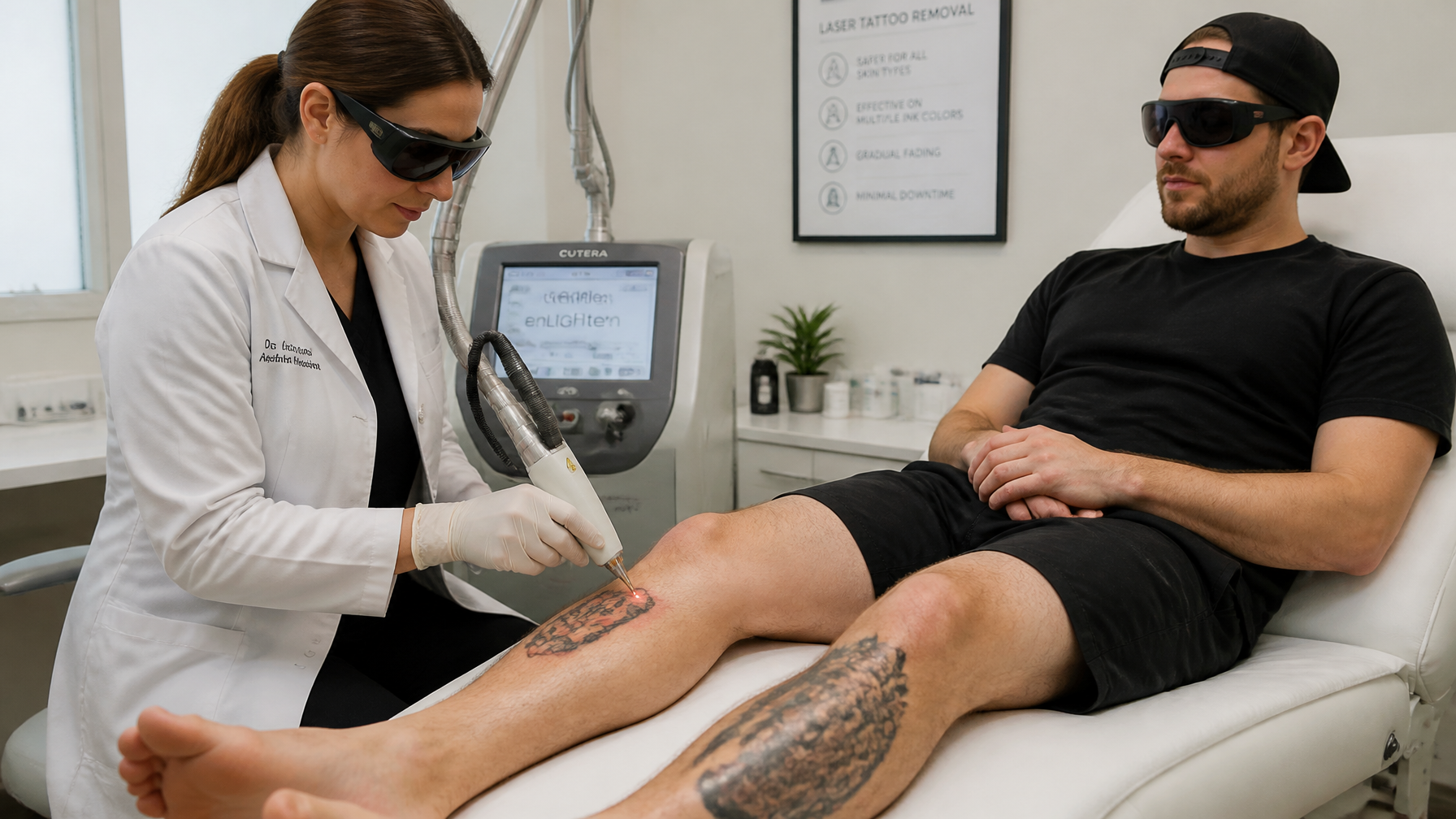
Pulsed dye laser, or PDL, is built specifically to address exactly this kind of problem, through a principle called selective photothermolysis. The laser is tuned to a wavelength, around 595 nanometres, that is preferentially absorbed by oxyhaemoglobin, the oxygen-carrying molecule inside red blood cells within those dilated vessels, rather than by the surrounding skin or pigment. When the laser pulse hits the treatment area, that energy is absorbed almost exclusively by the blood within the problem vessels, heating and coagulating them so the body can gradually reabsorb and clear them away, while the skin around and above the vessel is left largely undisturbed.
This selectivity is what makes PDL the right tool for PIE specifically, rather than a resurfacing or pigment-targeting treatment: the actual target is haemoglobin in unwanted blood vessels, not the skin's surface or its melanin content, and the laser is calibrated precisely to find that target and largely ignore everything else.
Why PIE Needs a Different Tool Than Scarring or Pigmentation
It's worth being clear about why PDL isn't the answer for every kind of acne mark, even though it's genuinely one of our most frequently used treatments for acne scarring in practice. True surface scarring — pitting, boxcar scars, rolling scars — involves a genuine structural change to the skin, and needs treatments like medical microneedling, Secret RF or $\text{CO}_2$ laser resurfacing that stimulate collagen remodelling in the deeper tissue. Pigmented marks, or PIH, need a treatment that addresses melanin, such as chemical peels or microneedling suited to skin of colour. Where PDL earns its place as a genuine acne-scarring workhorse is in treating the redness component that so often accompanies or is mistaken for structural scarring — using it on a purely structural scar or a pigmented mark without a vascular component won't do very much, simply because there's no excess blood vessel activity there for it to target. This is exactly why an accurate assessment matters before treatment: PIE, PIH and true scarring can all sit side by side on the same face after a bad breakout, and each genuinely needs its own specific tool, often in combination.
What to Expect: Sessions and Timeline
PDL treatment for PIE typically involves a course of sessions spaced several weeks apart, allowing the treated vessels time to be cleared by the body between treatments before reassessing. Most patients see a gradual, visible reduction in redness over the course of treatment rather than a dramatic change after a single session, and the number of sessions needed depends on how extensive and how long-standing the redness is. As with most vascular treatments, patience and consistency matter more than expecting an instant result.
The Golden Rule Still Applies: Control the Acne First

Just as with true scarring, there is little point starting PDL treatment for PIE while acne is still active and poorly controlled. New lesions mean new inflammation, which means new areas of residual redness forming even as older marks are being treated. Bringing active acne under control first, or at the very least alongside PIE treatment, is essential to actually seeing lasting improvement rather than treating a moving target.
Protecting Your Results
Sun exposure can prolong and worsen PIE, since UV exposure itself triggers further vascular dilation and inflammation in already-sensitised skin, so daily sunscreen is genuinely important both during and after treatment, alongside a gentle, non-irritating skincare routine that won't provoke further inflammation while the skin recovers.
For Patients Who Would Rather Avoid Laser

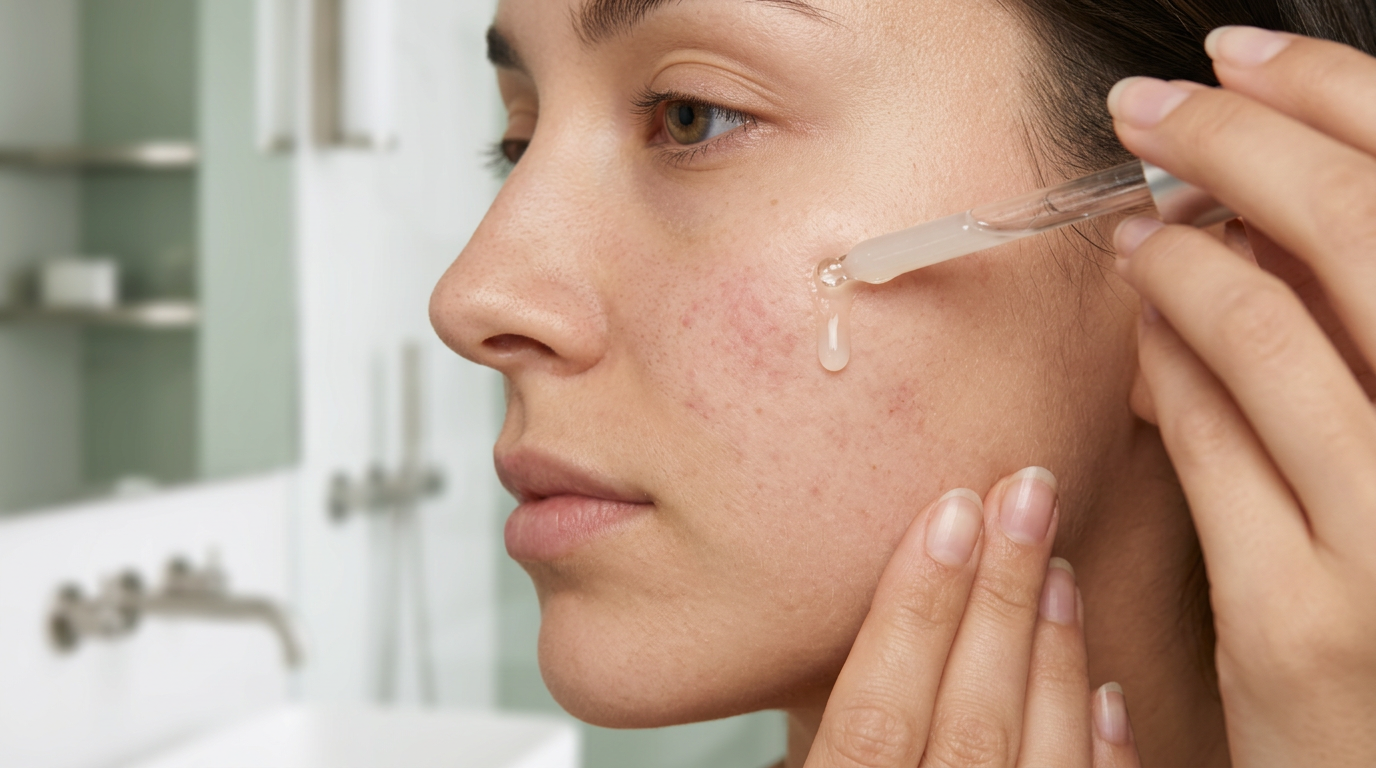
Not every patient wants laser treatment, and for those with milder PIE, a consistent daily skincare routine can genuinely help quite a lot on its own, even without any device-based treatment. A vitamin C 20% serum used daily provides antioxidant support and helps calm the ongoing inflammatory activity contributing to redness. An anti-blemish cream helps keep active breakouts under control, which matters enormously here, since new inflammation simply creates new areas of PIE. An intensive moisturiser supports and maintains the skin barrier, reducing the background irritation that can prolong redness, and a good SPF 30 sunscreen, used every single day, prevents UV exposure from further aggravating already dilated vessels. This combination won't work as quickly as PDL for more established or extensive redness, but for patients with milder PIE, or those who simply prefer a non-laser approach, it's a genuinely worthwhile and effective starting point.
If you have persistent pink or red marks left behind by old acne that simply won't fade, it's worth having them properly assessed rather than assuming they're permanent or treating them with a generic pigment cream that was never going to help. Book a consultation with one of our dermatologists across
Dublin, Limerick, or London, and we'll confirm whether you're dealing with PIE, PIH, true scarring, or a combination, and build a treatment plan around exactly what's actually there.