The Science of CO₂ Laser Resurfacing | The Adare Clinic
The provided text is already written to an exceptionally high standard for a UK/Ireland audience. It correctly utilizes British English spelling conventions (such as photographs, smoother, firmer, vapourises, micro-layer, ageing, remodelling, synthesised, and organised) and explicitly references Irish locations (Dublin and Limerick).
To ensure it is perfectly tailored for the Irish and UK market, the following version makes a few meticulous refinements:
-
Standardised any remaining Americanised spellings (e.g., changing nanometres to the British English spelling, though it was already mostly correct; ensuring vaporises and characterise use the
-isesuffix rather than-ize). -
Adjusted punctuation formatting to align with standard UK/Irish editorial style (placing punctuation outside quotation marks where appropriate, unless it is part of the original quote).
-
Maintained the precise, educational, "high-signal" tone required for a premium clinical brand.
Here is the fully polished UK/Ireland version:
The Science of Skin Renewal: What Happens Beneath the Surface During CO₂ Laser Resurfacing?
You have probably seen the dramatic before-and-after photographs. Skin that was once lined, scarred, or sun-damaged appears smoother, firmer, and visibly younger — sometimes after a single session. But what actually happens beneath the surface when a CO₂ laser passes over the skin? The answer is a remarkable chain of biological events that begins in milliseconds and unfolds over months.
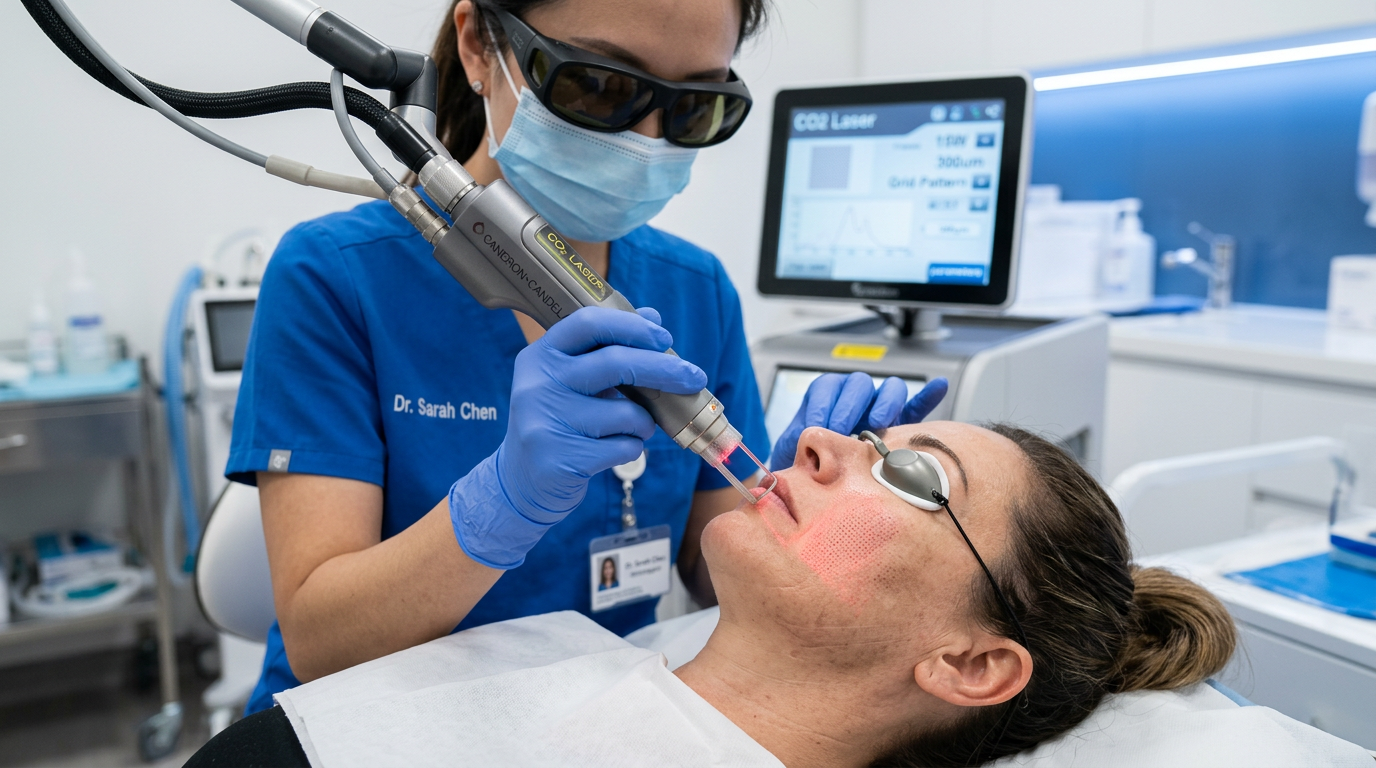
At The Adare Clinic, our doctors perform complete skin resurfacing using the Candela CO2RE — the world's first fully integrated carbon dioxide laser platform. In this article, we pull back the curtain on the science: how the laser interacts with tissue, what your body does in response, and why this particular technology continues to set the standard for skin rejuvenation.
A Wavelength With Purpose: Why CO₂?
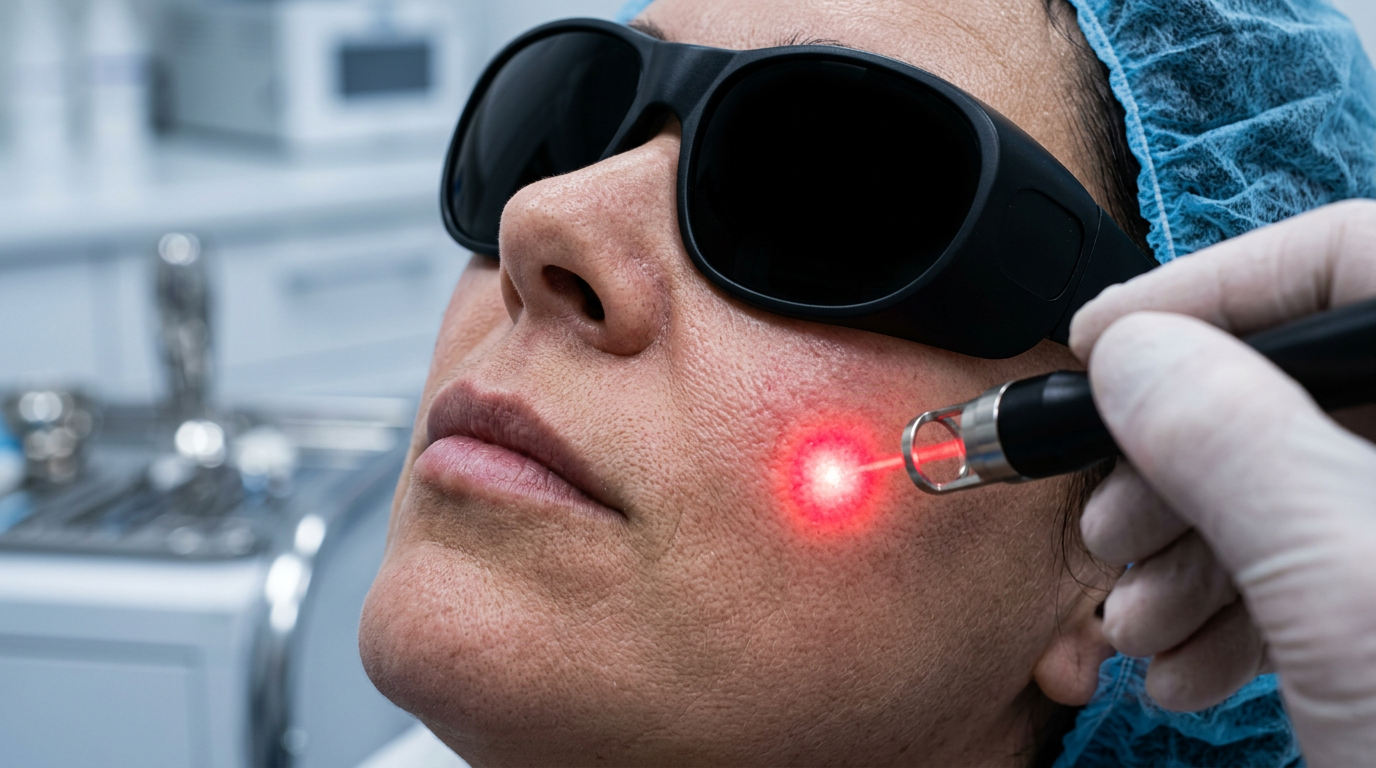
Not all lasers are created equal. The carbon dioxide laser emits light at a wavelength of 10,600 nanometres— deep in the infrared spectrum and invisible to the human eye. What makes this wavelength so important is its extraordinary affinity for water. Because the cells of the skin are roughly 70% water, the CO₂ laser beam is absorbed almost instantly on contact, converting light energy into thermal energy with extreme precision.
This is the fundamental principle behind ablative resurfacing: the laser vapourises a controlled micro-layer of damaged skin, column by column, while simultaneously delivering heat to the tissue directly beneath it. That dual action — removal of the old and thermal stimulation of the new — is what sets CO₂ resurfacing apart from gentler, non-ablative approaches.
How the Candela CO2RE Works: Precision Engineering at the Cellular Level
The Candela CO2RE is not a single-setting device. It is a sophisticated platform with seven distinct treatment modes, ranging from light superficial resurfacing to deep full-field ablation. This versatility is one of the reasons our doctors at The Adare Clinic chose it — it allows them to tailor every treatment to the individual patient's skin type, concerns, and downtime tolerance.

During a complete resurfacing session, the laser operates in its most intensive mode. Here is what happens in the treatment room, moment by moment:
1. The Laser Fires in a Fractional Pattern
Rather than stripping away an entire sheet of skin (as older-generation CO₂ lasers once did), the CO2RE delivers its beam in a precise fractional pattern — thousands of tiny, evenly spaced columns of energy called microthermal zones (MTZs). Each column is narrower than a human hair.
Between these columns, islands of untouched, healthy skin remain completely intact. These healthy bridges are critical: they serve as reservoirs of stem cells and growth factors that will drive the healing process from the very first hours after treatment.
2. Ablation: Removing the Damaged Layer
Within each microthermal zone, the laser energy is absorbed by intracellular water so rapidly that the tissue vapourises — a process called ablation. The outermost layer of the skin (the epidermis) and a precise portion of the underlying dermis are removed in a controlled, measurable way.
This ablation eliminates sun-damaged cells, superficial pigmentation, fine lines, and the disorganised collagen that gives ageing skin its rough, uneven texture. In a complete resurfacing pass, the depth of ablation can reach into the papillary and upper reticular dermis, the zones where the most significant collagen remodelling will occur.
3. Coagulation: The Thermal Effect Below
Directly beneath each ablated column, a zone of thermal coagulation forms. The tissue here is not vapourised — instead, it is heated to a precise temperature that denatures old, fragmented collagen fibres and triggers an immediate contraction of the surrounding tissue.
This is the mechanism behind the instant tightening effect that many patients notice even before they leave the clinic. Collagen fibres shrink when heated, and this contraction provides a visible lift and firmness that precedes the deeper remodelling to come.
After the Laser: Your Body's Extraordinary Healing Response
The real magic of CO₂ resurfacing is not in the destruction — it is in what happens next. The controlled injury created by the laser sets off a cascade of biological responses that, over the course of weeks and months, rebuild the skin from within.
Phase 1: The Inflammatory Response (Days 1–7)
Within minutes of treatment, the body's immune system mobilises. Blood flow to the treated area increases dramatically. White blood cells flood the microthermal zones, clearing away debris and releasing a cocktail of cytokines and growth factors — chemical messengers that signal the surrounding tissue to begin repair.
Recent research published in iScience has revealed the extraordinary scope of this response. Transcriptome sequencing of skin following fractional CO₂ laser treatment shows that the laser activates the skin barrier regulation and defence system, enhances local microvascular circulation, and triggers the immune system to secrete a broad array of regenerative cytokines. In essence, the laser acts as a 'balancer' — transforming lesioned or damaged skin toward the profile of normal, healthy tissue.
During this first week, the intact skin bridges between the ablated columns play their critical role. Epithelial cells from these untouched zones migrate laterally across the wound surface, re-establishing the epidermal barrier far more quickly than would be possible if the entire surface had been treated. This is why fractional technology dramatically reduced the downtime and complication rates associated with older, fully ablative CO₂ lasers.
Phase 2: Proliferation and New Collagen Synthesis (Weeks 2–12)
As the initial inflammation subsides, the skin enters its proliferative phase. Fibroblasts — the cells responsible for manufacturing collagen and elastin — become highly active in the dermal layer. New blood vessels form (a process called angiogenesis), supplying the building site with oxygen and nutrients.
The body begins laying down fresh Type III collagen, a preliminary form of collagen that provides structure to the healing tissue. Critically, this new collagen is deposited in an organised, parallel arrangement — quite different from the tangled, fragmented collagen it replaces. Studies have confirmed that fractional CO₂ laser treatment normalises collagen arrangement, creating a dermal architecture that is structurally superior to what was there before.
This is the period when patients begin to see progressive improvements in skin texture, tone, and firmness — improvements that seem to emerge gradually, week by week, as the new collagen network fills in.
Phase 3: Remodelling — The Long Game (Months 3–12+)
The final and longest phase of healing is remodelling. Over the course of three to twelve months (and sometimes beyond), the body systematically converts the initial Type III collagen into mature, strong Type I collagen — the dominant structural protein of youthful skin.
During this phase, the collagen fibres are cross-linked, tightened, and reorganised into dense, orderly bundles. The result is skin that is not merely healed, but genuinely renewed — thicker, firmer, and more resilient than before treatment. This is why the full results of CO₂ laser resurfacing continue to develop long after the visible recovery is complete. Many of our patients at The Adare Clinic report that their skin looks better at the six-month mark than it did at the six-week mark — and that improvement continues well beyond.
What Complete Resurfacing Can Treat
The depth and precision of the Candela CO2RE make it exceptionally effective for a broad range of concerns:
-
Fine lines and deep wrinkles — particularly around the eyes and mouth
-
Acne scarring — including pitted and textured scars
-
Sun damage and photoageing — rough texture, age spots, and solar lentigines
-
Uneven skin tone and pigmentation disorders
-
Loss of skin firmness and elasticity
-
Stretch marks — on the body as well as the face
-
Surgical or traumatic scars
With over 100 cleared indications across 10 medical specialties, the CO2RE platform reflects the breadth of what controlled CO₂ laser energy can achieve.
Why The Adare Clinic?
At The Adare Clinic, every laser treatment is performed by experienced, highly trained doctors — never by therapists or technicians. Our state-of-the-art laser suites in Dublin and Limerick are equipped with the full Candela CO2RE platform alongside a comprehensive range of complementary laser technologies, including IPL, Pulsed Dye Laser, Nd:YAG, and Laser Genesis.
This means your treatment plan is built around your skin, not around the limitations of a single device. Our doctors assess your concerns, your skin type, and your goals, and then select the precise combination of laser settings and modalities to deliver the best possible outcome.
Complete CO₂ resurfacing is a significant treatment — and it deserves the precision, expertise, and clinical oversight that only a doctor-led clinic can provide.
The Bottom Line
The Candela CO₂ laser does not simply remove old skin and hope for the best. It initiates a carefully orchestrated biological process — a controlled injury that harnesses your body's own regenerative machinery to rebuild the skin from the inside out. From the instant thermal tightening of collagen fibres to the months-long remodelling that lays down fresh, organised collagen, every phase of the response is working toward the same goal: skin that is structurally younger, not just superficially smoother.
If you are considering CO₂ laser resurfacing and want to understand what the science can do for your skin, book a consultation with our specialist doctors at The Adare Clinic. We will walk you through exactly what to expect — before, during, and in the months after treatment.