The Hidden Melasma Trigger Nobody Warns You About: Heat
"I never miss my SPF, so why is my melasma still getting worse?" It's one of the most common questions we hear from patients at The Adare Dermatology Clinic, Chelsea. The answer, more often than not, comes down to a trigger patients rarely think to ask about: heat.
Sun protection is essential in managing melasma, and we'll come back to it. But treating melasma as a purely sun-related condition misses a large piece of the picture. Below, we explain what melasma really is, why it develops, and why temperature — not just UV exposure — deserves just as much of your attention.
Melasma, Defined
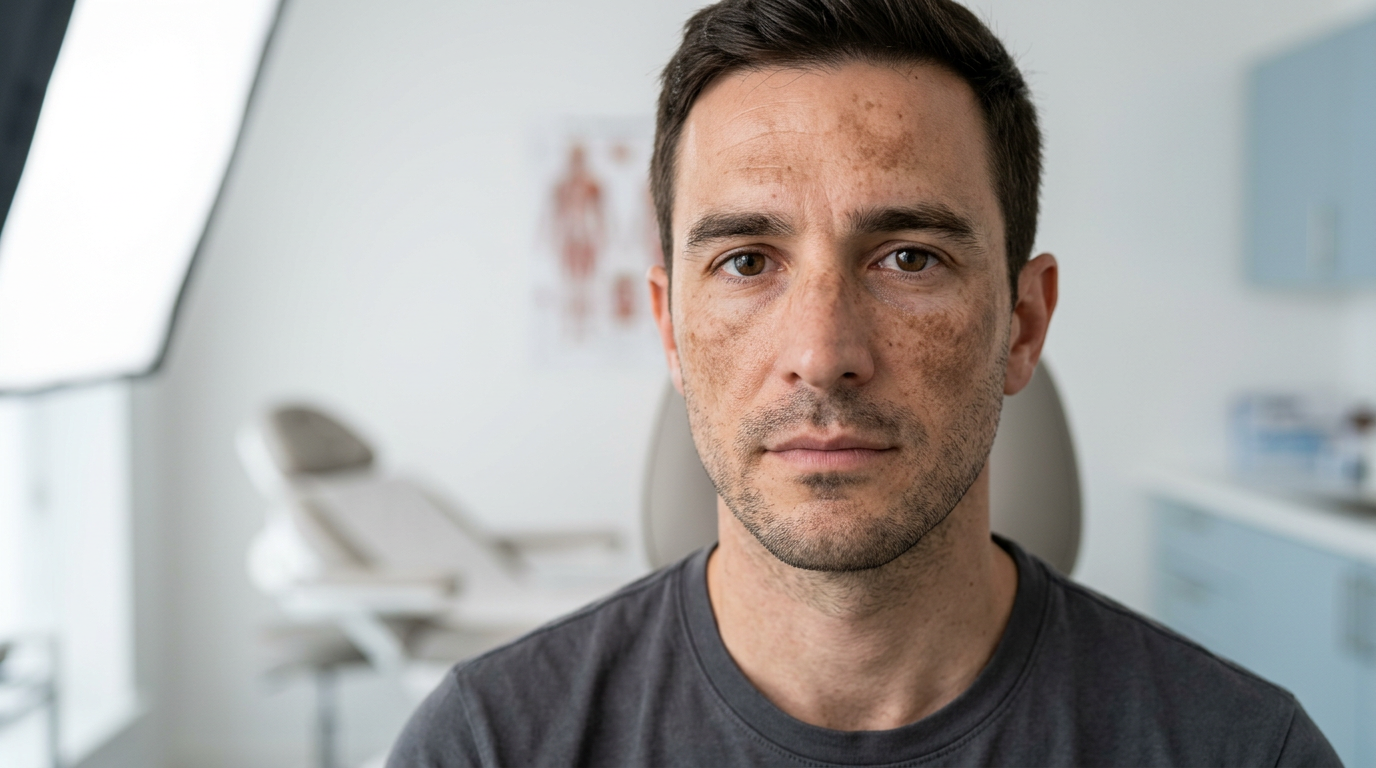
Melasma is diagnosed clinically: an experienced dermatologist can typically identify it by examining the skin, without needing further testing. It shows up as symmetrical brown or greyish-brown patches, usually across the cheeks, forehead, nose, chin, and upper lip.
A few facts worth knowing about who it affects. Melasma is considerably more common in people with darker skin tones (Fitzpatrick skin types III to VI), and women are affected far more often than men — largely due to hormonal factors. Men can and do develop melasma too, and it should never be ruled out purely on the basis of gender.
One pattern we see regularly, and one that's often overlooked, is extra-facial melasma in postmenopausal women — pigmentation appearing outside the classic facial areas, such as on the neck, chest, or arms. It's a good reminder that melasma isn't static; it can shift in presentation as a woman moves through different life stages.
What's Actually Driving Melasma?

Three factors sit at the core of most melasma cases we see in clinic:
Family history. A genetic predisposition is common, and patients with relatives who have melasma often develop it earlier or find it more persistent.
Hormones. Pregnancy, the contraceptive pill, and hormone replacement therapy are all recognised drivers, which is why melasma is sometimes nicknamed the "pregnancy mask" — although it's by no means confined to pregnancy.
The aging process. This is the point we most want patients to understand: melasma is, at its core, a disorder of aging skin. It doesn't simply appear once and fade away — it reflects ongoing changes in melanocyte (pigment cell) behaviour, and left unmanaged, it tends to become more stubborn over time. That's exactly why we push for an early, proper skincare routine rather than a reactive one once pigmentation is already well established.
Building a Melasma-Proof Routine
Given that melasma is a long-term condition, the daily basics matter more than any single in-clinic procedure. Here's what we build into every melasma patient's routine at our Chelsea clinic:
Broad-spectrum SPF50+, applied daily, without exception. This is non-negotiable. Where possible, we recommend a formula that also filters High Energy Visible (HEV) light, sometimes called blue light — not just UVA and UVB. Research increasingly shows that visible light can stimulate pigment production in melasma-prone skin, so UV filtering alone isn't enough.
This matters enormously here in London, and across the UK more broadly, between March and September, when the UV index is regularly above 3. Grey skies and cooler air lead many people to relax their sun protection during these months, but UV index — not sunshine or temperature — is what determines risk, and London sits well above the "protection needed" threshold for most of the spring and summer.
Vitamin C. As an antioxidant, it helps counter the oxidative stress that fuels pigment production, and pairs well with daily sunscreen.
Glycolic and mandelic acids. These exfoliating acids encourage turnover of pigmented surface cells and help other active ingredients penetrate more effectively.
Retinoids, provided the patient isn't pregnant or breastfeeding. These support cell renewal and can gradually fade existing pigmentation, but we always confirm suitability before recommending them.
Why Heat Deserves Just as Much Attention as Sun
Here's the part of melasma management that's easy to miss: melanocytes in melasma-affected skin are inherently unstable. They're more reactive than melanocytes in unaffected skin, and heat alone — independent of any UV exposure — can be enough to set them off. This is why a patient can be diligent about sunscreen and still see their melasma flare after activities that simply warm the skin.
This shapes how we approach treatment in clinic:
We're deliberate about heat-based procedures. Treatments like Intense Pulsed Light (IPL) and laser therapy rely on generating heat within the skin. In non-melasma patients, this is generally straightforward, but in melasma-prone skin, that same heat can destabilise melanocytes and trigger a pigmentation rebound — sometimes leaving patients worse off than before treatment. Any energy-based device used on a melasma patient needs careful settings, appropriate cooling, and close clinical judgement, ideally from a dermatologist with specific experience treating pigmentary conditions.
Saunas and steam rooms carry real risk. Both raise skin and core body temperature substantially, and for melasma-prone patients, that alone can be enough to provoke a flare — no sun exposure required.

For our London patients in particular, this extends into everyday city life. A gym sauna session after a workout, a hot yoga class, a long soak in a hot bath after a busy day, standing over a hob while cooking, or blow-drying hair close to the scalp can all raise skin temperature enough to act as a trigger. None of these need to be cut out entirely — but melasma patients benefit from knowing they're a factor and adjusting where it's practical to do so.
Practical Ways to Keep Your Skin Cool
A few simple adjustments go a long way:
Choose lukewarm water over hot for showers and baths, especially if your skin tends to flush or feel warm easily.
If sauna sessions, steam rooms, or hot yoga are part of your routine, consider dialling back frequency during periods when your melasma feels more active, and follow up with a cool rinse and a gentle, fragrance-free moisturiser.
Step back from direct heat when cooking where you can, and consider a lightweight mineral sunscreen as an added barrier, which may also help with heat-related reactivity.
Keep a facial mist or a chilled roller nearby for hot days or post-exercise, and use it to bring your skin's temperature down promptly.
Always flag your melasma history to any practitioner before an energy-based skin treatment — even one unrelated to pigmentation — so they can adjust their approach accordingly.
Managing Melasma Takes More Than Sunscreen
Melasma is shaped by genetics, hormones, and the natural aging process, and it can be triggered by far more than UV light alone. Heat — whether from a sunny afternoon, a sauna, a laser device, or simply a hot shower — can undo weeks of careful skincare if it's not accounted for.
The most reliable path forward combines daily SPF50+ with HEV protection, antioxidant and exfoliating actives, retinoids where appropriate, and genuine awareness of heat as a trigger in its own right.
If your melasma isn't responding the way you'd expect, or you'd simply like a personalised plan, our dermatology team at The Adare Dermatology Clinic, Chelsea would be glad to assess your skin and guide you toward calmer, more even-toned results. Book a consultation with us to get started.