Sebaceous Hyperplasia: Causes, Symptoms & Removal | UK Guide
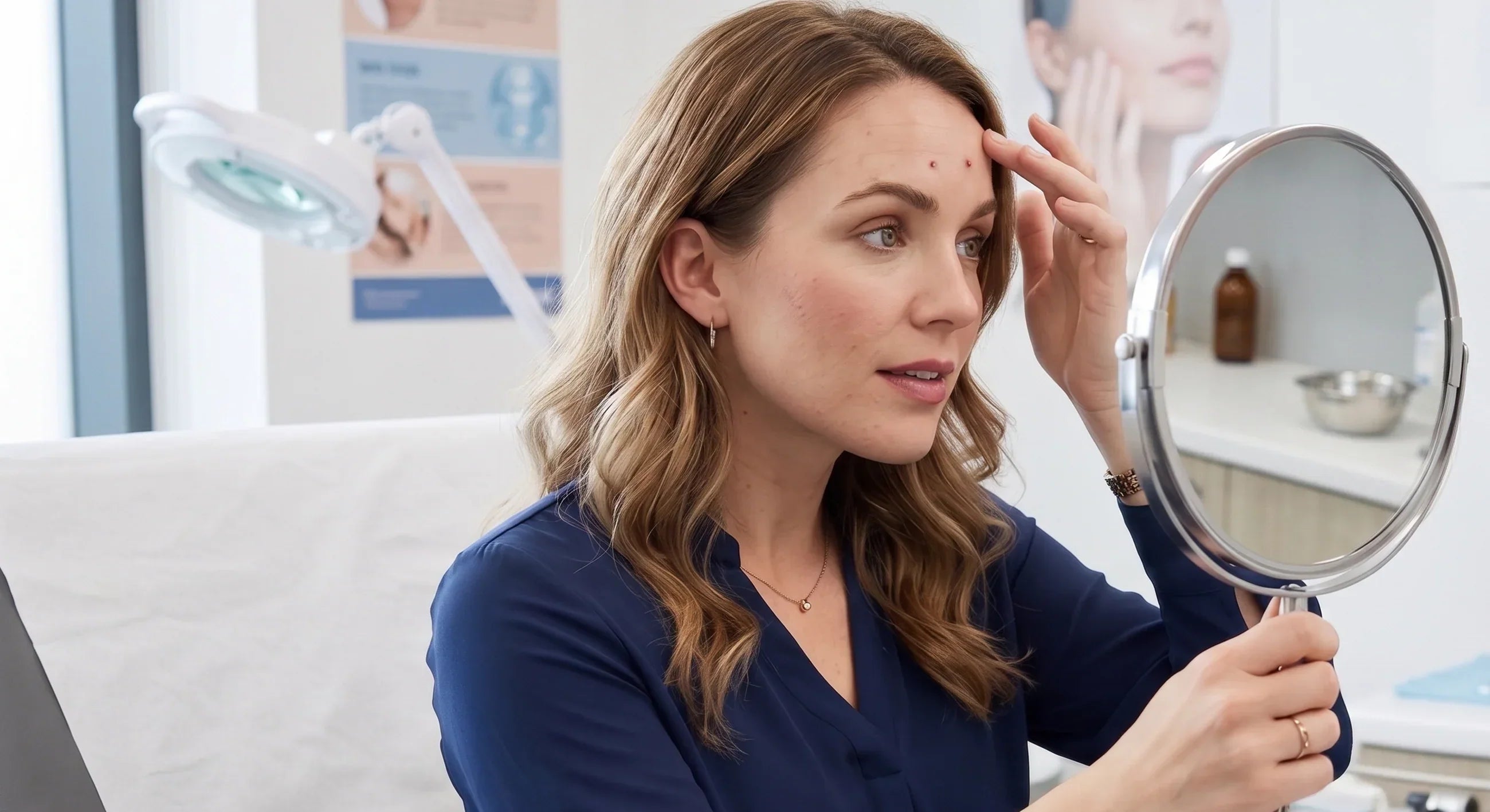
You glance in the mirror one morning and notice something new on your forehead—a small, soft, yellowish bump with a slight dip in the middle. It doesn't hurt. It isn't growing rapidly. But it's there, and it wasn't a year ago. If this sounds familiar, you may be looking at sebaceous hyperplasia, one of the most common and most misunderstood skin findings in adults.
These bumps are harmless, but they're often mistaken for something more concerning, and many people spend years not knowing what they are or why they keep appearing. Here's a thorough look at what sebaceous hyperplasia actually is, why it happens, and what you can do about it.
What Is Sebaceous Hyperplasia?

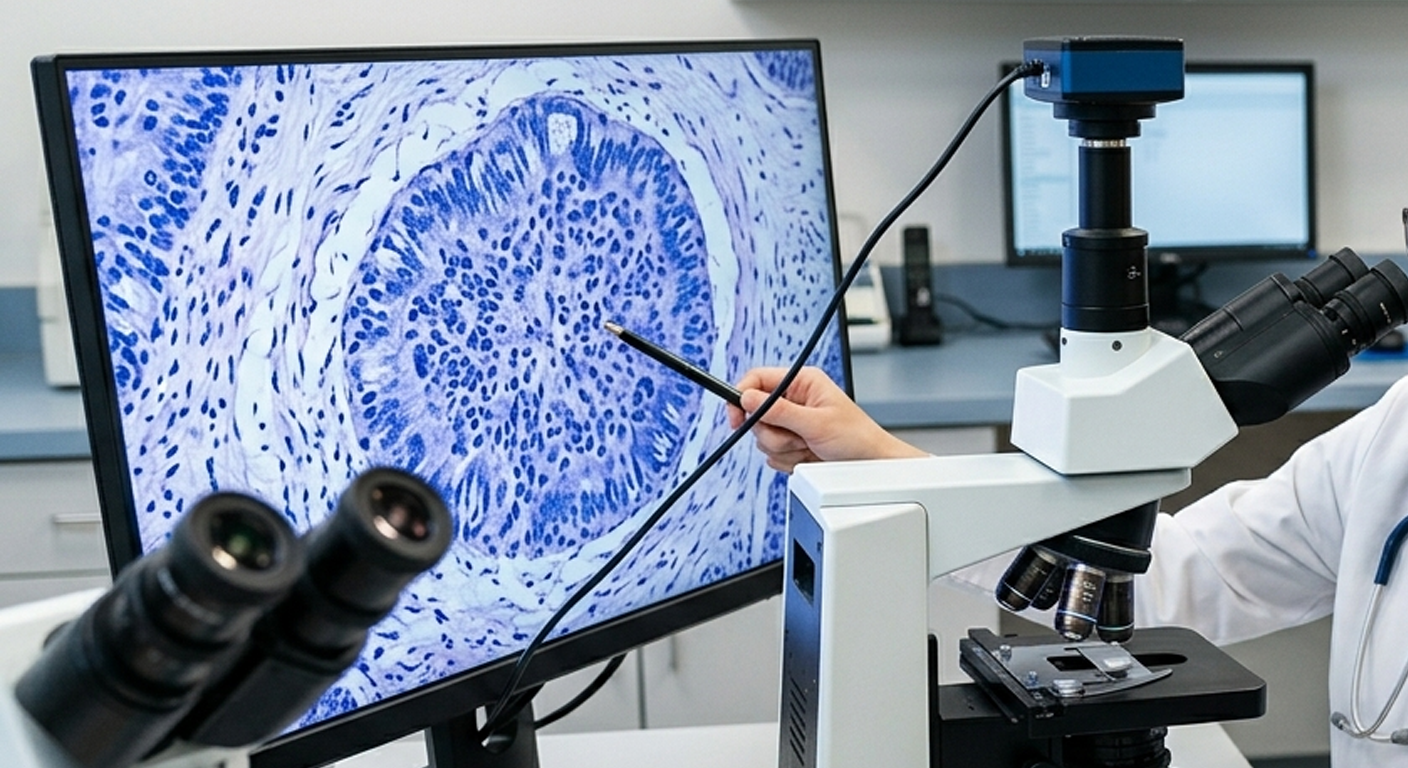
Sebaceous hyperplasia is a benign enlargement of the sebaceous (oil-producing) glands in the skin. The word hyperplasia simply means an increase in the number of cells in a tissue, so sebaceous hyperplasia is essentially an overgrowth of an otherwise normal gland.
Each lesion is technically a cluster of enlarged sebaceous lobules surrounding a single hair follicle opening. Under the surface, the gland balloons outward, and from above you see a soft papule that often has:
-
A yellowish or skin-coloured hue
-
A smooth, dome-shaped surface
-
A central dimple or umbilication where the follicle empties
-
A diameter typically between 1 and 4 millimetres
-
A tendency to appear on the forehead, cheeks, nose, and occasionally the chest
The bumps don't itch, hurt, or bleed under normal circumstances. They're so common in adults over 40 that many dermatologists consider them a routine part of skin ageing rather than a "condition" in the medical sense.
Why Does It Happen?
Sebaceous glands are under tight hormonal control, particularly by androgens. During puberty, androgen levels surge and the glands enlarge dramatically—this is one of the reasons teenagers develop oily skin and acne. After puberty, the glands stabilise, but they don't stop responding to hormones, sun exposure, and the slow biological changes of ageing.
Several factors contribute to the development of sebaceous hyperplasia:
-
Ageing: As skin ages, the turnover of sebaceous gland cells slows down. New cells continue to be produced at roughly the same rate, but old cells aren't shed efficiently, so the gland gradually expands. This is why the condition is rare before age 30 and very common by age 50.
-
Genetics: Some people develop dozens of these bumps in their 30s, while others reach their 70s with only one or two. Family history plays a clear role, though the specific genes involved aren't fully mapped.
-
Chronic sun exposure: Ultraviolet radiation damages the structural proteins around the glands and accelerates the photoageing process. Sebaceous hyperplasia is more common in sun-exposed areas, and people with significant lifetime sun damage tend to develop more lesions.
-
Immunosuppression: Patients taking long-term immunosuppressive medications—particularly ciclosporin after organ transplantation—can develop widespread, sometimes larger sebaceous hyperplasia. This form can appear earlier in life and is often more disfiguring.
-
Hormonal factors: Because androgens drive sebaceous gland activity, conditions or medications that shift androgen balance may influence the development of these lesions, though the link is less direct than with acne.
Where It Tends to Appear
The classic locations are the forehead, temples, cheeks, and nose—the same areas where sebaceous glands are most densely packed. Less commonly, lesions appear on the chest, areola, scrotum, or vulva. When they show up on the genital skin, they're often called Fordyce spots, which are a closely related variant rather than a different condition.
People with oily or combination skin tend to develop more sebaceous hyperplasia, simply because they have more active glands to begin with.
The Most Important Question: Is It Cancer?
This is the question that brings most people to their GP or dermatologist. Sebaceous hyperplasia is benign, but it can closely resemble basal cell carcinoma (BCC), the most common skin cancer. Both can present as small, pearly, dome-shaped bumps on sun-exposed skin in older adults.
Features that favour sebaceous hyperplasia over basal cell carcinoma include:
-
A clear central dimple or umbilication
-
A soft, yellowish colour rather than translucent pearliness
-
Multiple similar lesions across the face
-
No history of bleeding, crusting, or non-healing ulceration
-
Stability over months or years without growth
Features that should prompt evaluation by a doctor:
-
A pearly or translucent appearance
-
Visible small blood vessels crossing the surface (telangiectasia)
-
Recent growth or change
-
Ulceration, bleeding, or crusting
-
A solitary lesion in a sun-damaged area
Dermatologists often use dermoscopy, a handheld magnifying device with polarised light, to distinguish the two. Sebaceous hyperplasia typically shows a pattern of yellowish lobules around a central crater—sometimes described as a "bonbon" or "cumulus cloud" appearance—while basal cell carcinoma shows characteristic arborising vessels. When there's any doubt, a small biopsy resolves the question definitively.
There's also a rare but important condition called sebaceous carcinoma, which is a malignant tumour of the sebaceous gland. It's uncommon and usually looks more aggressive than sebaceous hyperplasia, but it's another reason any rapidly growing or unusual lesion deserves professional evaluation.
Do You Need to Treat It?
From a medical standpoint, no. Sebaceous hyperplasia is harmless and doesn't progress to anything dangerous. Most doctors will reassure patients and leave the lesions alone.
Because it is a benign cosmetic issue, treatment is generally not available on the NHS. If you wish to have them removed for cosmetic reasons—such as when lesions cluster on the forehead or cheeks, or if they are large enough to be irritated by shaving—you will usually need to see a private dermatologist or cosmetic clinic.
Treatment Options
There's no single best treatment—each approach has tradeoffs in terms of effectiveness, scarring risk, and cost. Common private options include:
-
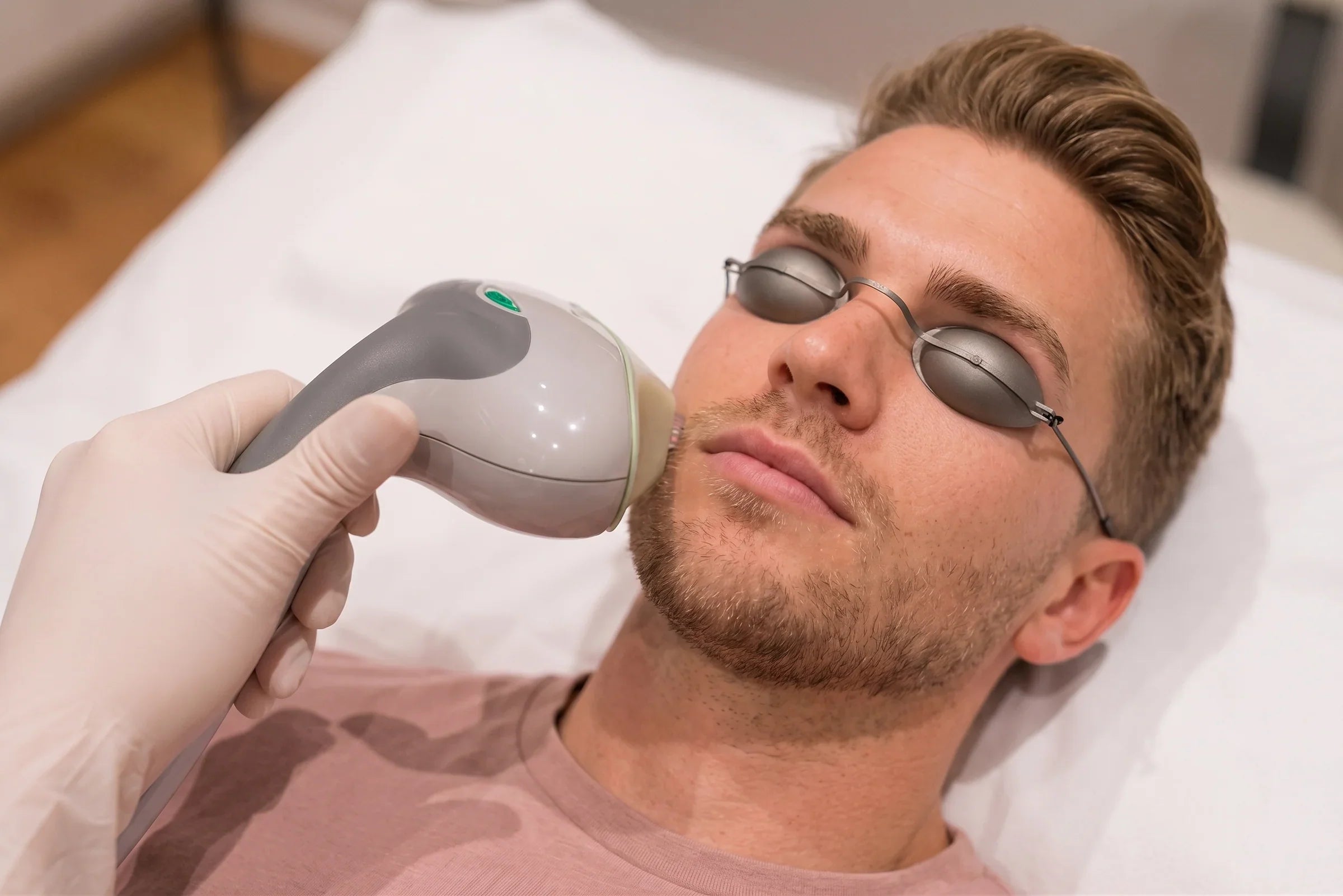
Electrocautery or electrodesiccation: A fine electric needle is used to gently destroy the enlarged gland. Quick and effective for individual lesions. The main risks are temporary redness and, occasionally, a small flat scar or pigment change.
-
Laser treatment: Several lasers can target sebaceous hyperplasia, including pulsed-dye lasers, erbium:YAG lasers, and $CO_2$ lasers. Lasers tend to produce cleaner cosmetic results but are more expensive and may require multiple sessions.
-
Cryotherapy: Liquid nitrogen can freeze the lesions, though this technique carries a higher risk of leaving a light spot (hypopigmentation), particularly on darker skin tones. It's used less commonly than other methods for facial lesions.
-
Topical retinoids: Prescription retinoids like tretinoin or adapalene can modestly reduce the appearance of small lesions over months of consistent use. They don't usually eliminate established bumps but may slow the development of new ones.
-
Oral isotretinoin: Reserved for severe or widespread cases, especially in transplant patients on ciclosporin. It shrinks sebaceous glands throughout the body but has significant side effects and requires strict medical monitoring and blood tests. Lesions often return after treatment ends.
-
Chemical cautery: Trichloroacetic acid (TCA) applied precisely to individual lesions can destroy the gland tissue. This is a technique-dependent treatment best done by an experienced clinician.
-
Photodynamic therapy (PDT): A photosensitising cream is applied to the skin and activated with a specific light source. It can be useful for patients with extensive lesions, but it is costly and availability is limited.
Important Caveat: Even when treated successfully, new lesions can develop elsewhere on the skin. Treatment removes individual bumps but doesn't change the underlying biology of your sebaceous glands.
What Doesn't Work
A few things worth mentioning, since they come up constantly in online advice:
-
Squeezing or picking doesn't drain these bumps. There's nothing inside to extract—it's enlarged gland tissue, not a clogged pore. Picking causes inflammation, scarring, and sometimes infection.
-
Over-the-counter acne treatments like benzoyl peroxide and salicylic acid don't shrink sebaceous hyperplasia. These lesions aren't acne.
-
"Detox" or pore-cleansing products have no effect on gland size.
-
Home cautery or plasma pens sold online can cause serious burns, permanent hyperpigmentation, and severe scarring. This is a treatment for trained professionals only.
Prevention and Long-Term Management
You can't fully prevent sebaceous hyperplasia, but a few habits may slow its progression:
-
Daily broad-spectrum sunscreen: Reduces the photoageing and UV damage that contributes to gland enlargement.
-
A consistent retinoid routine: Using an over-the-counter retinol or a prescription retinoid in your 30s and beyond supports healthier sebaceous gland cell turnover.
-
Regular skin checks: Having your GP or a private dermatologist look at any new or changing spots helps distinguish benign lesions from anything more concerning, especially if you have a history of sun exposure.
The Bottom Line
Sebaceous hyperplasia is the skin doing exactly what it's designed to do, just a little too enthusiastically and a little too inefficiently as the years pass. It's harmless, common, and entirely manageable. The most important thing is knowing what it is so you don't worry unnecessarily—and so you recognise when a bump on your face doesn't fit the pattern and deserves a closer look.
If you're unsure about a lesion, book an appointment with your GP. A quick evaluation can settle the question, and that peace of mind is worth far more than any cosmetic treatment.