Reversing Sun Damage: The Ultimate UK Guide to LimeLight IPL
A British summer brings with it pub gardens, coastal escapes, and plenty of well-deserved vitamin D. But along with those golden memories often comes an unwelcome souvenir: sun damage. If you've noticed new freckles, stubborn brown spots, persistent redness, or an overall uneven complexion after months of UV exposure, you're not alone.
The good news? Modern aesthetic technology offers effective solutions to reverse these visible signs of photodamage—and one of the most popular treatments available across UK clinics today is LimeLight IPL.
In this comprehensive guide, we'll explore everything you need to know about LimeLight IPL: how it works, what it treats, what to expect during and after treatment, and why it has become a go-to option for anyone looking to restore their skin's clarity and youthfulness.
Understanding Sun Damage: What Happens to Your Skin
Before diving into treatment options, it's important to understand what sun damage actually does to your skin. Ultraviolet (UV) radiation from the sun penetrates the skin's layers, triggering a cascade of changes at the cellular level.

-
Hyperpigmentation: This occurs when UV exposure stimulates melanocytes—the cells responsible for producing melanin—to go into overdrive. This results in sun spots, age spots, and freckles that can appear anywhere the skin has been repeatedly exposed to sunlight. These flat, brown patches often show up on the face, chest, hands, and arms.
-
Vascular changes: This is another common consequence. Sun exposure damages the walls of small blood vessels, causing them to dilate and become visible near the skin's surface. This manifests as facial redness, broken capillaries, and can exacerbate conditions like rosacea. Many people notice increased redness on their cheeks, nose, and chin after years of cumulative exposure.
-
Collagen breakdown: This is perhaps the most significant long-term effect. UV radiation decreases collagen production and damages existing collagen fibres, leading to fine lines, wrinkles, and a loss of skin firmness. This process, known as photoageing, can make skin look older than it actually is.
The combination of these effects creates what dermatologists call "photodamage"—a mottled, uneven complexion with visible discoloration, texture changes, and premature ageing signs.
What Is LimeLight IPL?
LimeLight is a medical-grade Intense Pulsed Light (IPL) device developed by Cutera, a leading global manufacturer of aesthetic laser and light-based technologies. Unlike traditional lasers that emit a single wavelength of light, IPL delivers multiple wavelengths simultaneously, allowing the treatment to target different skin concerns in a single session.
The technology behind LimeLight makes it particularly versatile. It can address both pigmented lesions(brown spots, sun spots, freckles) and vascular lesions (redness, broken capillaries, rosacea) by targeting the specific chromophores—or colour-absorbing molecules—in the skin. For pigmentation, the light targets melanin; for redness, it targets haemoglobin in the blood vessels.
What sets LimeLight apart from other IPL devices is its ability to be precisely customised for different skin types and concerns. The treatment settings can be adjusted based on your Fitzpatrick skin type (a classification system that categorises skin by colour and response to sun exposure), your sun exposure history, and your specific treatment goals.
How LimeLight IPL Works: The Science Behind the Treatment
The principle behind LimeLight IPL is selective photothermolysis—a technical term that essentially means using light to selectively heat and destroy targeted cells without damaging surrounding tissue.
When the intense pulses of light penetrate the skin, they're absorbed by their target chromophores:
-
Melanin in sun spots absorbs the light energy and heats up, causing the pigmented cells to fragment and rise to the skin's surface.
-
Haemoglobin in dilated blood vessels similarly absorbs the light, causing the vessel walls to coagulate and collapse.
The body then naturally eliminates these damaged cells and vessels over time through the lymphatic system and natural exfoliation.
But the benefits don't stop there. The heat generated during treatment also stimulates collagen production in the deeper layers of the skin. As new collagen forms, skin becomes plumper and more resilient. Pores appear smaller, texture softens, and the overall complexion takes on a fresher, more youthful appearance.
The treatment is non-ablative, meaning it doesn't remove or wound the outer layer of skin. This results in minimal downtime compared to more aggressive resurfacing treatments—a major advantage for people with busy lifestyles.
What Does LimeLight IPL Treat?
LimeLight IPL is remarkably effective for a wide range of sun damage concerns:
-
Sun spots and age spots: Those flat, brown patches that appear on sun-exposed areas respond exceptionally well to IPL treatment. Even light-coloured or low-contrast brown spots that were previously difficult to treat can be effectively addressed.
-
Freckles: While some people love their freckles, others prefer a more even complexion. LimeLight can reduce the appearance of freckles caused by sun exposure.
-
Facial redness and flushing: Diffuse redness, whether from sun damage or rosacea, can be significantly improved. The treatment targets the dilated blood vessels responsible for that persistent flushed appearance.
-
Telangiectasia (visible small blood vessels): Those tiny red or purple clusters of dilated capillaries, often appearing around the nose or on the cheeks, respond brilliantly to light-based treatment.
-
Rosacea-related redness: While rosacea cannot be "cured" with light treatment, LimeLight can substantially improve its appearance by reducing visible redness and vascular changes.
-
Uneven skin tone and texture: The overall effect of treatment is a more uniform, balanced complexion with improved clarity.
-
Photodamage on the body: LimeLight isn't just for the face. It's excellent for treating sun damage on the neck, décolletage (chest), arms, and backs of hands—all areas that accumulate significant UV exposure over time.
What to Expect During Treatment
A LimeLight IPL session is relatively quick and straightforward. Most treatments take between 20 minutes to one hour, depending on the size of the treatment area and the specific concerns being addressed.
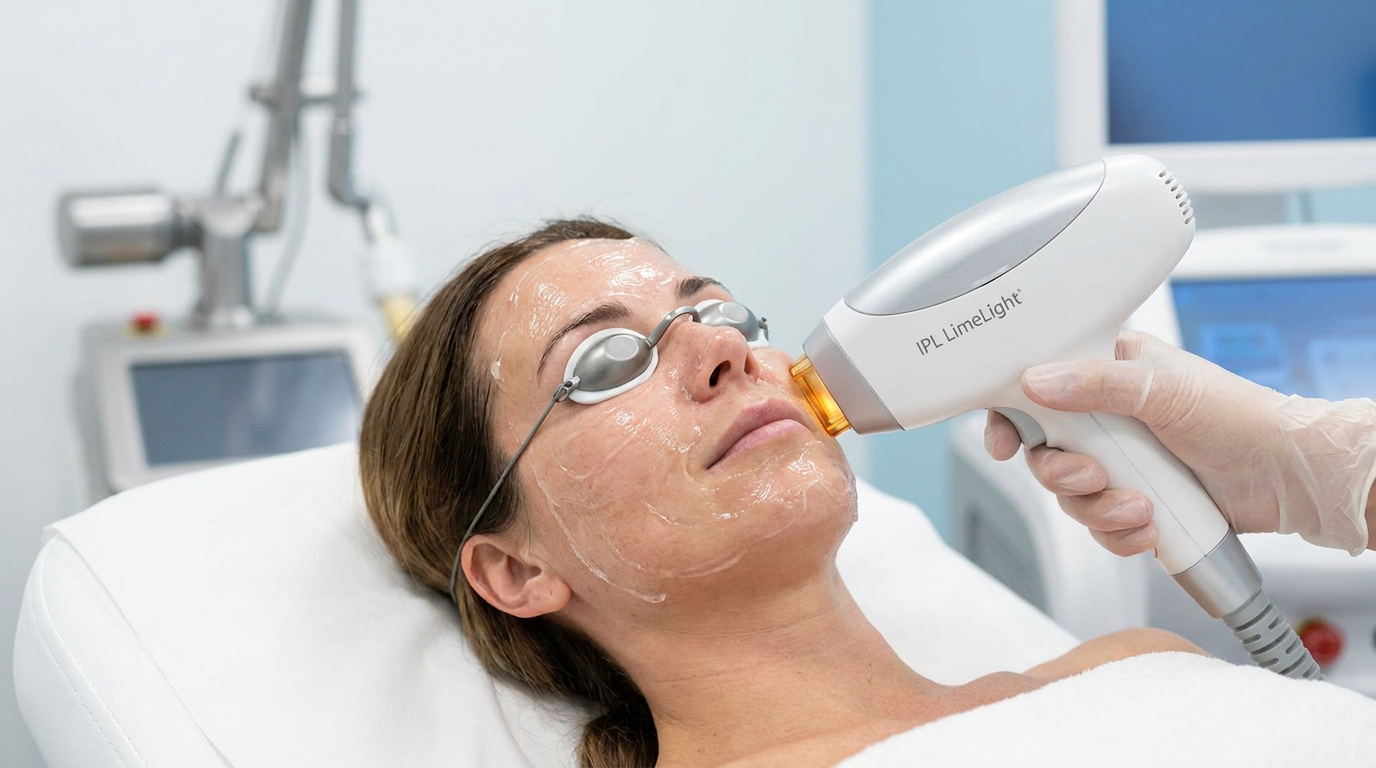
Before treatment begins, your practitioner will cleanse the skin and apply a cooling gel. The LimeLight device is then set to deliver the correct wavelengths for your skin colour and targeted concerns. During treatment, the handpiece is passed over the skin, delivering pulses of light.
What does it feel like? Most patients describe the sensation as similar to an elastic band snapping against the skin. The feeling is brief and manageable—local anaesthesia typically isn't required, though your practitioner may apply a topical numbing cream for added comfort if needed. Modern LimeLight devices also incorporate cooling systems to help keep the skin comfortable throughout the procedure.
Recovery and Results: What Happens After Treatment
One of the biggest advantages of LimeLight IPL is its minimal downtime. Most people can return to work and normal activities immediately after treatment, though you may want to plan around some temporary visible effects.
Immediately after treatment, you can expect:
-
Mild redness, similar to a light sunburn
-
Slight warmth in the treated area
-
Possible mild swelling that typically resolves within a few hours to a day
-
Darkening of pigmented spots (often called "peppering")
The darkening of brown spots is actually a sign that the treatment is working—the pigment is being brought to the surface. Within 3 to 10 days, these darkened spots will flake off naturally as the skin exfoliates, revealing clearer skin beneath. Makeup can typically be applied immediately after treatment to cover any redness if desired.
Visible improvement in redness, telangiectasia, and overall skin tone develops over the following one to three weeks as the body clears the damaged cells and vessels. The results are gradual and natural-looking, which many patients appreciate.
How Many Treatments Do You Need?
While some patients see noticeable improvement after just one session, most achieve optimal results with a course of treatments.
| Concern Level | Recommended Sessions | Interval | Maintenance |
| Mild to Moderate | 2 to 4 treatments | Every 3 to 4 weeks | Every 6 to 12 months |
| Severe Photodamage | 5 to 6 treatments | Every 3 to 4 weeks | Every 6 months |
The effects of LimeLight treatments are cumulative, meaning improvements continue to build with each session. After completing an initial treatment course, top-up sessions help address any new sun damage that accumulates over time and keep the complexion looking its best.
Who Is a Good Candidate for LimeLight IPL?
LimeLight IPL works best for patients with Fitzpatrick skin types I through III—generally fairer skin tones. This is because IPL targets melanin, and darker skin tones carry a higher risk of hyperpigmentation or hypopigmentation (lightening) after treatment. If you have a deeper skin tone, alternative treatments like Laser Genesis may be more appropriate and safer.
Ideal Candidates
-
Sun-induced pigmentation or freckling
-
Uneven skin tone and texture
-
Facial redness, flushing, or rosacea
-
Visible broken capillaries
-
Early signs of photoageing
Contraindications (Who Should Avoid It)
-
Are currently tanned or have recent sun exposure (including fake tan, sunbeds, or active holiday tans—any tan must fade completely before treatment)
-
Are pregnant or breastfeeding
-
Take Roaccutane (isotretinoin) or have taken it within the past 6 months
-
Take photosensitising medications (e.g., certain antibiotics like Doxycycline or Tetracycline)
-
Have certain autoimmune or connective tissue disorders
-
Are experiencing an active rosacea or acne flare-up in the treatment area
Always disclose your complete medical history and current medications during your initial consultation.
Protecting Your Results: Post-Treatment Care
Sun protection after LimeLight IPL isn't just recommended—it's essential. Your skin will be significantly more sensitive to UV radiation after treatment, and unprotected sun exposure can reverse your results by triggering brand-new pigmentation.
Commit to a daily broad-spectrum sunscreen with SPF 30 or higher (ideally SPF 50), even on overcast British winter days. Reapply every two hours if you are outdoors. Wear protective hats and seek shade during peak UV hours. This isn't just about protecting your investment in the treatment; it's about long-term skin health and cancer prevention.
The Bottom Line
Summer sun damage doesn't have to be permanent. LimeLight IPL offers a safe, effective, and non-invasive way to reverse the visible effects of photodamage—clearing sun spots, reducing redness, evening out skin tone, and restoring a youthful radiance. With minimal downtime and gradual, natural-looking results, it’s a brilliant option for anyone looking to undo the effects of UV exposure.
If you're ready to say goodbye to your skin's patchy summer souvenirs, book a consultation with a qualified, registered aesthetic practitioner or dermatologist to determine whether LimeLight IPL is the right choice for your skin.