How to Get Rid of Athlete's Foot for Good (and Stop It Coming Back)
It starts with an intense itch, peeling skin, and a burning sensation between your toes at the end of the day — and it almost never clears up on its own. Athlete’s foot is one of the world's most widespread skin conditions. Despite its name, you certainly don't need to be a gym enthusiast to contract it.
Athlete’s foot is an infection, not a sign of poor personal hygiene. It thrives in warm, damp environments, spreading easily via shared surfaces, your own footwear, or untreated nails. Eradicating it requires completing a full course of targeted antifungal treatment, keeping your feet completely dry, disinfecting your shoes, and protecting your skin barrier.
What Is Athlete's Foot and How Do You Get It?
Known medically as tinea pedis, athlete’s foot is a fungal infection of the skin. It is caused by dermatophytes — microscopic, mould-like fungi that feed on keratin, the protein found in skin, hair, and nails.
These fungi thrive in warm, dark, and humid conditions, making the inside of a shoe after a long day an ideal breeding ground. They easily persist in shared areas such as changing room floors, swimming pool surrounds, communal showers, hotel carpets, and inside trainers.
Dermatophytes require warmth, moisture, and accessible skin to establish an infection. You can pick them up through:
-
Direct contact: Sharing towels, bathmats, or living with someone who has an active infection.
-
Contaminated floors: Walking barefoot in wet public areas where fungal spores can survive for months.
-
Non-breathable footwear: Synthetic socks and non-porous shoes or safety boots that trap sweat against the skin.
-
Excessive sweating (hyperhidrosis): Constantly damp skin dramatically increases your susceptibility.
-
Damaged skin defences: Small cuts, cracked heels, dry skin, or underlying conditions like diabetes and poor circulation make it easier for fungi to penetrate.
-
Self-reinfection: Fungal nail infections continuously re-infect the surrounding skin every time you pull on a pair of socks.
Recognising the Symptoms
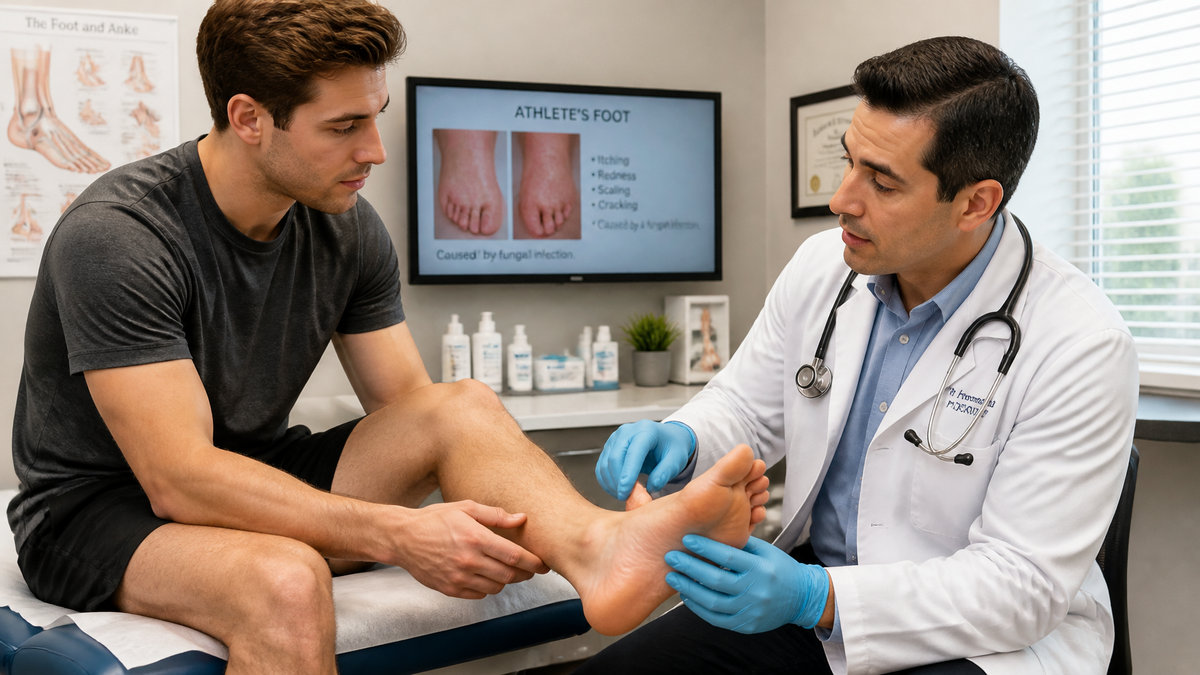
The infection typically targets the gaps between the toes (particularly between the fourth and fifth toe), but it can spread across the soles, the sides of the feet, and onto the toenails.
Symptoms differ from person to person, but commonly include:
-
Itching or burning sensations, particularly noticeable right after taking off your shoes and socks.
-
Peeling, flaking, or cracking skin, especially in the toe webs.
-
Red, scaly patches along the soles or sides of the feet.
-
A rash with a raised, defined border that slowly expands.
-
Small blisters or fluid-filled, weeping skin in more severe, inflamed cases.
-
Thickened, discoloured, or brittle toenails if the fungus has spread to the nail bed.
Watch out for the "Moccasin" Type: This variation presents as dry, thickened, and scaled skin across the entire sole, often misdiagnosed as simple dry skin or eczema. Because it frequently goes untreated, it is a primary culprit behind recurring infections.
Step-by-Step Guide to Clearing the Infection
Mild infections isolated to the skin between the toes can usually be managed at home. If the infection is widespread, severe, or affects your nails, consult a pharmacist or GP.
-
Apply a proper antifungal — and complete the course.
Over-the-counter creams, sprays, and powders containing active ingredients like terbinafine, clotrimazole, or miconazole are effective. Apply the treatment to all affected skin plus a surrounding margin. Crucially, continue application for one to two weeks after the skin appears fully healed. Stopping as soon as the itching subsides is the leading cause of relapse, as live fungal spores remain active underneath.
-
Keep the area thoroughly dry.
Towel-dry each toe individually after washing. Pat the skin gently rather than rubbing, or use a hairdryer on a cool setting for hard-to-reach moisture. Allow your feet to air for 15 to 20 minutes before putting on socks.
-
Change your socks frequently.
Wear breathable cotton-rich or moisture-wicking socks, and change them during the day if your feet become sweaty. Wash socks on a hot cycle and ensure they are completely dry before wearing.
-
Rotate your footwear.
Avoid wearing the same pair of shoes two days in a row. Allow at least 24 hours for shoes to air out completely, unlace them fully to improve airflow, and use an antifungal shoe powder or spray internally.
-
Maintain strict personal hygiene boundary.
Never share shoes, socks, or towels. Use a dedicated foot towel and wash bathmats frequently on a high temperature.
-
Avoid scratching.
Scratching transfers the fungus to your hands and creates open breaks in the skin, exposing you to secondary bacterial infections.
Supporting Your Skin Barrier

Antifungals kill the fungus, but proper skincare helps preserve the skin barrier, making it harder for infections to take hold. Damaged, macerated skin heals slowly and is more susceptible to fungal colonization.
-
Use gentle emollients carefully: If your heels and soles are left cracked and dry following a low-grade infection, a non-greasy, barrier-supporting emollient (such as REFORM Skincare’s Skin Barrier Repair Cream) can help restore moisture. Apply it only to clean, dry skin on the heels and soles.
-
Keep moisturisers away from toe webs: Never apply emollients or moisturisers between the toes during an active infection, as trapping moisture there worsens the condition.
-
Skip chemical exfoliants: Avoid using acid-based exfoliants on infected or broken skin. While useful for rough heels, acids will severely irritate inflamed, fungal-infected skin and delay recovery.
Preventing Recurrence
Clearing athlete's foot is straightforward; keeping it away requires long-term habit changes. Reinfection usually originates from contaminated shoes, shared floors, infected family members, or your own toenails.
-
Wear flip-flops or water shoes in public showers, pools, and changing rooms.
-
Thoroughly dry between your toes every time your feet get wet.
-
Alternate between two or three pairs of daily shoes so footwear dries completely.
-
Dust the inside of your shoes with antifungal powder if you are prone to flare-ups.
-
Treat any underlying fungal nail infections promptly, as these act as a constant reservoir for re-infection.
-
Check family members for signs of infection if it keeps returning to your household.
When to Consult a Professional
Seek medical advice from a GP, podiatrist, or pharmacist if:
-
Symptoms do not improve after two weeks of consistent, correct antifungal treatment.
-
The skin shows signs of blistering, oozing, significant swelling, or severe pain.
-
Redness begins spreading up your foot or leg, or you develop a fever (indicating a potential bacterial infection needing urgent attention).
-
You have diabetes, poor circulation, or a compromised immune system.
-
You are unsure of the diagnosis, as eczema, psoriasis, and contact dermatitis can mimic the appearance of athlete's foot.
Note: This article provides general educational information and does not substitute for formal medical advice. If your symptoms are persistent, severe, or accompanied by underlying health conditions like diabetes, consult a qualified healthcare professional.