Article: Vitamin B5 Gel: The Real Meaning of Deep Hydration
Vitamin B5 Gel: The Real Meaning of Deep Hydration
Despite being a marketing cliché, "deep hydration" refers to a genuine biological process. It isn't about a wet face or the greasy coating left by a heavy cream. Real deep hydration means holding water inside the skin's uppermost layer—the stratum corneum—to keep cells plump, enzymes functional, and the protective barrier intact.
Understanding this explains why many people apply moisturiser religiously yet still suffer from tight, flaky skin by afternoon. Their creams act as a seal, but if no water was introduced underneath, there is nothing to trap. This is precisely the gap a vitamin B5 gel fills.
How to Build It Into Your Routine
Incorporating a gel hydrator is simple: cleanse, apply the gel while skin is still slightly damp, follow with moisturiser, and finish with sunscreen in the morning.
-
Application: Pat skin semi-dry—applying humectants to bone-dry skin is ineffective as there is no surface water to bind. Allow the gel 30 to 60 seconds to absorb before applying a moisturiser.
-
Targeted Uses:
-
Mix with night-time retinol to buffer against peeling and tightness.
-
Apply after exfoliating acids to soothe stinging and restore lost moisture.
-
Use after sun exposure or air travel to ease discomfort better than a heavy balm.
-
Use on reactive, sensitive skin that tolerates few other ingredients.
-
Hydration vs Moisturisation: Knowing the Difference
While often used synonymously, hydration and moisturisation serve two separate functions:
| Function | Primary Role | Key Ingredients | How It Works |
| Hydration | Restores water content | Glycerin, hyaluronic acid, panthenol | Draws water into the skin's layers and holds it there. |
| Moisturisation | Strengthens lipid barrier | Ceramides, fatty acids, plant oils | Prevents water from evaporating off the skin surface. |
Order is vital. Applying a humectant to a damaged barrier results in quick evaporation, while applying an occlusive cream to dehydrated skin simply seals in dryness. Think of a sponge inside a sealed jar: the jar protects it, but the sponge must be damp first. This is why a gel hydrator is applied right after cleansing, with a moisturiser layered over it to lock in the hydration.
The Science Behind Vitamin B5
In skincare, vitamin B5 usually appears as panthenol (dexpanthenol), a provitamin form that penetrates the stratum corneum better than panthenic acid itself. Once absorbed, it converts into panthenic acid to actively bind water.
Panthenol offers several proven benefits:
-
Reduces Transepidermal Water Loss (TEWL): Effective at concentrations of 1% and above.
-
Strengthens the Barrier: Supports structural repair and normal cell turnover.
-
Calms Inflammation: Widely used in wound-care and post-procedure formulations to soothe irritated skin.
Clinical trials support its efficacy. One study combining panthenol with prebiotics saw stratum corneum hydration rise by 19% after one day and roughly 81% after 28 days. Another trial on a panthenol emollient noted hydration gains between 42% and 54% over four weeks.
Optimal concentrations in leave-on products range from 0.5% to 5%, with 2% to 5% yielding the best balance of soothing and barrier repair. Formulations exceeding 5% often plateau in performance while risking texture and stability issues.
Why Texture Matters: The Gel Advantage
A product's feel directly affects how consistently it is used. Gels are ideal delivery systems for humectants for three key reasons:
-
Water-based vehicle: Spreads smoothly across damp skin and absorbs quickly without residue.
-
Oil-free lightness: Ideal for combination, oily, and breakout-prone skin types that find heavy creams too suffocating.
-
Seamless layering: Sinks in cleanly without causing subsequent products to pill or slide.
For hot or humid climates, combining a gel hydrator with a lightweight lotion offers a practical alternative to heavy creams. Those with extremely dry or eczema-prone skin can layer the same gel beneath a richer emollient.
Selecting the Right Formula
When choosing a product, opt for fragrance-free formulations that feature panthenol or dexpanthenol clearly alongside simple bases like glycerin. Fragrances and essential oils are common triggers for irritation and offer no hydrating value.

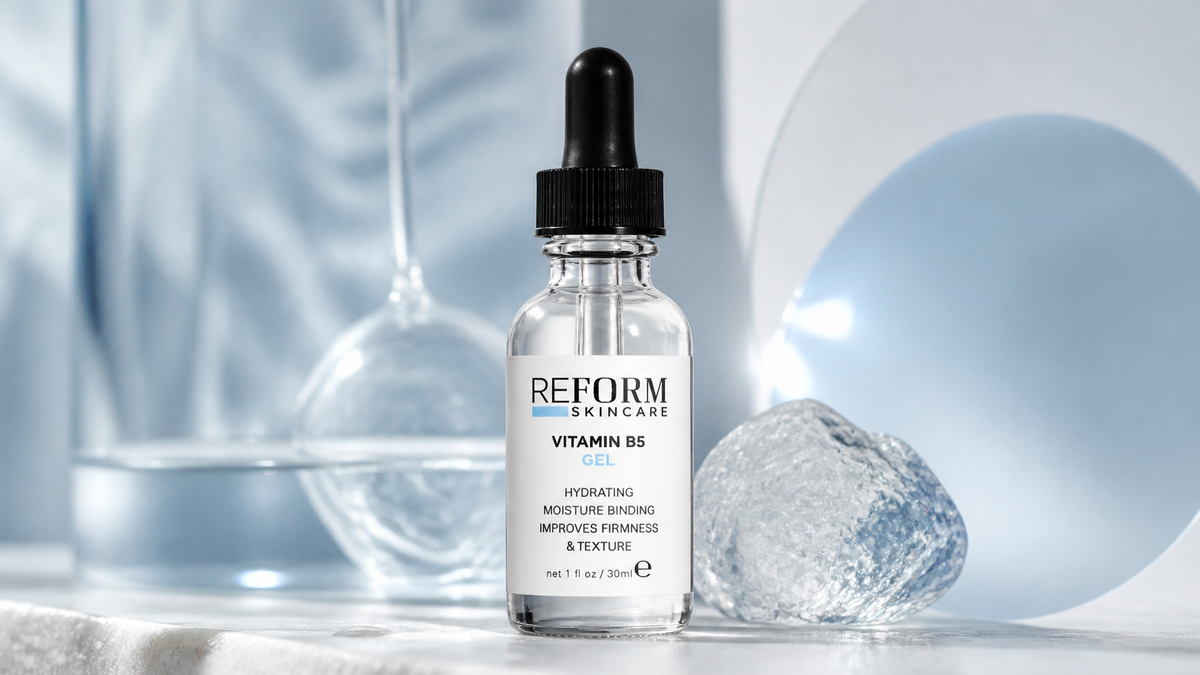
Doctor-formulated options, such as the REFORM Skincare Vitamin B5 Gel, follow these principles by offering a fast-absorbing base designed to restore hydration and support the skin barrier, leaving it balanced with daily use. You can explore their full range to find options suitable for your routine.
At its core, addressing dehydrated skin requires both water and a seal to keep it there. Vitamin B5 provides an evidence-backed solution for binding water, while a gel format ensures it remains comfortable enough for twice-daily use across all skin types. Paired with a suitable moisturiser and daily sun protection, it effectively targets the root cause of persistent skin tightness.