Virtual vs. In-Person Dermatology UK: When to Click or Clinic
The way we see doctors has changed — and dermatology is no exception. What was once a field that relied entirely on face-to-face appointments now offers a growing menu of virtual options, from video consultations to asynchronous photo-based assessments. For patients, this is both liberating and a little confusing. When should you log on, and when should you show up?
Choosing the right format isn't just a matter of convenience. It can affect the accuracy of your diagnosis, the speed of your treatment, and even how comfortable you feel discussing sensitive skin concerns. This guide breaks down what each option actually involves, where each one shines, and how to decide which path makes sense for your specific situation.
What Virtual Dermatology Actually Looks Like
Virtual dermatology — often referred to as teledermatology in the UK — generally falls into two categories:
-
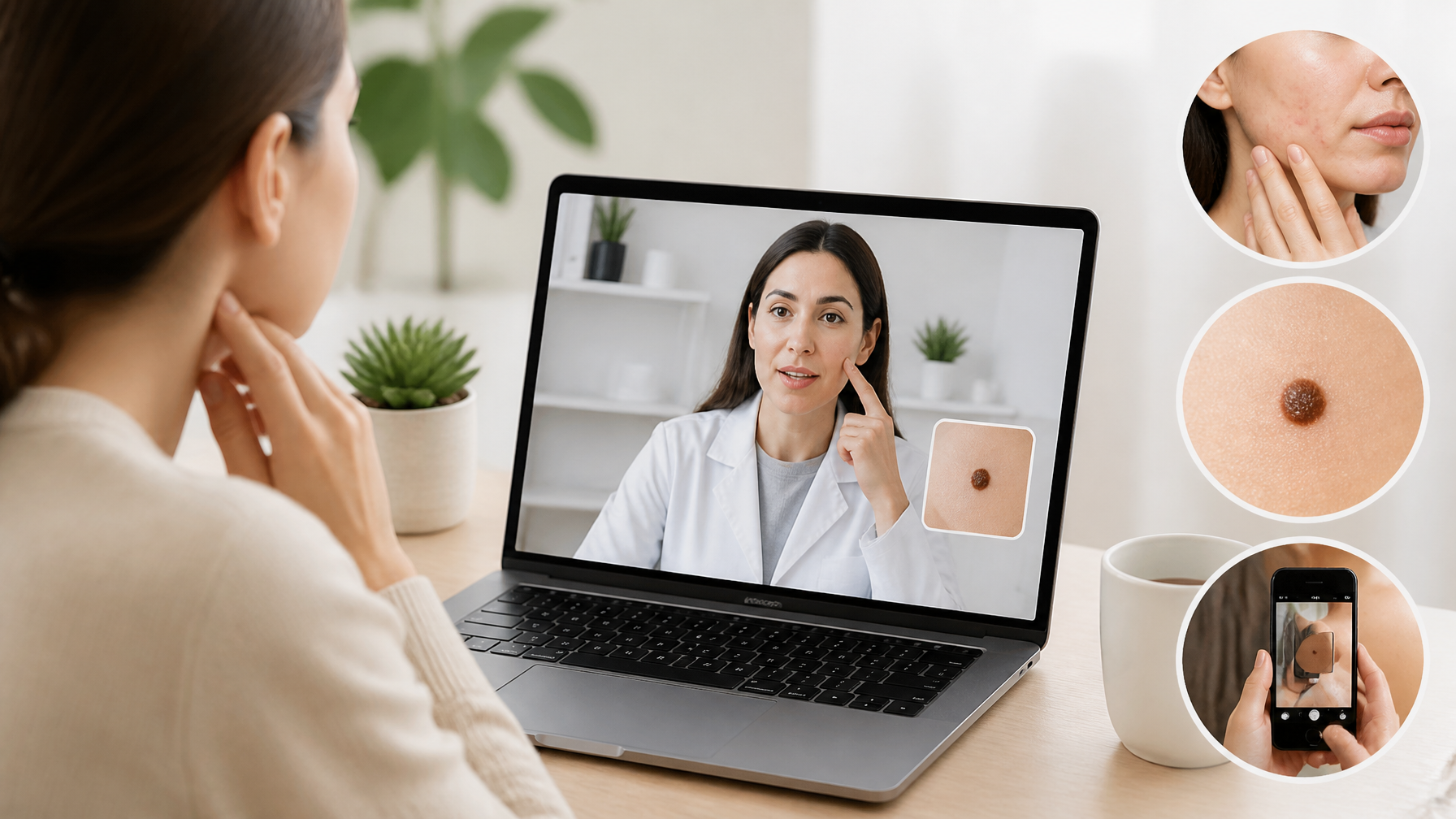
Synchronous (live) consultations: You meet your dermatologist over a secure video call in real time. You describe your symptoms, show affected areas on camera, and discuss a treatment plan, much like a traditional appointment but from your home.
-
Asynchronous (store-and-forward) consultations: You upload high-quality photos of your skin concern along with a digital triage questionnaire detailing your symptoms. A dermatologist reviews them safely on their own time and sends back a diagnosis, management plan, or prescription.

Both formats have become significantly more sophisticated. Smartphone cameras now capture skin detail well enough for many clinical assessments, and NHS-approved or private secure platforms ensure your data stays private and GDPR-compliant. In the UK, teledermatology adoption surged during the pandemic and has since been deeply integrated into both NHS pathways and private healthcare to manage long waiting lists and streamline patient care.
What an In-Clinic Visit Offers That a Screen Can't
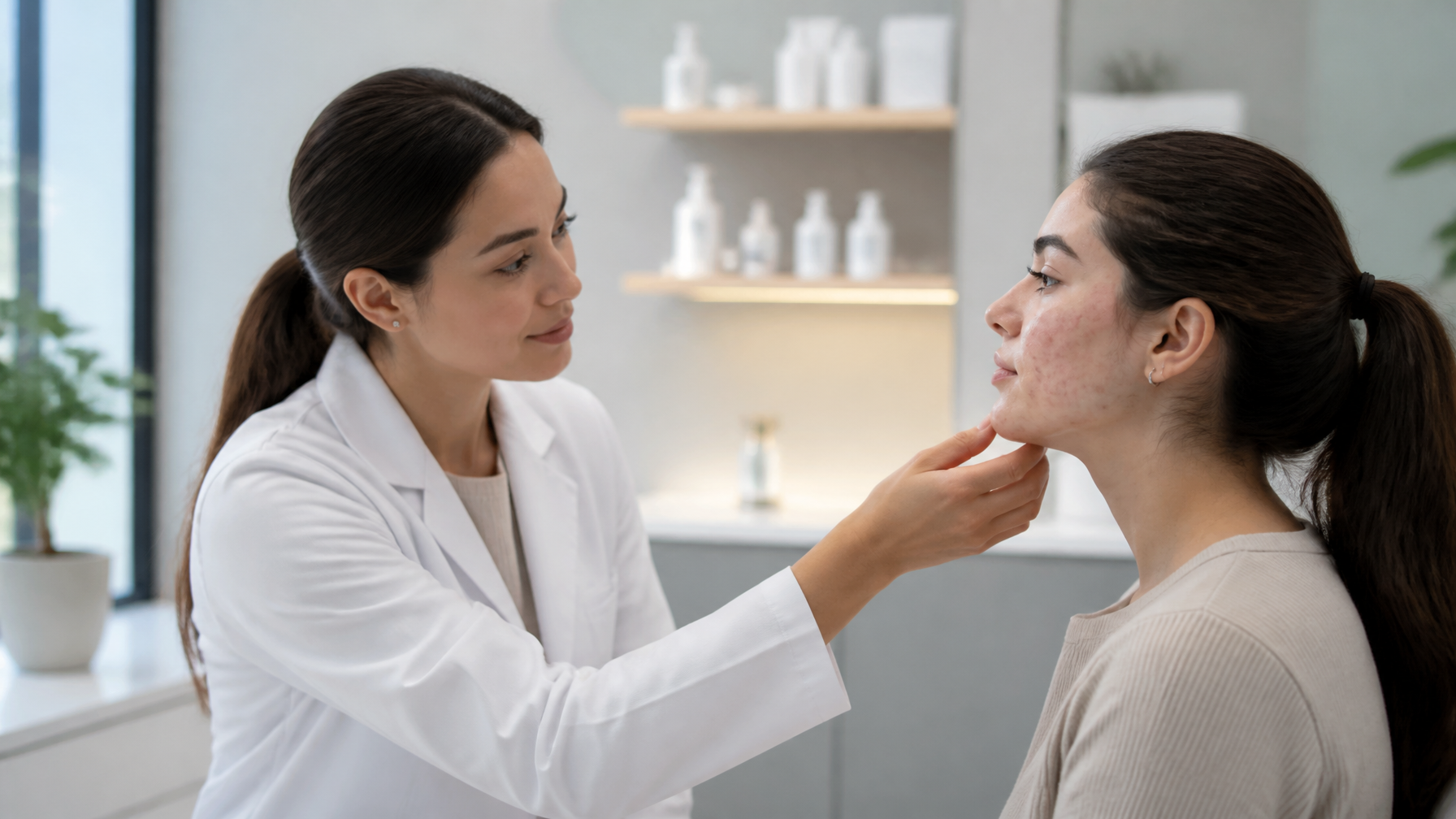
An in-person consultation gives the consultant dermatologist access to specialized tools and physical assessments that simply don't translate to a digital format:
-
Dermoscopy: A handheld device (a dermatoscope) that uses polarized light and magnification to see skin structures beneath the surface. This is the absolute gold standard for evaluating moles and pigmented lesions.
-
Palpation: Physically touching a lesion to assess its texture, depth, firmness, and whether it is fixed to underlying tissues. A photo can show color, but it can't tell a doctor if a lump is fluid-filled or solid.
-
Biopsies and minor surgery: Anything that involves taking a skin sample, freezing (cryotherapy), injecting (like steroid injections for alopecia or scars), or surgical removal must happen in a clinical setting.
There's also an intangible benefit: the full-body skin check. During a face-to-face visit, a dermatologist can examine areas you might not have thought to photograph — your scalp, behind your ears, or the soles of your feet — and catch early warning signs of skin cancer you didn't know to look for.
When Virtual Is the Smart Choice
Teledermatology works best when the concern is visually straightforward and unlikely to require an immediate procedure. Consider going virtual when:
-
You have a common, non-urgent skin issue: Acne, mild eczema flare-ups, rosacea, psoriasis management, dandruff, and minor rashes are well-suited to digital triage. Experienced dermatologists can often diagnose these confidently from a clear photo or video.
-
You need a follow-up or prescription review: If you've already been diagnosed and just need to check progress on a treatment (like oral isotretinoin/Roaccutane monitoring) or need a repeat prescription, a virtual visit saves a trip to the hospital or clinic.
-
You want to bypass long waiting times: NHS dermatology waiting lists can be notoriously long. Many patients use private online dermatology services as an affordable "triage" step to find out if their condition needs urgent attention or if it can be managed with over-the-counter or GP-prescribed treatments.
-
Scheduling flexibility matters: Virtual consultations eliminate travel time and parking stress. For working professionals and parents, getting an evening or weekend digital slot can make the difference between seeking help and putting it off.
When You Should Go In Person
Some situations call for the dermatologist's full toolkit — and your physical presence. Prioritize an in-clinic visit when:
-
You have a suspicious mole or changing lesion: Any spot that fits the ABCDE criteria (Asymmetry, Border irregularity, Color changes, Diameter over 6mm, or Evolving) needs a face-to-face dermoscopy. This should never be assessed solely via a standard smartphone selfie.
-
Your concern involves texture, depth, or lumps beneath the skin: Deep cysts, nodules, or lesions that feel different from how they look require physical palpation.
-
You require a hands-on procedure: Mole removal, skin tag clipping, cyst drainage, or therapeutic injections require a sterile clinical environment.
-
The issue is in a hard-to-photograph area: Conditions affecting the scalp, nails, inside the mouth, or genital areas are notoriously difficult to capture accurately on camera and are best evaluated in person.
The Hybrid Approach: Best of Both Worlds
Increasingly, both the NHS and private providers are finding that the best care blends both formats. A common and effective pattern looks like this:
[Initial Consultation In-Person]
       │ (Thorough exam, dermoscopy, and diagnosis)
       ▼
[Follow-ups Virtually]
       │ (Progress checks, photo uploads, prescription tweaks)
       ▼
[Return to Clinic As Needed] (For annual skin checks or if new symptoms arise)
This hybrid model reduces unnecessary travel and frees up hospital slots while ensuring clinical safety is never compromised.
Practical Tips for Getting the Most Out of Each Format
If you're going virtual:
-
Lighting is everything: Take photos in bright, natural daylight. Avoid using your camera flash, as it washes out redness and distorts the true color of a rash.
-
Get close and stay steady: Take one photo from a distance to show where the issue is on your body, and a few clear, well-focused close-ups.
-
Prepare your history: Write down when it started, whether it itches or hurts, what you've already tried (including over-the-counter creams), and any family history of skin conditions.
-
Check credentials: Ensure the platform uses dermatologists on the General Medical Council (GMC) Specialist Register. In the UK, a "dermatologist" should ideally be a Consultant Dermatologist.
If you're going in person:
-
Come bare-faced: If the issue is on your face, do not wear makeup, concealer, or heavy tinted moisturisers. The doctor needs to see your natural skin tone and texture.
-
Wear accessible clothing: Wear loose clothing that is easy to remove if the dermatologist needs to check a rash or mole on your body.
-
Bring your current routine: Bring a list (or photos) of your current skincare products, prescribed creams, and medications.
Cost and Insurance Considerations in the UK
The financial landscape depends entirely on how you access care:
-
The NHS Route: Both in-person and NHS teledermatology services (such as digital triage pathways managed by your GP) are free at the point of use. However, waiting times for non-urgent referrals can be significant.
-
The Private Route: * Asynchronous/Photo-based online services typically cost between £40 to £90per assessment.
-
Live video or face-to-face private consultations with a Consultant Dermatologist generally range from £200 to £350+ for an initial visit, excluding the cost of any private prescriptions or procedures.
-
-
Private Health Insurance: Major UK insurers (like Bupa, AXA Health, and Aviva) frequently cover virtual dermatology consultations, often through their own digital health apps (like Bupa From Home or AXA Doctor at Hand). However, they may still require a GP referral first. Always check if a digital service is recognized by your provider before booking.
Cost Tip: If you pay for a virtual consultation only to be told, "I need to see you in clinic to biopsy this," you will likely have to pay for the face-to-face appointment separately. If your symptom strongly mirrors the "go in person" list, booking a physical clinic slot from the start is often the most cost-effective route.
The Bottom Line
There's no universally "better" option — only the one that fits your specific concern, budget, and peace of mind. Teledermatology is a highly effective clinical tool that delivers fast, convenient care for common skin issues. However, for changing moles, complex conditions, or anything requiring physical touch, nothing replaces a consultant's trained eye and specialized instruments in a clinic setting. Knowing when to click and when to clinic is the secret to managing your skin health safely and efficiently.