Article: The Science of Skin Transformation from Modern Lasers and Medical Skincare Deliver Real Results
The Science of Skin Transformation from Modern Lasers and Medical Skincare Deliver Real Results
Skin rarely transforms overnight. Instead, it evolves through the small, consistent ways we treat it every day. In recent years, a quiet revolution has taken place at the intersection of modern laser technology and medical-grade skincare — shifting the goal of healthy, radiant skin away from genetic good luck towards a clear, systematic science.
This article explores how these two powerful approaches work, who stands to benefit, and what realistic results actually look like.
The Shift from Cosmetic to Medical
The biggest change in recent years is philosophical. Skincare used to be about surface management: a cleanser, a moisturiser, a hopeful serum. Today, the most effective approaches are built on dermatological science — treating skin as living tissue with measurable structure, rather than just a surface to be polished.
That shift matters clinically. Skin is not a single sheet; it is a layered organ with distinct jobs:
-
Stratum Corneum: The outermost layer is a brick-and-mortar barrier of flattened cells held together by lipids. Its health determines how much moisture you retain and how well you resist irritants.
-
Epidermis: Beneath the barrier sits the epidermis, where cell turnover occurs and where pigment-producing melanocytes live.
-
Dermis: Deeper still is the structural layer packed with collagen, elastin and hyaluronic acid — the scaffolding that gives skin its firmness and bounce.
Almost everything we call "ageing" is a change in one of those layers. Fine lines and thinning occur because the dermis produces roughly one per cent less collagen each year after our mid-twenties. Dullness occurs when cell turnover slows, leaving dead cells lingering on the surface. Pigmentation stems from melanocytes behaving erratically after years of sun exposure, whilst redness comes from dilated capillaries near the surface.
Once you view skin through this lens, the logic of modern treatment becomes obvious:
-
Medical Skincare influences collagen production, pigmentation pathways and barrier function at a cellular level.
-
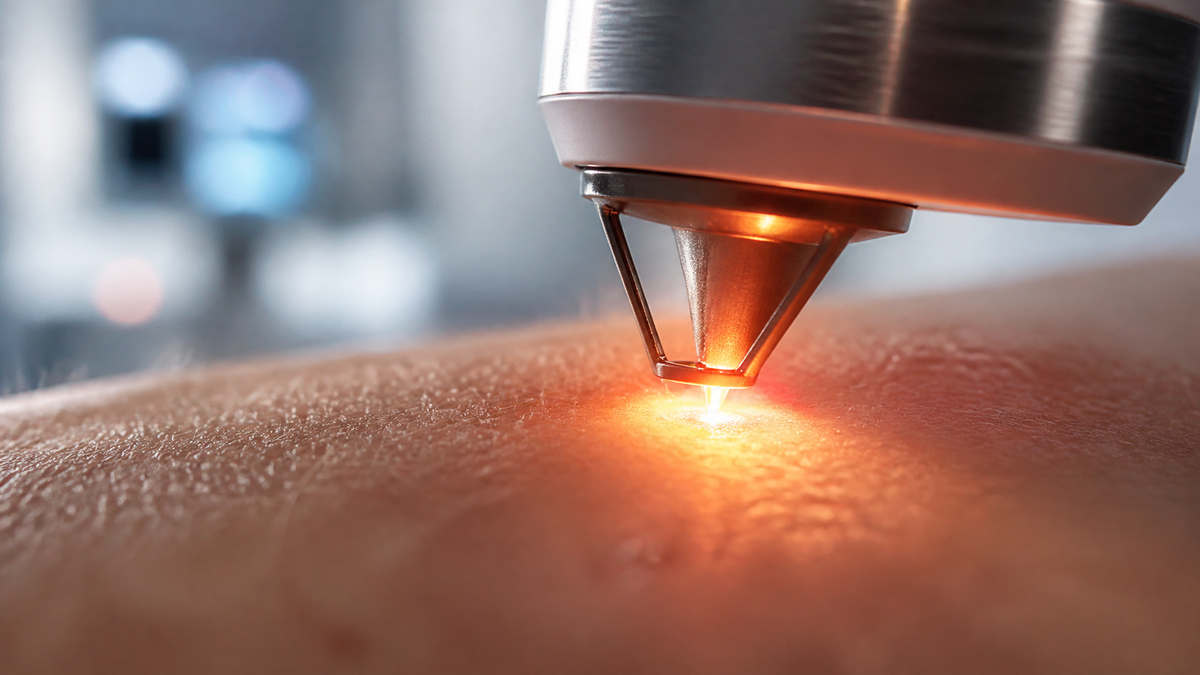
Lasers deliver controlled, targeted energy deep into the dermis to trigger genuine structural change that topical products cannot achieve on their own.
Neither is a substitute for the other; the most impressive results come from using both with clear intent.
Part 1: What Modern Lasers Actually Do
Older laser treatments earned a reputation for being harsh — bringing long downtime, unpredictable results, and a genuine risk of scarring or pigmentation changes on darker skin tones. Much of that risk has now been engineered away.
Key Laser Modalities
-
Fractional Resurfacing: Treats only a fraction of the skin at a time, leaving surrounding tissue intact to speed up healing. You achieve meaningful collagen remodelling with days rather than weeks of recovery.
-
Picosecond Lasers: Pulse in trillionths of a second, shattering pigment particles so finely that the body clears them easily — highly effective for melasma, sun damage and tattoo removal.
-
Non-Ablative Lasers: Heat the dermis without removing the surface layer, making them ideal for early skin laxity and fine lines with almost no downtime.
-
Vascular Lasers: Target haemoglobin specifically, clearing redness, broken capillaries and rosacea-related flushing.
Light-Based Alternatives: IPL and LED
There is also a second family of devices worth knowing about, which is often confused with lasers:
-
Intense Pulsed Light (IPL): Not a laser, but a broad-spectrum light source filtered to target pigment and blood vessels. Excellent for diffuse sun damage and creating an even complexion, though less precise for a single stubborn lesion.
-
LED Phototherapy: A gentler option used mainly to calm inflammation and support healing rather than to resurface tissue.
Neither is a lesser option; they simply address different concerns, and a good clinician will match the device to the problem rather than the other way round.
Inclusivity Across Skin Tones
Crucially, newer devices and protocols are far safer across a wider range of skin tones. For years, people with deeper skin tones were told lasers "weren't for them." That advice is now largely obsolete, provided the treatment is delivered by an experienced practitioner.
Older devices could not distinguish between the target pigment and the natural melanin in surrounding skin, causing energy to be absorbed indiscriminately. Longer wavelengths, shorter pulses and advanced cooling mechanisms have changed that calculus considerably.
Part 2: Why Medical Skincare is the Other Half
A laser treatment without a proper skincare protocol is a missed opportunity. While the laser creates the structural change, skincare maintains and extends it. Think of a laser session as a building renovation, and your daily routine as the maintenance that stops it from reverting.
Key Active Ingredients
-
Retinoids: The gold standard for accelerating cell turnover and stimulating collagen.
-
Vitamin C & Antioxidants: Reduce oxidative stress and support the brightening of uneven tone.
-
Niacinamide: Strengthens the skin barrier and calms inflammation.
-
Alpha Hydroxy Acids (AHAs) & Salicylic Acid: Improve surface texture and unclog pores.
-
Broad-Spectrum SPF 50: Non-negotiable. It is the single most effective anti-ageing product available, and the one most people under-apply.
Medical-Grade vs. High-Street
The difference between medical-grade skincare and high-street products lies in concentration, formulation stability and clinical rationale:
| Feature | High-Street Skincare | Medical-Grade Skincare |
| Active Concentrations | Often low or fractional percentages | High, prescription-strength levels |
| Delivery Vehicle | Formulated to sit on the surface | Designed to penetrate deeper skin layers |
| Adjustment Period | Minimal risk of irritation | Demands a gradual period of adaptation |
Because stronger actives require careful handling, a tailored prescription beats a generic "anti-ageing" set almost every time.
Part 3: The Combined Protocol and Realistic Timelines
The most effective treatment plans sequence skincare and lasers deliberately.
[ Phase 1: Priming ]  --->  [ Phase 2: Laser Session ]  --->  [ Phase 3: Recovery & Support ]
Retinoids & Pigment         Targeted Energy             Gentle Cleansing, Barrier Repair
Inhibitors (Weeks prior)    Delivery                    & Strict SPF 50
-
Preparation (Priming): Priming with a retinoid thins the stratum corneum and speeds up turnover, allowing laser energy to reach its target more predictably while shortening healing time. Adding a pigment inhibitor reduces the risk of post-inflammatory hyperpigmentation (PIH), particularly on deeper skin tones.
-
Treatment & Pause: Certain active ingredients (including prescription retinoids and exfoliant acids) must be paused directly around treatment days. Your clinician will detail exactly what to stop and when.
-
Recovery: A stripped-back routine of gentle cleansing, occlusive moisturiser and daily sunscreen protects the result while the skin heals.
What Expectations and Timelines Look Like
| Concern / Phase | Laser Capabilities | Skincare Capabilities | Expected Timeline |
| Immediate (Days 1–7) | Temporary redness, mild swelling, sandpaper texture | Hydration and barrier repair support | Initial surface healing |
| Short-Term (Weeks 2–4) | Pigment shattering, reduced redness | Improved tone evenness & smoother texture | Surface brightness appears |
| Long-Term (Months 3–6+) | Deep collagen remodelling, tighter skin | Sustained structural support & protection | Peak collagen results & structural changes |
Note: Results are gradual and cumulative. Most individuals require a course of treatments followed by sensible ongoing maintenance rather than a single session.
Part 4: Safety and Choosing a Practitioner

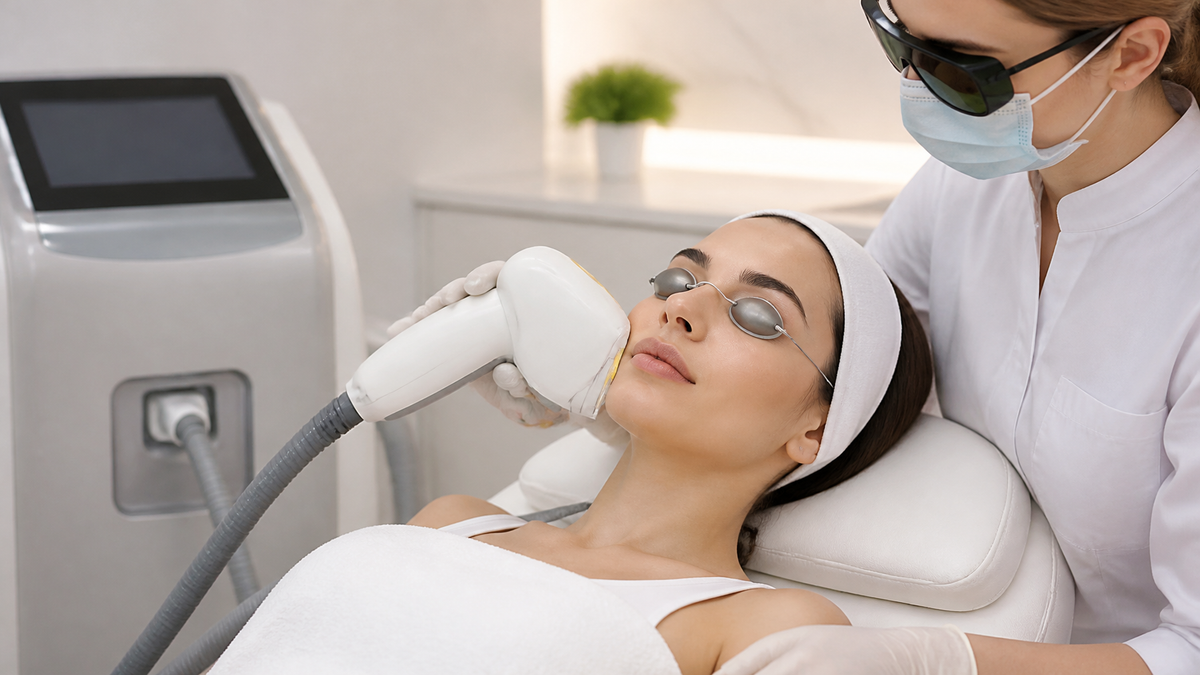
Laser treatments are medical procedures. They should always be performed by a qualified doctor, dermatologist or clinician operating under proper medical supervision, using equipment appropriate for your skin tone.
What to Look For in a Clinic
-
Thorough Consultation: Your Fitzpatrick skin type, medical history, current medications and pigment tendencies should directly shape your plan.
-
Post-Treatment Support: A reputable clinic will offer clear aftercare instructions, follow-up appointments, and direct support if your skin reacts unexpectedly.
Key Red Flags 🚩
-
No consultation prior to treatment
-
Promises of "guaranteed" or instant results
-
No discussion of downtime, risks or required skincare pauses
-
A willingness to laser over active infections, cold sores or recently sun-exposed skin
Remember: A practitioner who declines to treat you under certain conditions is showing good clinical judgment, not a lack of service.
The Bigger Picture
Modern skin treatments reward consistency over intensity. A considered medical skincare routine used daily, punctuated by well-chosen laser sessions a few times a year, now outperforms almost anything else available.
While the technology behind modern lasers is genuinely impressive, the transformation people notice — clearer tone, firmer texture, a healthy glow — comes from the discipline surrounding it: protecting your barrier, wearing sunscreen every day, and working with a professional who understands your skin rather than just your budget.
Start with a proper assessment. Everything else follows from there.