The Perimenopausal Collagen Crash: How to Protect Your Skin
Introduction: The Skin Shift Nobody Warned You About
For many women, the first signs of perimenopause don't arrive as hot flashes or mood swings — they show up in the mirror. A jawline that looks softer than it used to. Fine lines that seem to have deepened overnight. Skin that feels drier, thinner, and somehow less resilient. These aren't cosmetic coincidences. They're the visible evidence of a profound biological shift happening beneath the surface, driven primarily by one molecule: collagen.
Perimenopause — the transitional years leading up to menopause, typically beginning in a woman's early-to-mid 40s — triggers a cascade of hormonal changes that directly impact skin structure. Estrogen, the hormone most closely linked to skin health, begins its irregular decline, and the consequences for collagen production are dramatic. Understanding this process isn't vanity; it's dermatological science. And the earlier you understand it, the more effectively you can intervene.
What Exactly Is Collagen, and Why Does It Matter So Much?
Collagen is the most abundant protein in the human body, making up roughly 75-80% of the skin's dry weight. Think of it as the architectural scaffolding of your dermis — the deep layer of skin responsible for firmness, elasticity, and that plump, hydrated look we associate with youthful skin. Collagen fibres form a dense, interwoven mesh that supports the skin's structure, working in concert with elastin (which provides snap-back resilience) and hyaluronic acid (which holds moisture).
Your body produces collagen continuously throughout life, but here's the critical fact: production peaks in your 20s and begins a slow, steady decline from around age 25. By the time perimenopause arrives, you're already operating at a deficit. What happens next accelerates that decline into something far more significant.
The Perimenopausal Collagen Crash
Research published in the American Journal of Clinical Dermatology has demonstrated that women can lose approximately 30% of their skin collagen in the first five years after menopause, with the decline beginning during perimenopause itself. This isn't a gradual fade — it's a sharp drop-off that coincides with falling estrogen levels.
Here's why estrogen matters so much to collagen: estrogen directly stimulates fibroblasts, the specialised cells in the dermis responsible for producing collagen, elastin, and hyaluronic acid. As estrogen levels fluctuate and ultimately decline during perimenopause, fibroblast activity slows. The result is a triple threat:
-
Less collagen synthesis — Your skin produces fewer new collagen fibres.
-
Increased collagen degradation — Enzymes called matrix metalloproteinases (MMPs) break down existing collagen faster.
-
Reduced hyaluronic acid production — The skin holds less moisture, compounding the loss of volume and suppleness.
The visible effects are unmistakable: deepening wrinkles, sagging along the jawline and cheeks, increased skin fragility, slower wound healing, and a loss of that luminous quality that well-hydrated, collagen-rich skin naturally has.
Beyond Wrinkles: The Deeper Consequences

Collagen loss during perimenopause isn't purely an aesthetic concern. Thinning skin becomes more vulnerable to bruising, tearing, and sun damage. The skin's barrier function weakens, making it more susceptible to irritation, dryness, and sensitivity — many perimenopausal women notice that products they've used for years suddenly sting or cause redness. There's also a connection between skin collagen and bone density: both rely on the same collagen-building pathways, and the hormonal shifts that thin your skin are simultaneously affecting your skeletal health.
How to Fight Back: An Evidence-Based Strategy
The good news is that collagen loss during perimenopause is not entirely inevitable. While you can't stop the hormonal clock, dermatological science offers a robust toolkit for slowing, and in some cases partially reversing, the decline. The key is a multi-pronged approach that works both topically and systemically.
1. Retinol: The Gold Standard
If there's one ingredient that dermatology specialists universally recommend for aging skin, it's retinol — a vitamin A derivative. Retinol works by stimulating fibroblast activity, boosting collagen synthesis, accelerating cell turnover, and reducing the activity of collagen-degrading MMPs.
For perimenopausal skin, starting with a low-concentration retinol (0.25-0.5%) and gradually building tolerance is the standard approach. Stronger formulations offer pronounced results but require guidance from a dermatology specialist like Dr Naomi, especially for skin that's becoming more sensitive. Apply retinol at night, and always pair it with sunscreen the following morning.
2. Vitamin C Serums: Antioxidant Protection and Collagen Support
L-ascorbic acid (vitamin C) is one of the few topical antioxidants with strong clinical evidence supporting its role in collagen production. It serves as a necessary cofactor in collagen synthesis — without adequate vitamin C, your body literally cannot build collagen properly. Topically, a well-formulated vitamin C serum (ideally at 10-20% concentration, with a pH below 3.5) also neutralises free radicals from UV exposure and pollution, both of which accelerate collagen breakdown.
Look for serums that combine vitamin C with vitamin E and ferulic acid, a combination shown to enhance stability and efficacy. Apply in the morning, beneath sunscreen.
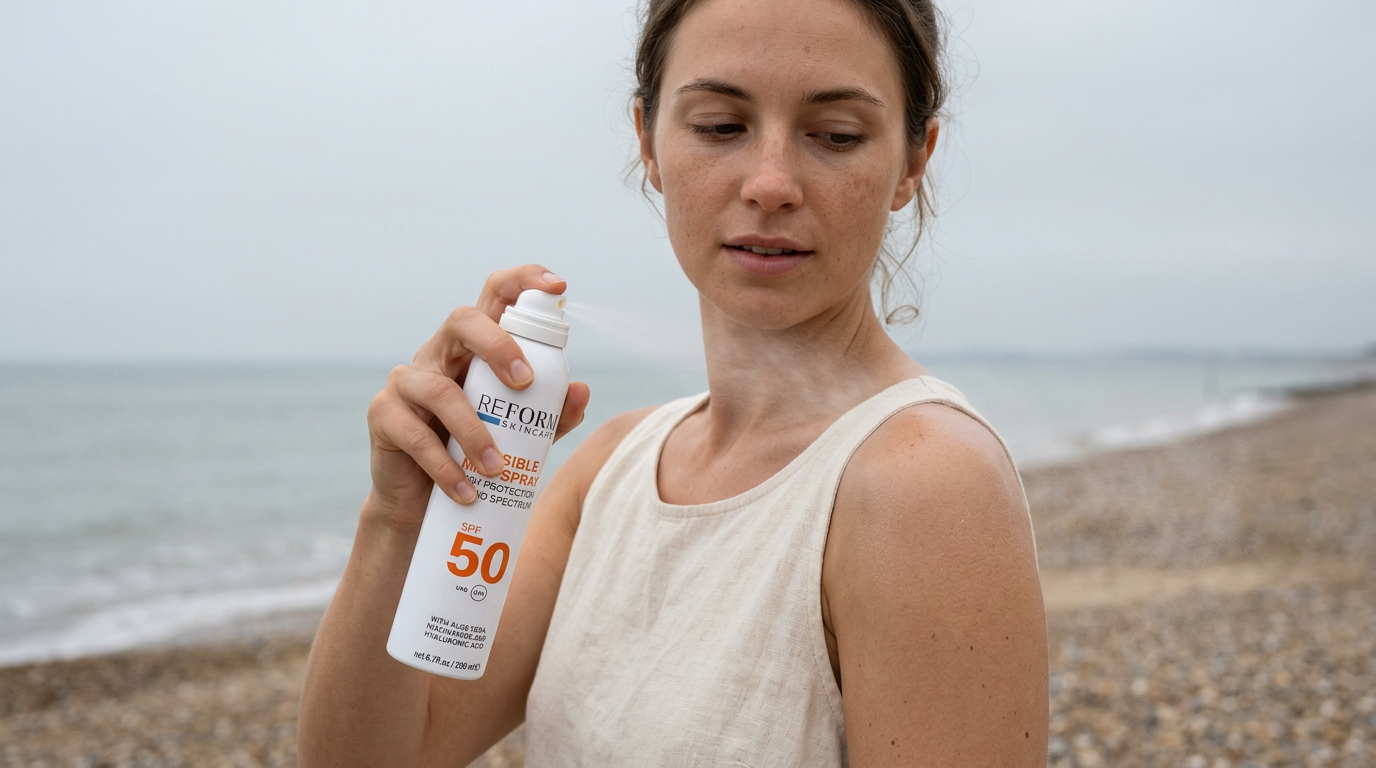
3. Sunscreen: Non-Negotiable Protection
UV radiation is the single greatest external accelerator of collagen destruction. UVA rays penetrate deep into the dermis, directly damaging collagen fibres and stimulating MMP activity. During perimenopause, when your skin's repair capacity is already diminished, unprotected sun exposure compounds the hormonal losses dramatically.
A broad-spectrum SPF 30-50, applied daily regardless of weather or season, is the most impactful anti-aging intervention that exists. Reapply every two hours during direct exposure. Mineral sunscreens containing zinc oxide or titanium dioxide are often better tolerated by sensitised perimenopausal skin.
4. Peptides and Growth Factors
Peptides — short chains of amino acids — act as signalling molecules that can prompt fibroblasts to ramp up collagen production. Ingredients like Matrixyl (palmitoyl pentapeptide-4) and copper peptides have shown promise in clinical studies. They're generally well tolerated and make excellent additions to a routine that already includes retinol and vitamin C.
Epidermal growth factors (EGFs) are another frontier, with emerging evidence suggesting they can support skin repair and renewal. These are typically found in high-end serums and are best used as complementary treatments rather than standalone solutions.
5. Collagen-Stimulating Procedures
Topical products work at the surface, but in-office dermatological procedures can reach the deeper dermal layers where collagen lives. The most evidence-backed options include:
-
Radiofrequency (RF) treatments — Devices like SECRET RF or Morpheus8 deliver heat energy deep into the dermis, triggering collagen remodelling over several months. SECRET RF utilizes minimally invasive micro-needles to deliver precise RF energy into varying layers of the skin, making it highly effective for tightening and texture revision.
-
Microneedling — Creates controlled micro-injuries that trigger the skin's wound-healing response, stimulating new collagen and elastin production. A series of 3-6 sessions is typically recommended.
-
Fractional laser resurfacing — Ablative and non-ablative lasers create zones of controlled damage, prompting robust collagen regeneration. Downtime varies but results can be significant.
These procedures are most effective when combined with a consistent topical regimen. Consult a dermatology specialist to determine which options suit your skin type and concerns.
6. Nutrition and Health
Collagen production is a systemic process, and what you consume matters. Key nutritional strategies include:
-
Protein-rich diet — Amino acids like proline, glycine, and lysine are the building blocks of collagen. Ensure adequate intake through lean meats, fish, eggs, legumes, and bone broth.
-
Vitamin C-rich foods — Citrus fruits, bell peppers, strawberries, and broccoli support collagen synthesis from the inside.
-
Omega-3 fatty acids — Found in fatty fish, flaxseed, and walnuts, omega-3s help maintain the skin's lipid barrier and reduce inflammation that can accelerate collagen breakdown.
7. Hormone Replacement Therapy (HRT)
For some women, hormone replacement therapy can directly address the root cause of perimenopausal collagen loss by restoring estrogen levels. Studies have shown that women on HRT maintain higher skin collagen content and thickness compared to untreated controls. However, HRT carries its own risk-benefit profile and is a deeply personal medical decision. Discuss it with your GP and a dermatology specialist together to assess whether it's appropriate for your situation.
Building Your Perimenopausal Skin Routine
A simplified, effective daily framework looks like this:
Final Thoughts: Agency Over Aging
Perimenopause changes your skin — that is a biological reality. But it doesn't dictate the outcome. The science of dermatology offers powerful, proven tools to protect and rebuild collagen, preserve skin integrity, and maintain healthy, resilient skin through this transition and beyond.
The most important step? Start now. Collagen preservation is far more effective than collagen restoration. Whether you're noticing the first subtle signs or are well into the perimenopausal years, every intervention you adopt today compounds over time. Talk to a dermatology specialist like Dr Naomi, build a routine grounded in evidence, and approach this chapter of skin health with the same proactive strategy you'd bring to any other aspect of your wellbeing.
Your skin is changing. You get to decide how the story unfolds.
Book your consultation here!