Spotting the Signs: What Is Lentigo Maligna and How Is It Treated?
A new brown patch on sun-exposed skin can be easy to dismiss as an age spot. Most pigmented marks are harmless, but some require medical attention. Lentigo maligna is one of them.
Usually developing slowly on skin that has received substantial sun exposure, lentigo maligna is an early form of melanoma. Recognising suspicious changes and arranging a prompt skin assessment can help prevent it from becoming invasive.
What is lentigo maligna?
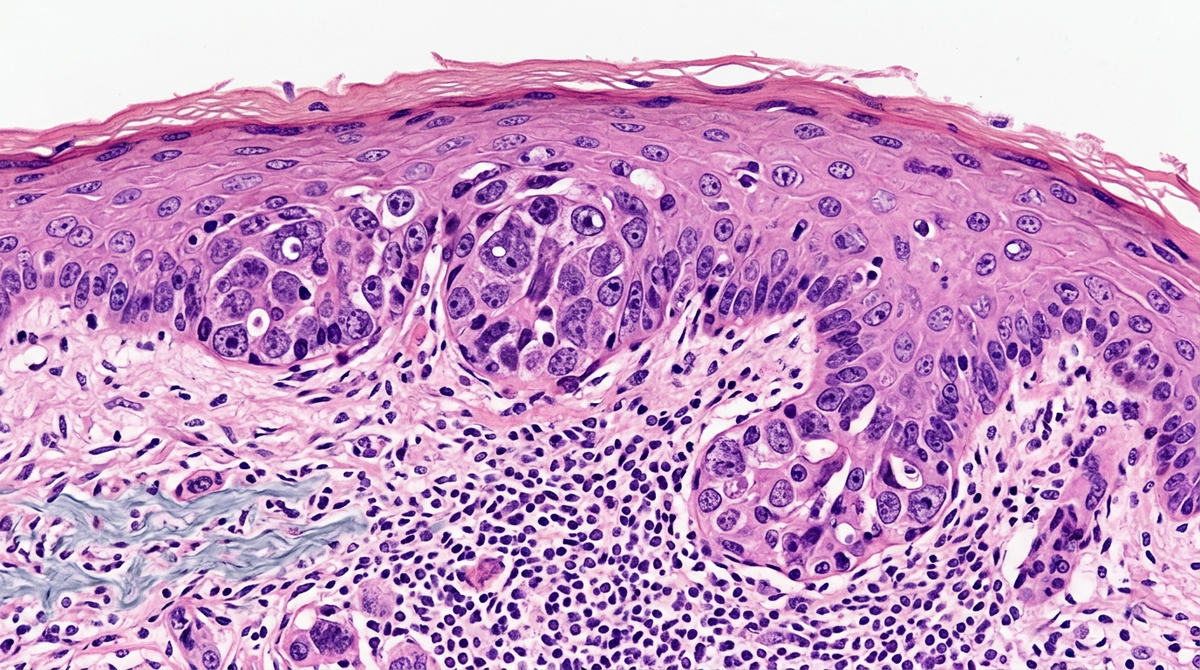
Lentigo maligna is melanoma in situ, which means abnormal melanocytes—the cells that produce skin pigment—are confined to the skin's outermost layer. At this stage, the abnormal cells have not grown into the deeper layers of the skin.
If those cells begin growing downwards, the condition becomes lentigo maligna melanoma, an invasive form of melanoma that may spread elsewhere in the body. Lentigo maligna often changes over many years, but it is impossible to predict reliably whether or when a particular lesion will become invasive. This is why medical assessment and treatment are important.
Lentigo maligna most commonly occurs in older adults and on areas with long-term sun exposure, particularly the:
-
Face, especially the cheeks and nose
-
Ears
-
Scalp
-
Neck
-
Forearms and lower legs
It is more frequent in people with fair skin, although it can affect any skin tone.
What does lentigo maligna look like?
Lentigo maligna often begins as a flat, slowly enlarging patch that may resemble a freckle, sunspot or age spot. It may be light brown initially and become more irregular over time.
Warning signs include:
-
Asymmetry: One half of the mark does not resemble the other.
-
Irregular borders: The edges may look blurred, scalloped or uneven.
-
Uneven colour: The patch may contain different shades of tan, brown, black, grey, pink, red or white.
-
Increasing size: It gradually spreads outwards and can become several centimetres wide.
-
Change over time: Its colour, outline, texture or overall appearance evolves.
-
A new raised area: A lump or thickened section within a previously flat patch may suggest invasive growth.
-
Bleeding, crusting or itching: These symptoms are not always present, but any such change should be assessed.
The familiar ABCDE guide—Asymmetry, Border, Colour, Diameter and Evolving—can help when checking moles and pigmented patches. However, lentigo maligna may not fit every rule. The most important clue is often a mark that looks different from surrounding sunspots or continues to change.
It is not possible to diagnose lentigo maligna accurately from appearance alone. Avoid treating a suspicious patch with brightening products, acids, retinoids or home remedies before it has been examined, as fading or irritating the surface could make changes harder to monitor and delay appropriate care.
Who is at greater risk?
The main cause is cumulative exposure to ultraviolet radiation from sunlight. Risk tends to increase with age because UV damage builds over time.
Other risk factors include:
-
Fair skin that burns easily
-
A history of significant sun exposure or outdoor work
-
Previous skin cancer
-
Numerous sunspots or other signs of sun damage
-
A weakened immune system
-
A personal or family history of melanoma
Having one or more risk factors does not mean that a person will develop lentigo maligna. Likewise, somebody without obvious risk factors may still be affected.
How is it diagnosed?

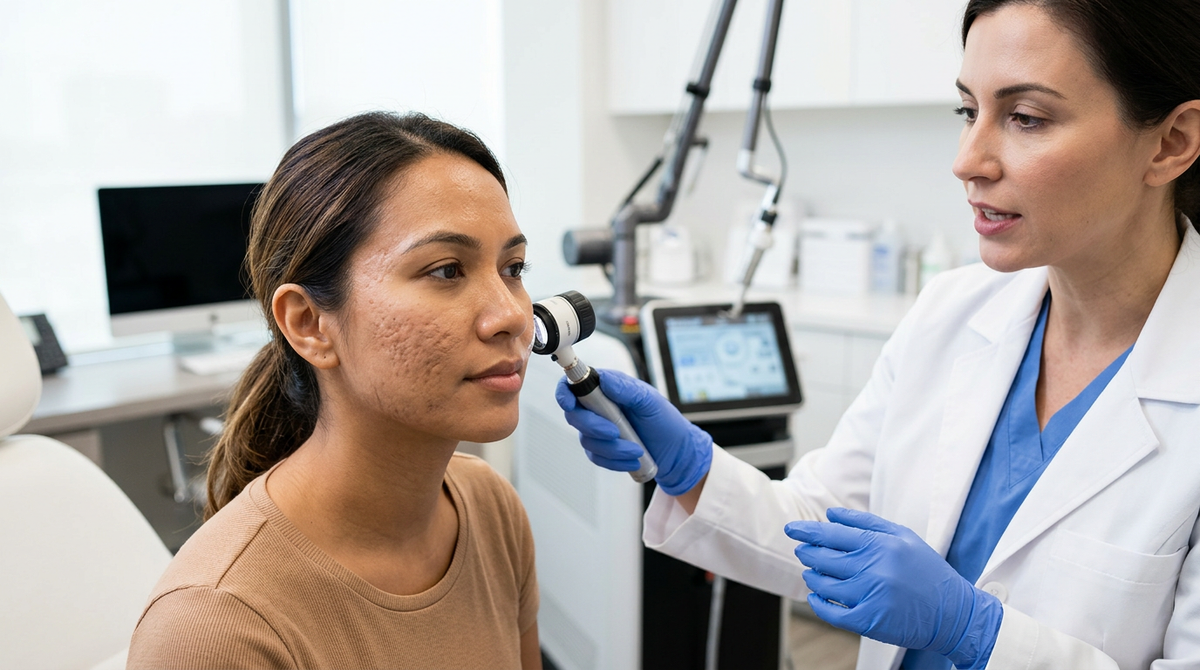
A GP or dermatologist will examine the lesion and may use a dermatoscope, a magnifying instrument that reveals structures beneath the skin's surface.
If the patch looks suspicious, a biopsy is required. Depending on its size and location, the clinician may remove the entire lesion or take one or more samples from the most concerning areas. A pathologist then examines the tissue under a microscope to determine whether it is lentigo maligna and whether invasive melanoma is present.
Large or uneven lesions can occasionally contain an invasive area that was not captured in an initial sample. Complete removal may therefore provide additional information about the diagnosis.
How is lentigo maligna treated?
Surgical removal
Surgery is the main treatment. The lesion is removed along with a margin of apparently normal skin to clear abnormal cells that may extend beyond the visible border. The tissue is examined to check whether the edges are clear.
Because lentigo maligna frequently appears on the face, removing it can be challenging. The visible patch may also underestimate its microscopic extent. In some specialist centres, staged excision or margin-controlled surgery may be considered, allowing the edges to be checked carefully while preserving as much healthy tissue as possible.
Reconstruction may involve direct closure, a skin graft or a local skin flap. The approach depends on the lesion's size, depth and position.
Non-surgical treatments
When surgery is unsuitable because of a lesion's location, a person's health or other clinical considerations, a specialist may discuss alternatives. These can include:
-
Imiquimod cream, which stimulates a local immune response
-
Radiotherapy
-
Cryotherapy, in selected circumstances
These options may not provide the same certainty of complete clearance as surgery because no entire specimen is available for microscopic examination. Treatment should therefore be planned and monitored by a dermatologist or specialist skin-cancer team.
If invasive lentigo maligna melanoma is diagnosed, treatment and staging depend on how deeply it has entered the skin and other pathological features. Wider surgery and, in some cases, lymph-node assessment or further tests may be recommended.
What happens after treatment?
Follow-up is important because lentigo maligna can recur, particularly when abnormal cells extend beyond its visible edges. The clinician will advise how often the treated area and the rest of the skin should be checked.
Between appointments:
-
Examine the scar and nearby skin for renewed pigmentation, thickening or other changes.
-
Check the rest of the body regularly for new or evolving marks.
-
Photograph existing lesions periodically under consistent lighting.
-
Report a suspicious change rather than waiting for the next scheduled review.
Can skincare prevent lentigo maligna?
No skincare product can treat lentigo maligna or guarantee that it will not develop. Consistent UV protection, however, can reduce further sun damage and forms an important part of caring for sun-exposed skin.
Use a broad-spectrum sunscreen with a high SPF every day, applying it generously to exposed areas and reapplying every two hours when outdoors, as well as after swimming, sweating or towel-drying. REFORM Skincare's SPF 50+ Antioxidant Sunscreen is one suitable high-protection option, offering broad-spectrum UVA and UVB defence. Sunscreen should be combined with shade, protective clothing, a broad-brimmed hat and sensible avoidance of intense midday sun.
After a biopsy, surgery or other medical treatment, follow the clinical team's wound-care instructions. Do not apply active skincare or sunscreen directly to an unhealed wound unless advised to do so.
When should you seek medical advice?
Arrange an assessment if you notice a pigmented patch that is new, changing, irregular, unusually coloured or different from your other marks. A lesion that develops a raised area, bleeds, crusts or fails to heal should also be checked promptly.
Lentigo maligna is generally slow-growing, but early assessment matters. When identified while it remains confined to the skin's surface, it can usually be treated before it develops the ability to spread.