Recognising the Signs: When to See a Consultant Dermatologist for Hair Loss
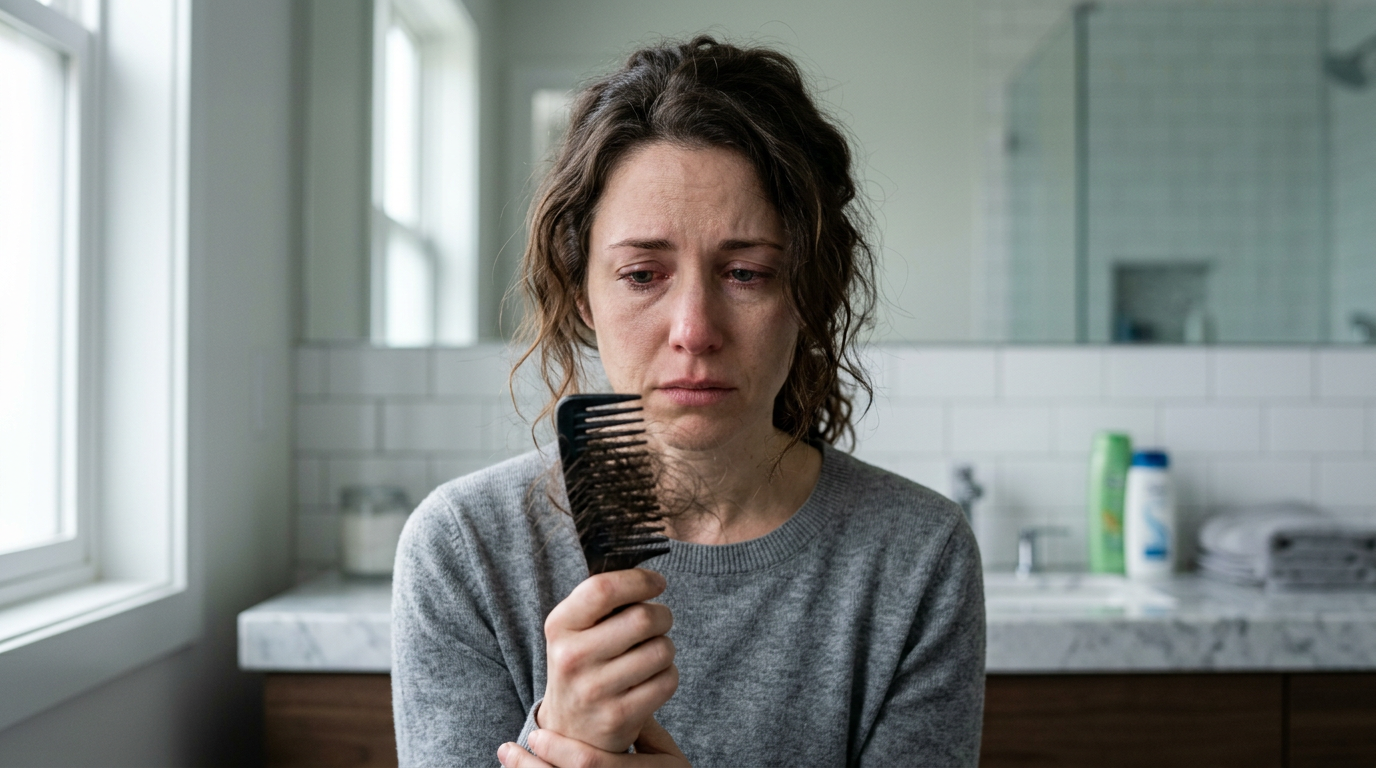
You notice more hair in the shower drain than usual. Your parting looks wider than it did a year ago. The "volumising" shampoo you bought last month isn't doing much of anything. If any of this sounds familiar, you are far from alone — and you may be at the point where over-the-counter products can no longer give you what you need.
Hair loss affects millions of adults across the UK, spanning every gender, ethnicity, and age group. In fact, male pattern baldness alone impacts an estimated 6.5 million men in the UK, while roughly 50% of womenwill experience significant thinning by the age of 65.
Yet despite how common it is, most people spend months — sometimes years — cycling through high street shampoos, supplements, and social-media remedies before ever sitting down with a consultant dermatologist. That delay matters. Hair loss is often progressive, and the earlier a medical professional identifies the cause, the more effective treatment tends to be.
This post is a frank guide to understanding why hair falls out, what consumer products can and cannot do, and how to recognise the signs that it is time to book a medical dermatology consultation.
Understanding Why Hair Falls Out
Hair grows in cycles. At any given moment, about 90 percent of your hair is in the anagen (active growth) phase, which lasts two to seven years. A smaller percentage is in catagen (transition) and telogen (resting and shedding). Losing 50 to 100 hairs a day is perfectly normal.
Problems arise when something disrupts that cycle — shortening the growth phase, pushing too many follicles into shedding at once, or damaging follicles so severely they stop producing hair altogether. The causes are wide-ranging:
-
Androgenetic alopecia (pattern hair loss): The most common form, driven by genetics and hormonal sensitivity to dihydrotestosterone (DHT). It causes gradual thinning at the temples and crown in men and diffuse thinning along the parting line in women.
-
Telogen effluvium: A temporary but dramatic shedding triggered by stress, severe illness, surgery, rapid weight loss, or hormonal shifts such as postpartum changes.
-
Alopecia areata: An autoimmune condition in which the immune system attacks hair follicles, producing round, smooth patches of baldness.
-
Nutritional deficiencies: Low iron (ferritin), vitamin D, zinc, or biotin levels can all contribute to thinning.
-
Thyroid disorders: Both hypothyroidism and hyperthyroidism can alter hair growth cycles.
-
Scarring alopecias: A group of inflammatory conditions (like frontal fibrosing alopecia or central centrifugal cicatricial alopecia) that permanently destroy follicles if left untreated.
-
Medications and medical treatments: Chemotherapy is the most well-known culprit, but blood thinners, retinoids, certain antidepressants, and hormonal therapies can also cause shedding.
The critical takeaway: Hair loss is a symptom, not a diagnosis. Treating it effectively requires knowing which of these mechanisms is at play — and that is something a shampoo bottle cannot tell you.
What Over-the-Counter Products Actually Do
Let’s be clear: not every hair-care product is snake oil. Some have genuine, if limited, benefits.
-
Ketoconazole shampoos: Can reduce scalp inflammation and have a mild anti-androgenic effect that may support hair retention in pattern hair loss.
-
Minoxidil (Regaine): This is the main over-the-counter (OTC) ingredient with robust clinical evidence. It prolongs the anagen phase and increases follicle size. It works best for early, mild thinning — and it requires consistent, indefinite use.
-
Biotin supplements: May help if you have a documented deficiency, but for most adults eating a balanced diet, extra biotin does little for hair growth.
-
Volumising and thickening shampoos: These simply coat the hair shaft to create the appearance of fuller hair. They do not affect the follicle or slow down the loss in any way.
-
Caffeine-infused shampoos, rosemary oil, and other botanicals: Show some promise in early-stage research, but clinical evidence remains limited and inconsistent.
The honest summary: OTC products can maintain or modestly improve mild thinning in certain types of hair loss, particularly androgenetic alopecia. They cannot reverse significant loss, treat autoimmune or scarring conditions, correct hormonal imbalances, or regrow hair from dormant follicles. When the cause goes deeper than surface-level care can reach, it is time for a medical approach.
Red Flags: When to See a Dermatologist

So how do you know when you have crossed the line from "normal shedding" or "try a better conditioner" into "I need professional help"? Watch for these signals:
-
Sudden or rapid shedding: If you are losing noticeably more hair over a period of weeks — clumps in the shower, hair on your pillow, thinning you can see in photos — that pace suggests something systemic, not cosmetic.
-
Patchy bald spots: Smooth, round patches of hair loss are a hallmark of alopecia areata and warrant prompt evaluation.
-
Scalp symptoms: Persistent itching, burning, tenderness, redness, scaling, or pustules can indicate an inflammatory or scarring alopecia. These conditions can cause permanent follicle loss if not treated early.
-
Thinning that doesn't respond to minoxidil after six months: Minoxidil is effective for many people, but if you have used it consistently for half a year without improvement, the underlying cause may be something it cannot address.
-
Hair loss accompanied by other symptoms: Fatigue, unexplained weight changes, irregular periods, or brittle nails alongside hair loss point toward thyroid dysfunction, iron deficiency, or other medical conditions that require blood tests — not a new shampoo.
-
Receding or thinning that is affecting your confidence: This is reason enough. You do not need a dramatic medical event to justify seeing a specialist. If hair loss is causing you distress, a dermatologist can offer options you simply cannot access on the high street.
What Happens During a Dermatology Consultation
In the UK, you can see a consultant dermatologist privately or via an NHS referral from your GP (though NHS cosmetic pathways for hair loss can be restricted depending on your local trust, making severe or inflammatory cases the primary focus for NHS care).
Walking into a dermatologist's office for hair loss isn't intimidating. Here is what to expect:
1. Detailed Medical History
The doctor will ask about the timeline of your hair loss, family history, medications, diet, stress levels, and any recent illnesses or surgeries.
2. Scalp Examination
A dermatologist can often identify the type of hair loss by visually examining your scalp. Many use dermoscopy (also called trichoscopy), a magnified imaging tool that reveals miniaturised follicles, inflammation, or scarring invisible to the naked eye.
3. Blood Tests
Blood tests for thyroid function, ferritin (iron stores), vitamin D, hormonal panels, and inflammatory markers help rule out or confirm systemic causes.
4. Scalp Biopsy
In ambiguous cases — particularly when a scarring alopecia is suspected — a small punch biopsy of the scalp provides a definitive diagnosis under a microscope.
Treatment Options Beyond the Chemist's Shelf
Once a diagnosis is confirmed, a consultant dermatologist can offer targeted, prescription-only treatments:
| Treatment Type | How it Works / What it Treats |
| Oral Minoxidil | Low-dose oral tablets that have gained significant traction for patients who do not respond well to or tolerate topical formulations. |
| Finasteride or Dutasteride | Oral medications that block DHT. These can slow down or reverse pattern hair loss in men, and are used in select, specific cases for women. |
| Anti-inflammatory Therapies | Topical, oral, or injected corticosteroids. For severe alopecia areata, advanced treatments like JAK inhibitors (e.g., baricitinib) are licensed for use in the UK. |
| Hormone-Modulating Treatments | Medications like spironolactone or specific oral contraceptives for women with hormonally driven thinning. |
| PRP (Platelet-Rich Plasma) Therapy | Injections of your own concentrated platelets into the scalp to stimulate follicle activity (primarily available via private clinics). |
| Hair Transplant Surgery | A viable private option once hair loss has stabilised, offering permanent redistribution of healthy follicles to thinning zones. |
The Cost of Waiting
Perhaps the most important thing to understand about hair loss is that time is a factor. Many forms of alopecia are progressive. In androgenetic alopecia, miniaturised follicles can eventually stop producing visible hair entirely. In scarring alopecias, destroyed follicles do not come back — no medication or procedure can reverse permanent scarring.
Early intervention preserves your options; late intervention limits them. Every month spent hoping a new high street shampoo will turn things around is a month that a dermatologist could have spent stabilising your hair, or saving follicles that are on the verge of going dormant for good.
The Bottom Line: Shampoos have their place, and good scalp care matters. But if your hair loss is persistent, progressive, patchy, or accompanied by scalp irritation, you have outgrown the pharmacy aisle. A General Medical Council (GMC) registered consultant dermatologist can identify the why behind your hair loss, and that diagnosis is the foundation for any treatment that actually works.