Laser Tattoo Removal UK: How Many Sessions Do You Need?
So, you’ve decided that tattoo no longer represents who you are. Perhaps it’s an ex’s name, a design that hasn’t aged well, or simply a style choice you’ve outgrown. Whatever the reason, laser tattoo removal is the gold standard for getting rid of unwanted ink — but the first question everyone asks is the same: how many sessions is this going to take?
The honest answer? It depends. That’s not a cop-out — it’s the reality of a process shaped by your skin, your ink, and your body’s own biology. Let’s break down exactly what determines the number of sessions you’ll need, what to realistically expect, and how to set yourself up for the fastest, cleanest results.
How Laser Tattoo Removal Actually Works
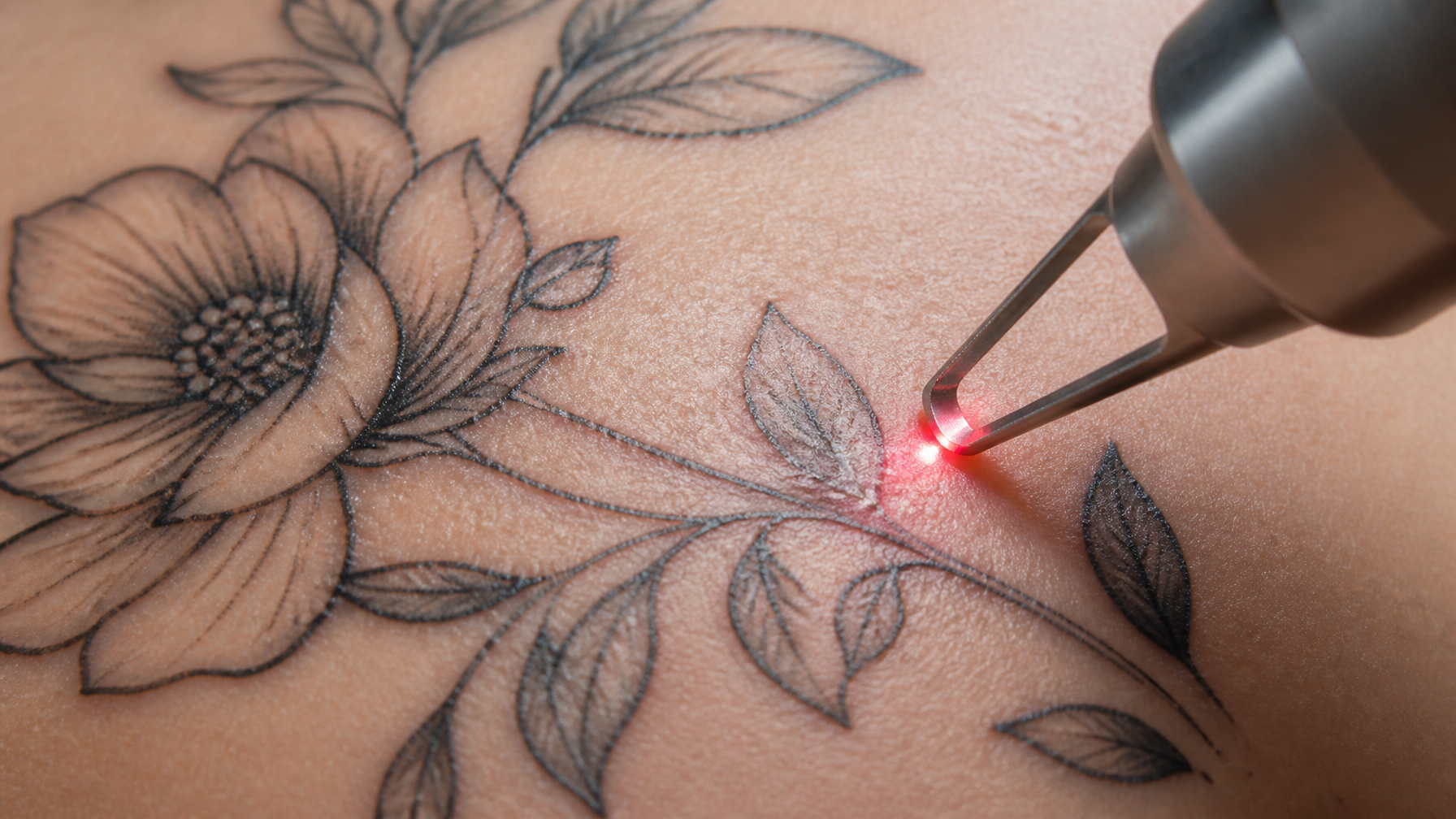
Before we talk numbers, it helps to understand the mechanism. Laser removal doesn’t "erase" a tattoo the way a cloth cleans a whiteboard. Instead, the laser delivers ultra-short pulses of concentrated light energy that shatter ink particlesbeneath the skin into tiny fragments. Your immune system — specifically your white blood cells and lymphatic system — then flushes those fragments out of the body naturally over the following weeks.
Why the gap? This is why sessions are spaced 6 to 8 weeks apart (sometimes longer). Your body needs time between treatments to do its part of the work. Each session breaks down a new layer of ink, and each recovery period lets your immune system clear it away.

Modern UK clinics typically use Q-switched lasers or the newer picosecond lasers, which pulse at different speeds. Picosecond lasers deliver energy in trillionths of a second, shattering ink more efficiently and often reducing the total number of sessions required. But even with the latest technology, multiple sessions are always necessary — no laser removes a tattoo in a single visit.
The Average: 6 to 12 Sessions
For most people, complete tattoo removal takes somewhere between 6 and 12 sessions. Some simpler tattoos fade in as few as 4 or 5 treatments, while complex, heavily saturated pieces can stretch to 15 or more. That’s a wide range, and several key variables determine where on the spectrum you’ll fall.
The Factors That Determine Your Session Count
1. Ink Colour
This is one of the biggest factors. Black and dark blue inks are the easiest to remove because they absorb the broadest spectrum of laser wavelengths. The laser can target them efficiently and break them down quickly.
Green, light blue, purple, and yellow inks are notoriously stubborn. They only respond to specific wavelengths, which means the laser has to work harder and you’ll likely need more sessions. If your tattoo is a multi-coloured piece, expect the removal timeline to be dictated by whichever colour is the most resistant.
2. Tattoo Size and Density
A small, lightly shaded tattoo will respond faster than a large, densely packed sleeve. Heavily saturated areas have more ink deposited deep in the dermis, which means more layers for the laser to work through. Fine-line tattoos often clear faster than bold, traditional-style tattoos with thick, solid fills.
3. Tattoo Age
Here’s a case where time is on your side. Older tattoos are easier to remove than newer ones. Over the years, your body has already started to break down and disperse the ink naturally — that’s why old tattoos look faded and blurry. A 15-year-old tattoo may need significantly fewer sessions than one you got last year.
4. Tattoo Location on the Body
Tattoos closer to your heart and on areas with strong blood circulation tend to fade faster. Chest, upper back, and upper arm tattoos typically respond well because blood flow is robust in those areas, helping your lymphatic system flush ink particles efficiently.
Tattoos on the extremities — ankles, wrists, hands, and feet — tend to be more stubborn. Blood flow is weaker in these areas, which slows the body’s natural clearing process. Expect a few extra sessions for ink in these locations.
5. Your Skin Tone
Laser tattoo removal works by targeting the contrast between ink pigment and surrounding skin. Lighter skin tonesgenerally allow for more aggressive treatment because the laser can differentiate easily between ink and skin.
Darker skin tones require more caution — the laser settings need to be adjusted to avoid damaging melanin in the skin, which can mean lower energy settings and, consequently, more sessions. This doesn't mean removal isn't possible for darker skin — it absolutely is, especially with newer Nd:YAG lasers designed for this purpose. It simply means the process may take longer and requires a practitioner experienced with diverse skin types.
6. Professional vs. Amateur Tattoos
Professionally done tattoos use high-quality ink applied at a consistent depth with professional machines. This uniformity actually helps with laser targeting, but the sheer amount of ink deposited is greater.
Amateur or "stick-and-poke" tattoos are often applied unevenly and at shallower depths with lower-quality ink. Ironically, these tend to be easier and faster to remove — sometimes clearing in as few as 3 to 5 sessions — because there’s simply less ink for the laser to deal with.
7. Your Immune System and Lifestyle
Since your body does half the work, your overall health matters. People who are younger, physically active, non-smokers, and well-hydrated tend to see faster results. Smoking, in particular, has been shown to significantly slow the fading process — some studies suggest it can reduce removal effectiveness by as much as 70%.
What a Typical Treatment Timeline Looks Like
Let’s put this into a real-world timeline. Assuming sessions are spaced 6 to 8 weeks apart:
For most people with an average black-ink tattoo of moderate size, you’re looking at roughly a year to a year and a halfof treatment. Patience is genuinely part of the process.
What About Fading for a Cover-Up?
Not everyone needs complete removal. If you’re planning to get a cover-up tattoo, you may only need 3 to 5 sessions to lighten the existing ink enough for a tattoo artist to work over it. This is a faster, more affordable approach that has become increasingly popular. Talk to both your removal technician and your tattoo artist to coordinate the level of fading needed.
Tips to Minimise Your Session Count
While you can’t change factors like ink colour or tattoo location, there are things within your control:
-
Don't smoke. Seriously — this is one of the most impactful things you can do to speed up the process.
-
Stay hydrated and exercise regularly. Anything that supports circulation and immune function helps your body flush ink faster.
-
Protect the area from sun exposure. Tanned or sunburned skin cannot be treated safely, which delays your next session. Use a high SPF sunscreen religiously on the treatment area.
-
Follow aftercare instructions precisely. Blistering, scabbing, and peeling are normal — but how well you care for the skin between sessions directly affects your final outcomes.
-
Choose a reputable clinic with modern technology. A clinic using a picosecond laser and staffed by qualified practitioners will almost always deliver results in fewer sessions than a bargain provider using outdated equipment.
The Cost Factor
In the UK, laser tattoo removal typically starts from around £50 to £150 per session for small tattoos, ranging up to £300+ per session for larger, more complex designs. Because multiple treatments are required, it represents a multi-session investment. Most reputable clinics offer package deals (such as buying a course of 6 sessions for the price of 5) which can help bring the per-session cost down.
Setting Realistic Expectations
The most important thing to understand about laser tattoo removal is that it’s a marathon, not a sprint. Results are gradual. You might not see dramatic fading until after the third or fourth session, and the final few sessions often target the faintest, most stubborn remnants of ink.
Complete removal to the point where no trace is visible is achievable for many tattoos, but some may leave behind a faint "ghost" image or slight texture change in the skin. A good practitioner will be transparent about what is realistic for your specific tattoo during your initial consultation.
The Bottom Line
Most people need 6 to 12 sessions spaced 6 to 8 weeks apart, putting the total timeline at roughly one to two years. Your specific number depends on ink colour, tattoo age, size, placement, skin tone, and your body’s own healing capacity.
The best first step is to book a consultation with a qualified laser technician who can evaluate your tattoo in person, conduct a patch test, and provide you with a personalised estimate. That tattoo may have been a permanent decision — but it doesn’t have to be a permanent outcome.