Guide to UK Skin Cancer Screening & Mole Mapping | What to Expect
Regular skin checks are one of the simplest, most powerful ways to catch skin cancer early. Yet many people put them off because they are unsure what to expect, feel embarrassed, or don’t realise they are at risk.
This guide walks you through full-body skin cancer screenings and mole mapping—what they are, who needs them, how they work, and how to prepare—so you can go into your appointment confident, informed, and in control.
(This is general information, not a substitute for a consultation with a doctor or consultant dermatologist.)
Why Skin Cancer Screening Matters
Skin cancer is one of the most common cancers in the UK. The good news: when detected early, most skin cancers are highly treatable and have an excellent prognosis.
Some key reasons screening is important:
-
The skin is visible: Unlike many internal cancers, you can actually see suspicious changes—if you know what to look for and get checked.
-
Not all dangerous lesions look scary: Melanoma and other skin cancers can be small, flat, skin-coloured, or look like a "normal" mole.
-
The sun exposure factor: You don't need to live in the tropics to be at risk. In the UK, intermittent intense sun exposure (like sunny weekends or outdoor hobbies) and sunburns on foreign holidays significantly increase your risk. Outdoor work and everyday commuting also add up.
-
Catching changes early: Screenings and mole mapping help catch changes before they become advanced or life-threatening.
What Is a Full-Body Skin Cancer Screening?
A full-body skin cancer screening is a head-to-toe examination of your skin performed by a consultant dermatologist, a GP specialising in dermatology, or a specially trained clinical nurse.
During this exam, the specialist will:
-
Visually inspect your skin from your scalp to your toes (including areas you cannot easily see yourself).
-
Look for suspicious lesions, such as new moles, changing spots, wounds that won’t heal, or unusual growths.
-
Assess your risk, considering your medical history, skin type, sun exposure, and family history.
What areas are checked?
A thorough screening typically includes:
-
Scalp, face, ears, neck
-
Chest, breasts, abdomen, back
-
Arms, hands, fingers, nails
-
Legs, feet, toes, and soles
-
Skin folds (behind ears, under breasts, groin, buttocks)
-
Sometimes the genital area (only with your explicit consent and if clinically relevant)
Note: If you are uncomfortable about specific areas, let your clinician know—they can explain why an area matters and adjust the exam based on your preferences.
What Is Mole Mapping?

Mole mapping (sometimes called full-body photography or digital mole mapping) is a specialised service—typically available privately or at tertiary NHS specialist clinics—used to document and track your moles and pigmented spots over time.
It usually involves:
-
High-quality photographs of your whole body from standard angles.
-
Close-up images (dermoscopic photos) of specific moles or spots of interest using a specialized skin magnifier.
-
Software-assisted comparison at each follow-up visit to spot new lesions or subtle changes in existing moles.
Why mole mapping is useful
-
Detects tiny changes: Even minor differences in shape, colour, or size can be picked up when digital images are compared side-by-side over months or years.
-
Helps manage high-risk patients: Individuals with a large number of moles or atypical moles can be monitored much more safely and accurately.
-
Reduces unnecessary biopsies: If a mole looks identical to previous images, your dermatologist may feel more confident that it is benign, saving you from an unnecessary minor operation.
-
Supports early melanoma detection: Melanoma can arise from a changing mole or appear as a brand-new lesion; mapping makes these far easier to identify.
Think of mole mapping as giving your dermatologist a "before" picture so they can easily spot the "after" changes.
Who Should Consider Full-Body Screening and Mole Mapping?
While everyone should keep an eye on their skin, some people are at higher risk and should consider regular professional screenings or mole mapping. This includes:
-
People with many moles (especially more than 50 to 100)
-
Those with atypical (dysplastic) moles—moles that are large, irregular, or unusually coloured
-
A history of severe sunburns, especially in childhood or teenage years
-
Fair skin, red or blonde hair, light eyes, or skin that freckles and burns easily
-
A personal or family history of skin cancer (melanoma, basal cell carcinoma, or squamous cell carcinoma)
-
Outdoor workers or those with frequent sun exposure (e.g., construction, farming, gardening, or outdoor sports)
-
Regular use of sunbeds in the past
-
People with a weakened immune system due to illness or medications (such as immunosuppressants)
If you fall into any of these categories, speak to a doctor or dermatologist about how often you should be screened.
How to Prepare for a Full-Body Skin Exam
A little preparation helps your appointment go smoothly and makes it easier for the clinician to examine your skin thoroughly.
1. Make a list of concerns
Before your visit, take note of:
-
Any new moles or spots
-
Existing moles that are itchy, bleeding, painful, or changing
-
Areas of skin that don’t heal or keep scabbing over
-
Any specific questions or worries you have
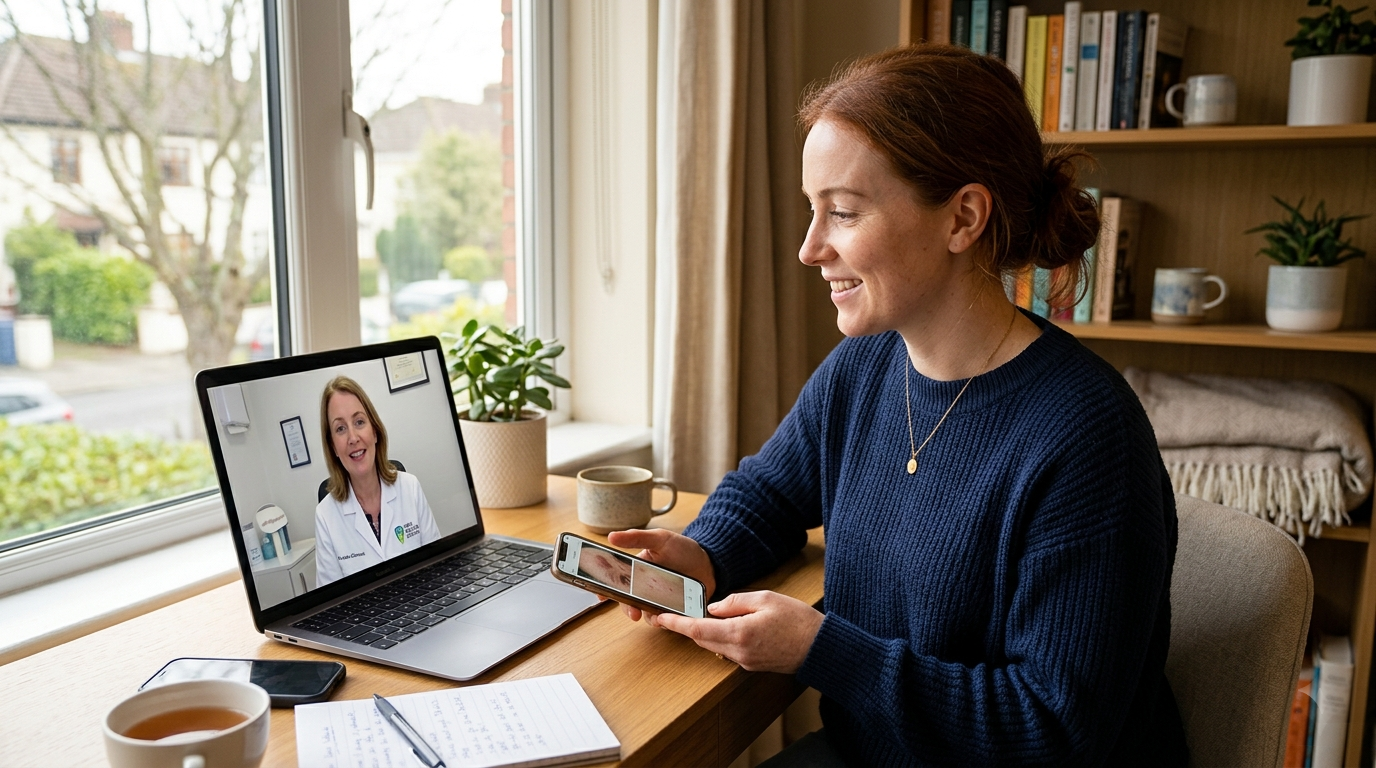
Tip: You can take photos at home of spots you are concerned about to show your doctor in case they alter in appearance before your appointment.
2. Arrive with clean, makeup-free skin
-
Avoid heavy makeup, foundation, or concealer on your face and neck.
-
Remove nail polish (especially dark colours) before you go, so your nail beds can be checked.
-
Do not use fake tan in the days leading up to the appointment; it can distort the natural colour of your moles and make assessment much harder.
3. Wear easy-to-remove clothing
-
Choose comfortable clothes and underwear that you feel okay being examined in.
-
You may be asked to change into a hospital gown, but you will generally keep your underwear on.
4. Bring your medical information
If relevant, bring along:
-
A list of your current medications and allergies
-
Details of any previous skin biopsies or skin cancer treatments
-
Any known family history of melanoma or other skin conditions
What Happens During the Screening?
Step 1: Discussion of history and concerns
Your clinician will start by asking about your medical history, your sun exposure habits (including sunbed use and holiday history), and whether you have noticed any changing spots. Be as detailed as possible, as this shapes their assessment.
Step 2: The actual skin exam
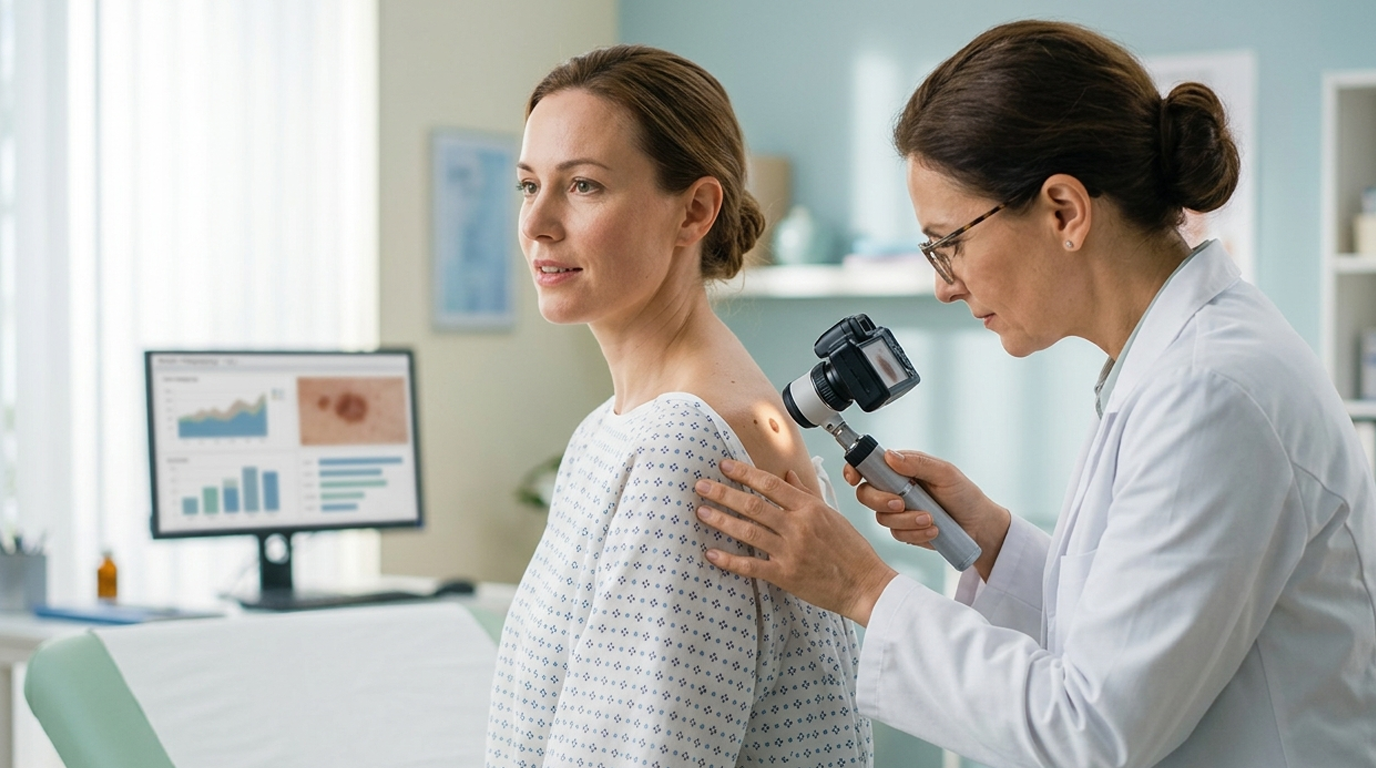
You will be asked to undress to your underwear in a private cubicle. The clinician will use bright lighting and a dermatoscope—a handheld, lighted magnifying tool—to inspect your moles systematically from head to toe.
Step 3: Focusing on specific lesions
If the clinician finds an unusual spot, they will evaluate it closely, often using the ABCDE rule:
-
A – Asymmetry: One half of the mole does not match the other.
-
B – Border irregularity: The edges are ragged, notched, or blurred.
-
C – Colour variation: The colour is not uniform; it may have patches of pink, black, brown, or white.
-
D – Diameter: The spot is larger than 6mm across (about the size of a pencil eraser), though melanomas can sometimes be smaller.
-
E – Evolving: The mole is changing in size, shape, colour, or is causing new symptoms like itching or bleeding.
What Happens During Mole Mapping?
If you opt for digital mole mapping, the process typically adds the following steps:
-
Full-body photography: You will stand in standardized positions while a specialised studio camera captures high-resolution views of your entire body. These images are stored securely on a medical database.
-
Close-up dermoscopic images: Any moles identified as "atypical" or requiring close monitoring are photographed via a digital dermatoscope to record their microscopic structure.
-
Digital comparison over time: At your follow-up appointments (usually 6 to 12 months later), the software flags new spots or subtle alterations in your existing moles for the dermatologist to review.
If a Suspicious Spot Is Found
Finding a suspicious mole does not automatically mean you have cancer. However, your clinician may recommend further steps:
Skin biopsy / Excision
If a spot looks highly suspicious, it will usually be removed. This is a minor surgical procedure performed under local anaesthetic (meaning you are awake, but the area is completely numbed). This may be done by a dermatologist, a GP with a special interest, or a plastic surgeon.
The removed tissue is sent to a pathology laboratory to be examined under a microscope.
Waiting for results
In the UK, biopsy results typically take anywhere from a few days to a few weeks, depending on whether you are seen via the NHS or privately.
The pathology report will determine if the lesion is:
-
Benign: Non-cancerous.
-
Pre-cancerous: Such as actinic keratosis or severe dysplasia.
-
Cancerous: Such as basal cell carcinoma (BCC), squamous cell carcinoma (SCC), or melanoma.
If skin cancer is diagnosed, your specialist will discuss your treatment plan. For the majority of early-stage skin cancers, the minor surgery to remove the mole is the only treatment required.
How Often Should You Get Screened?
-
Average risk (no concerning factors): Keep an eye on your own skin at home, and consider a professional check if you ever notice a change.
-
Higher risk (many moles, family history, fair skin): A professional screening or mole mapping every 6 to 12 months is often recommended.
-
Previous skin cancer: Your dermatologist will set a specific follow-up schedule, which often involves regular checks for the first few years after treatment.
Tips for At-Home Skin Checks
Professional screenings are vital, but checking your own skin once a month is your first line of defence.
-
How to check: Use a full-length mirror and a handheld mirror to examine hard-to-reach places. Alternatively, ask a partner or close family member to check your back and scalp.
-
Where to check: Don't forget easily missed areas like behind your ears, your scalp, under your breasts, your buttocks, the soles of your feet, and between your toes.
-
What to look for: Look for the "Ugly Duckling"—a mole that looks entirely different from all the other moles on your body, or any spot that is new, changing, itching, or bleeding.
The Golden Rule: If a spot or mole concerns you, do not wait for your next routine check. Book an appointment with your GP or a private dermatologist straight away.
Key Takeaways
-
Early detection saves lives: Caught early, the vast majority of skin cancers are entirely curable.
-
Mole mapping tracks changes: It provides a digital baseline of your skin, making it much easier to catch subtle, early signs of melanoma.
-
Know your risk: If you have fair skin, a large number of moles, or a family history of skin cancer, routine screenings are highly beneficial.
-
Preparation is simple: Arrive with clean, fake-tan-free skin and a note of any spots you've been worrying about.
-
Don't panic: Finding a suspicious lesion is an opportunity to treat a problem early, when it is simplest to resolve.