Adult Acne: Why You're Breaking Out in Your 30s (and How to Fix It)
You survived the teenage years. You made it through your 20s. You assumed, like most people do, that breakouts were something you'd eventually outgrow — a rite of passage that would quietly disappear alongside your university futon and questionable fashion choices.
And yet, here you are. Staring at a fresh breakout in the bathroom mirror at 33, wondering what you did to deserve this.
You're not alone. Adult acne — particularly acne that persists or appears for the first time in your 30s — is remarkably common, affecting up to 50% of women and around 25% of men in this age group. It's frustrating, sometimes painful, and often deeply misunderstood. The products and routines that worked (or didn't) at 16 aren't the answer anymore. Your skin has changed, your life has changed, and the underlying causes are almost certainly different.
Let's break down why this is happening and, more importantly, what actually works to fix it.
It's Not the Same Acne You Had as a Teenager
Teenage acne is typically driven by a surge of androgens during puberty. It tends to show up across the forehead, nose, and cheeks — the classic T-zone — and is often characterised by blackheads, whiteheads, and surface-level spots.
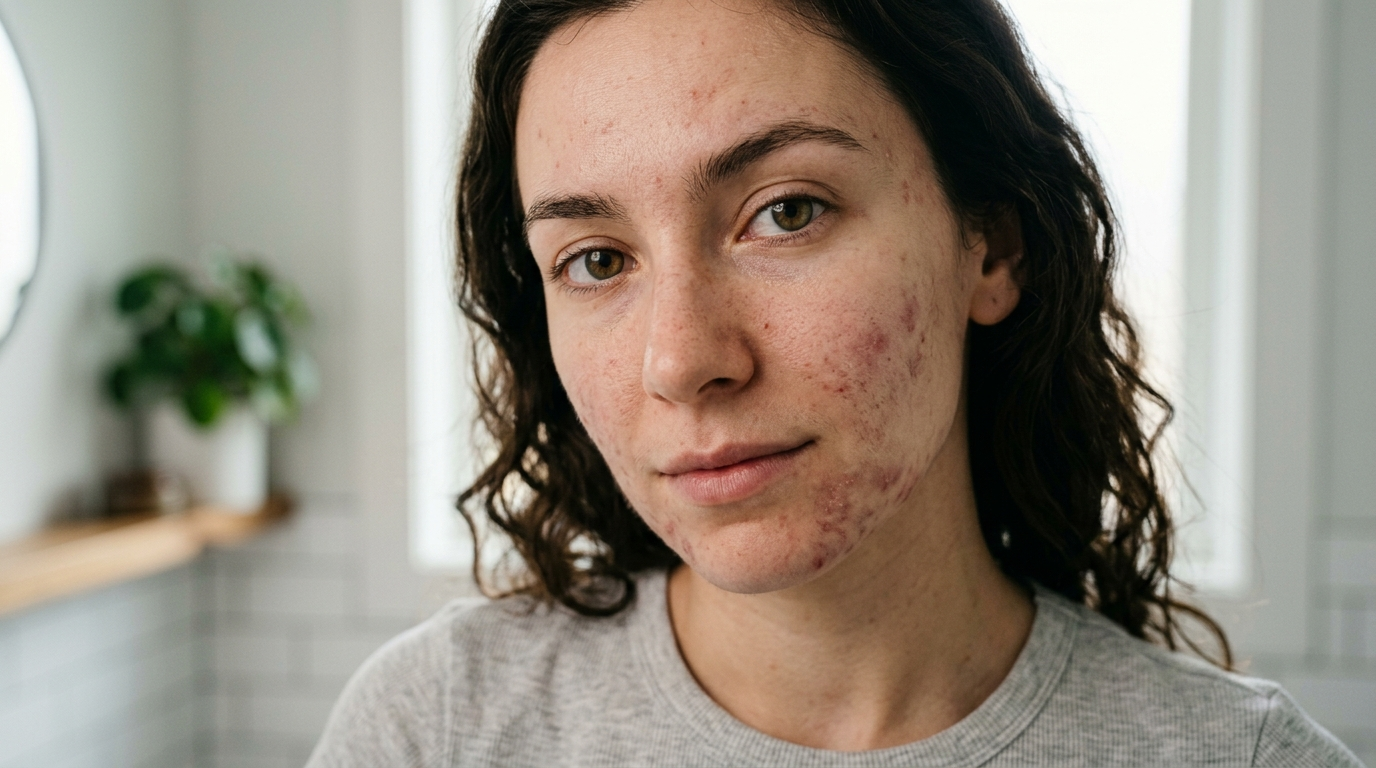
Adult acne plays by different rules. It tends to cluster along the jawline, chin, and lower cheeks. The breakouts are often deeper — those stubborn, under-the-skin cysts that take weeks to clear and sometimes leave marks behind. They're inflammatory, hormonal, and cyclical, frequently flaring in sync with your menstrual cycle, stress levels, or lifestyle shifts.
Understanding this distinction matters because it changes the entire treatment approach. Slathering on the same benzoyl peroxide wash you used at school is unlikely to solve the problem — and might actually make it worse by stripping your now-more-sensitive adult skin.
The Real Reasons You're Breaking Out

1. Hormonal Fluctuations
This is the single biggest driver of adult acne, especially for women. Fluctuations in oestrogen, progesterone, and androgens (like testosterone and DHEA-S) directly influence how much sebum your skin produces and how your pores behave.
These fluctuations can be triggered by:
-
Your menstrual cycle — breakouts that appear like clockwork a week before your period.
-
Going off (or starting) hormonal contraception — which can dramatically shift your hormonal baseline.
-
Perimenopause — yes, even in your late 30s, hormonal shifts can begin earlier than expected.
-
Polycystic ovary syndrome (PCOS) — a condition that affects roughly 1 in 10 women and is strongly associated with hormonal acne.
If your breakouts are concentrated around your jawline and chin and follow a predictable pattern, hormones are almost certainly involved.
2. Chronic Stress
Your 30s often come with compounding responsibilities — career pressure, relationships, children, ageing parents, financial stress. Chronic stress keeps your cortisol levels elevated, and cortisol has a direct relationship with oil production and skin inflammation.
Stress acne isn't just about one bad week. It's the cumulative effect of months or years of running on empty. It also disrupts sleep, digestion, and immune function — all of which feed back into skin health.
3. Your Skincare Routine Is Working Against You
Here's an ironic truth: many people in their 30s break out because of their skincare routine, not despite it. Common mistakes include:
-
Over-exfoliating with acids, retinoids, and physical scrubs simultaneously, which damages the skin barrier and triggers more inflammation.
-
Using products designed for oily teenage skin, which strip moisture and cause your skin to overcompensate with more oil.
-
Layering too many active ingredients without giving your skin time to adjust.
-
Skipping moisturiser because you think oily skin doesn't need it (it does).
Adult skin is thinner, drier, and more reactive than teenage skin. It needs a gentler, more strategic approach.
4. Diet and Gut Health
The link between diet and acne was dismissed for decades, but recent research has brought it back into focus. High-glycaemic foods — white bread, sugary snacks, processed carbohydrates — cause rapid spikes in blood sugar and insulin, which in turn increase androgen activity and sebum production.
Dairy, particularly skimmed milk, has also been associated with increased breakouts in some studies, likely due to the hormones and growth factors naturally present in milk.
Beyond specific foods, overall gut health plays a role. An imbalances gut microbiome can contribute to systemic inflammation, which shows up on the skin. If you've been on multiple rounds of antibiotics, eat a low-fibre diet, or deal with chronic digestive issues, your gut may be part of the picture.
5. Environmental and Lifestyle Factors
A few other common culprits worth examining:
-
Your phone screen — pressing a bacteria-covered phone against your cheek and jawline daily is a recipe for localised breakouts.
-
Pillowcases — if you're not washing them weekly, you're sleeping in a cocktail of oil, dead skin, and bacteria.
-
Masks — "maskne" became a household term for a reason; friction and trapped moisture create a perfect environment for breakouts.
-
Hair products — oils, silicones, and styling products migrate to your forehead and hairline, clogging pores.
How to Actually Fix It
Step 1: Simplify Your Routine
Strip your routine back to the essentials and rebuild from there.
-
Gentle cleanser — look for a sulfate-free, pH-balanced cleanser that removes dirt and makeup without stripping your skin. CeraVe, La Roche-Posay, and Cetaphil are reliable, easily available options in UK chemists.
-
Lightweight moisturiser — even oily, acne-prone skin needs hydration. Look for non-comedogenic formulas with ingredients like hyaluronic acid, niacinamide, or ceramides.
-
Sunscreen — daily, non-negotiable. UV exposure worsens post-acne marks and hyperpigmentation. Choose a lightweight, mineral or hybrid formula rated SPF 30 or higher.
That's it to start. Cleanser, moisturiser, sunscreen. Give your skin two to four weeks on this simplified routine before adding actives.
Step 2: Introduce Targeted Actives — Slowly
Once your skin has stabilised, add one active ingredient at a time, with at least two weeks between introductions:
-
Retinoid (retinol or retinal) — the gold standard for adult acne. It increases cell turnover, prevents clogged pores, and has anti-ageing benefits. Start with a low concentration two to three nights per week and build up gradually. Expect some initial purging.
-
Niacinamide (vitamin B3) — reduces inflammation, regulates oil production, and strengthens the skin barrier. Well-tolerated by most skin types.
-
Salicylic acid (BHA) — a gentle exfoliant that penetrates pores and clears congestion. Best used as a targeted treatment or a leave-on serum rather than a harsh wash.
-
Azelaic acid — an underrated ingredient that fights acne, reduces redness, and fades hyperpigmentation. It's gentle enough for sensitive skin and safe during pregnancy.
Avoid combining too many actives in a single routine. More is not more. A retinoid at night and niacinamide in the morning is a powerful, well-tolerated combination for most adults.
Step 3: Address the Hormonal Component
If topical treatments aren't enough — and for hormonal acne, they often aren't — it's worth talking to a GP or dermatologist about internal options available in the UK:
-
Spironolactone — an anti-androgen medication traditionally used for blood pressure, but widely prescribed off-label by UK dermatologists for hormonal acne in women. It reduces the effect of androgens on oil glands.
-
Combined oral contraceptives — certain birth control pills (like Yasmin or Lucette) can stabilise hormonal fluctuations that trigger breakouts.
-
Topical treatments via prescription — treatments like medical-grade tretinoin or fixed combinations (like Epiduo or Treclin) can be prescribed by a doctor or through reputable UK online dermatology services.
These aren't quick fixes. Spironolactone and prescription topicals typically take three to six months to show full results. But for persistent hormonal acne, they can be genuinely transformative.
Step 4: Make Strategic Lifestyle Adjustments
You don't need to overhaul your entire life, but a few targeted changes can make a meaningful difference:
-
Reduce high-glycaemic and heavily processed foods — prioritise whole grains, vegetables, lean protein, and healthy fats.
-
Manage stress deliberately — whether that's exercise, therapy, meditation, or simply protecting your sleep. Pick what's sustainable for you.
-
Clean your phone screen daily and swap pillowcases at least once a week.
-
Stay hydrated — it's not a magic cure, but adequate hydration supports overall skin function.
Step 5: Be Patient
This is the hardest part. Adult acne didn't appear overnight, and it won't resolve overnight. Most treatments need 8 to 12 weeks to show meaningful results. Switching products every two weeks because you haven't seen improvement yet is one of the most common mistakes people make.
Pick a plan, stay consistent, and track your progress with photos so you can see changes that happen gradually.
When to See a Professional
If you've been consistent with a thoughtful routine for three months and you're still breaking out — or if your acne is severe, cystic, or leaving scars — it's time to seek medical advice. You can book an appointment with your GP, who can offer prescription topicals, oral antibiotics (like lymecycline), or refer you to an NHS dermatologist. Alternatively, you can consult a private dermatologist or try a regulated UK teledermatology service.
There's no reason to tough it out alone. Adult acne is a medical condition, not a hygiene failure or a character flaw.
The Bottom Line
Breaking out in your 30s is not a sign that something is fundamentally wrong with you. It's an incredibly common condition driven by hormones, stress, and lifestyle factors that are largely within your ability to influence. The fix isn't a single miracle product — it's understanding why your skin is behaving this way and building a targeted, consistent approach that addresses the root causes.
Your skin at 33 is not your skin at 16. Treat it accordingly, give it time, and don't underestimate the power of simplicity over complexity.