Article: A Modern Take on Skin Care: Navigating Virtual Dermatology

A Modern Take on Skin Care: Navigating Virtual Dermatology
For years, accessing dermatological care in the UK has meant enduring frustratingly long waiting lists. A NHS referral for persistent eczema or stubborn acne frequently entails a months-long wait just to meet a specialist, followed by additional months of trialling different remedies. The advent of digital appointments has completely reshaped this process. Today, a quick questionnaire, a secure photo upload, and a video call have largely replaced the traditional referral letter.
Crucially, online consultations are not merely a budget-friendly or quicker substitute for an in-person visit; they represent an entirely distinct medical tool. Understanding where this digital approach excels—and where its boundaries lie—is essential for getting the right care.
The Practical Perks: Why Remote Skin Assessment Works
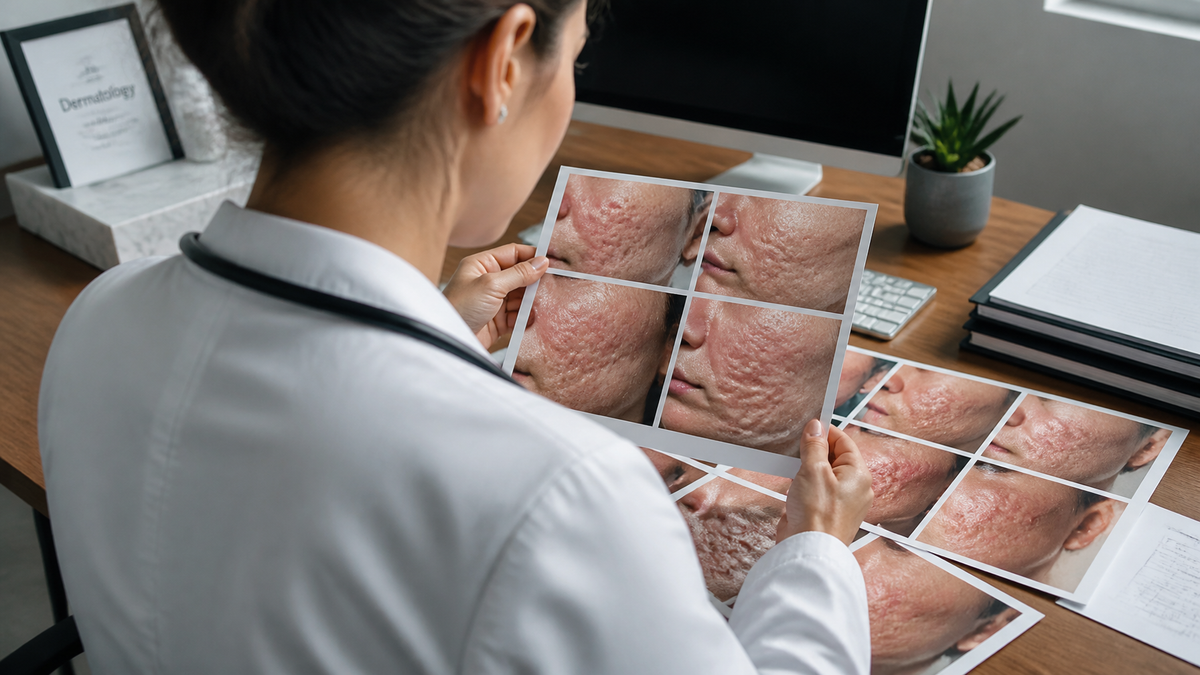
Dermatology is fundamentally a visual discipline. Because much of a diagnosis relies on sight, high-resolution photographs, strong lighting, and a clear medical history can convey vast amounts of information. In many cases, research shows that remote reviews are genuinely on par with face-to-face appointments.
The core advantages of remote consultations stem from everyday convenience:
-
Faster access: You secure advice far sooner than through traditional pathways.
-
Home comfort: You are evaluated in your natural surroundings, with your daily skin routine close at hand and under the actual daylight your skin experiences.
-
Unrushed dialogue: You can ask questions comfortably without feeling hurried out of a consulting room, and digital notes allow you to review advice at your leisure.
-
Smarter product reviews: It is remarkably easy to evaluate the half-used bottles sitting on your bathroom shelf rather than receiving a blanket prescription for an entirely new regimen.
Making the Most of a Digital Consultation
To ensure a remote assessment is effective, a bit of preparation goes a long way. The quality of advice you receive relies heavily on the quality of the information you supply.
-
Capture optimal photographs: Take pictures in natural daylight near a window, avoiding harsh indoor lighting or flash, which can distort skin texture. Include a broad shot for context alongside close-ups from multiple angles, ideally with a small coin nearby for scale. Capturing images across several days also helps illustrate progress or flare-ups.
-
Keep your skin natural: Resist the temptation to cover up. Avoid makeup, tinted creams, or image filters over the target area. Skip heavy exfoliants or strong active ingredients the night before so your skin presents in its usual state.
-
Document your current routine: Take photos of the front and back of your skincare products, ensuring ingredient lists are visible. This allows the specialist to assess exact formulations rather than guessing based on brand names.
-
Summarise your medical history: Note down when the issue began, triggers that aggravate it, previous treatments and their outcomes, alongside broader lifestyle factors like stress, sleep, and medication.
-
Frame specific questions: Digital sessions reward precision. Asking "This scaly patch has itchy flare-ups at night and stopped responding to mild steroid cream—what is the next step?" yields far better results than a vague "What is this rash?"
Where Virtual Care Falls Short
Despite its convenience, remote dermatology has clear physical limitations. A screen cannot replace physical touch or specialized equipment. Video feeds cannot evaluate the thickness of a plaque, feel the firmness of a deep nodule, or inspect the scalp properly. Crucially, a clinician cannot use a dermatoscope to examine lesions under precise light and magnification, nor can they perform biopsies, swabs, or physical treatments like cryotherapy.
Furthermore, camera settings, screen compression, poor lighting, and varying colour balances can easily distort redness, bruising, or subtle textures.
In-person appointments remain non-negotiable for:
-
Suspected skin cancer: Any new, changing, bleeding, or non-healing mole or spot requires a physical check and dermoscopy.
-
Rapidly spreading rashes accompanied by fever or systemic illness: These require urgent face-to-face emergency or urgent care.
-
Delicate or hard-to-see areas: Issues affecting the eyes, mouth, or genitals lose critical detail over camera.
-
Procedural needs: Conditions requiring physical interventions such as injections, laser therapy, or minor surgery.
-
Severe, volatile conditions: Situations where the risk of an incorrect or delayed diagnosis far outweighs the ease of a video call.
Who Benefits Most From Going Digital?
When used for the right clinical needs, virtual appointments offer outstanding care. The format is ideal for:
-
Managing chronic conditions: Long-term issues like acne, rosacea, eczema, psoriasis, and melasma cycle through phases of improvement and flare-ups. Adjusting an existing treatment plan rarely demands a travel-heavy trip across the country; a home review is simple to schedule and repeat.
-
Maintenance over mystery: If your diagnosis is already confirmed and you simply need to review whether your current routine remains suitable, remote appointments offer maximum efficiency.
-
Patients with mobility or caring responsibilities: For those managing chronic pain, physical disabilities, or demanding caregiving duties, consulting from a kitchen table makes receiving healthcare possible.
-
Busy professionals and shift workers: Flexible evening or weekend slots make fitting an appointment around unpredictable working hours straightforward.
-
Under-serviced regions: Patients living in remote areas with limited access to local specialists can connect with expert care without extensive travel.
The Verdict
Virtual dermatology is not a second-rate substitute for traditional care—it is a specialized tool tailored for convenience, routine follow-ups, and long-term condition management. Conversely, it is unsuitable for urgent symptoms, physical procedures, or diagnostic checks requiring physical contact.
If you are ever uncertain about which route to take, prioritize an in-person visit. If you choose to book remotely, treat the consultation like a professional photo shoot: clear daylight, unvarnished skin, accurate information, and zero filters.